
Life or Death Over Yemen: How Two F-16 Pilots Survived a Houthi SAM Ambush
Two F-16 pilots evade a sudden Houthi surface-to-air missile attack, demonstrating skill, teamwork, and modern aerial survival tactics.

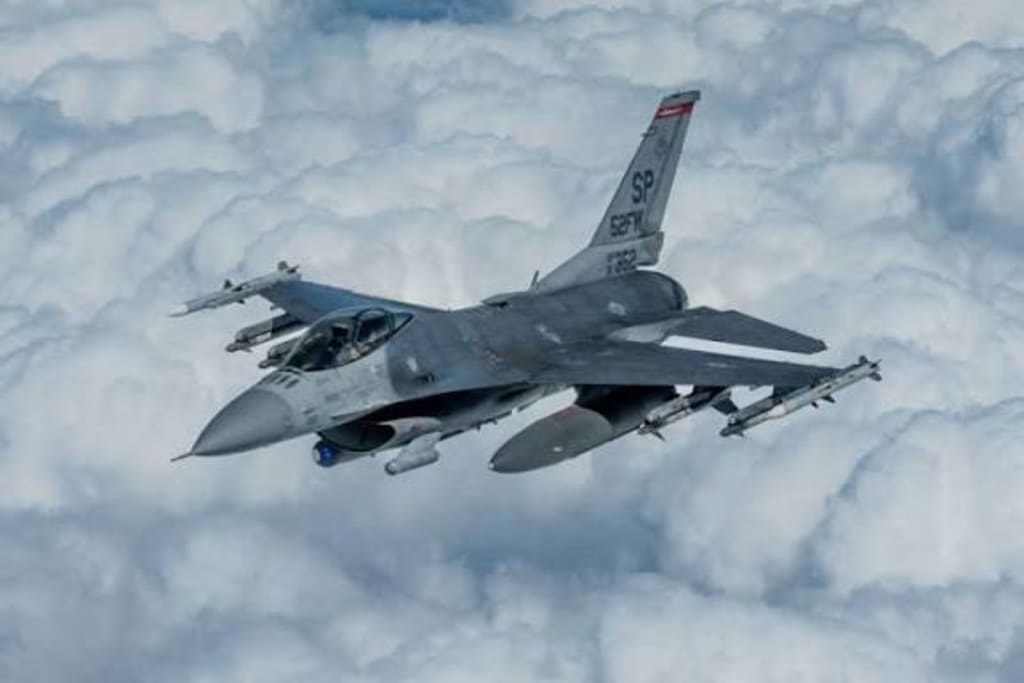
In the skies over northern Yemen, two F-16 pilots faced the nightmare scenario that every combat aviator dreads: a sudden surface-to-air missile (SAM) attack. The incident, which took place during a coalition strike mission, highlights both the dangers of modern asymmetric warfare and the extraordinary skill required to survive in hostile airspace dominated by mobile, well-hidden air-defense systems.
The pilots, part of a multinational air operation supporting coalition objectives, were tasked with a precision strike against insurgent positions linked to the Houthi movement. Intelligence had identified high-value targets, but the threat of SAMs in the region is notoriously difficult to predict. Yemen’s mountainous terrain provides insurgents with natural cover, and they have increasingly relied on portable, radar-guided missile systems to challenge coalition air superiority.
A Sudden Threat
According to sources familiar with the mission, the pilots were flying at medium altitude when radar warning receivers triggered multiple alerts. “The SAM launch indicators came up instantly,” said one official. “They had only seconds to react.”
The first missile, a radar-guided surface-to-air system, was detected by the F-16’s onboard warning sensors. The pilots executed evasive maneuvers at breakneck speed, using the jet’s afterburners, flares, and sharp banking turns to confuse the missile’s tracking system.
“It’s a test of both training and instinct,” said a retired fighter pilot familiar with the aircraft. “Every move must be precise. Hesitation can be fatal.”
Teamwork Under Fire
The survival of the two pilots was a direct result of coordinated teamwork. Flying in close formation, they alternated between offensive maneuvers and defensive positioning, ensuring that each aircraft could monitor the other’s blind spots. Their wingman maintained visual contact while the lead pilot executed high-G turns to evade the incoming missile.
This level of coordination reflects years of rigorous training, often simulated in high-intensity combat drills. “You rehearse these scenarios countless times,” the retired pilot explained. “But there’s nothing like real fire to test your mettle.”
Countermeasures and Modern Technology
F-16s are equipped with advanced electronic countermeasures designed to disrupt enemy targeting systems. During the ambush, the pilots deployed infrared flares to decoy heat-seeking missiles and electronic jamming to interfere with radar-guided projectiles. These tools are critical in survival, especially against the portable, manned SAM systems increasingly used by non-state actors.
“The jet itself gives you options, but it’s the pilot’s skill that makes the difference,” noted a defense analyst. “Technology can only go so far if the operator hesitates.”
Returning to Base
After several tense minutes, the pilots successfully evaded all incoming threats and regrouped at a safer altitude. Damage inspections revealed no critical hits, and the jets returned to base intact. The mission underscored both the persistent threat environment in Yemen and the ability of well-trained aircrews to operate under extreme pressure.
“The debrief focused on lessons learned,” said a coalition spokesperson. “Situational awareness, real-time intelligence, and decisive action were key. These are not hypothetical skills—they save lives.”
Strategic Implications
The incident also highlights the evolving nature of air warfare. Insurgent groups are increasingly sophisticated, blending traditional guerrilla tactics with modern missile systems. Coalition forces must adapt constantly, emphasizing pilot training, electronic warfare, and intelligence gathering to maintain air superiority.
Military analysts note that small-scale SAM ambushes, while not capable of turning the tide of a conflict, pose a persistent threat to manned aircraft and can have a psychological impact on aircrews.
Courage Above the Clouds
The survival of the two F-16 pilots serves as a testament to courage, training, and the enduring danger of combat missions in contested airspace. Their actions remind the global military community that even in an era of drones and precision weapons, the human element remains decisive.
As one official summarized, “It’s about preparation, teamwork, and the split-second decisions that keep pilots alive. In the end, it’s life or death—and these two made it back.”
About the Creator
Fiaz Ahmed
I am Fiaz Ahmed. I am a passionate writer. I love covering trending topics and breaking news. With a sharp eye for what’s happening around the world, and crafts timely and engaging stories that keep readers informed and updated.
Keep reading
More stories from Fiaz Ahmed and writers in The Swamp and other communities.
North Korea’s Kim Jong Un Re-elected as Chief of Workers’ Party
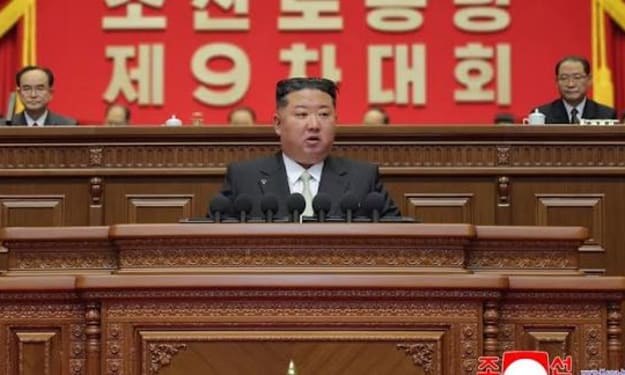
North Korean leader Kim Jong Un has been re-elected as chairman of the ruling Workers’ Party of Korea, consolidating his grip on power and reinforcing the continuity of the country’s political system amid growing economic strain and international isolation. The decision was announced at the conclusion of a high-level party congress held in Pyongyang, where senior officials praised Kim’s leadership and reaffirmed their commitment to his long-term strategic vision. State media described the vote as unanimous, presenting it as an expression of “absolute loyalty” to Kim and his policies on defense, development, and national unity. The re-election marks another chapter in Kim’s rule, which began in 2011 following the death of his father, Kim Jong Il. Over more than a decade in power, Kim has reshaped the country’s political hierarchy while prioritizing nuclear and missile development alongside limited economic reforms. Symbol of Political Stability The Workers’ Party remains the central pillar of governance in North Korea, and Kim’s reappointment as its chief sends a strong signal of internal stability at a time when the nation faces mounting challenges. Officials attending the congress highlighted the importance of ideological unity and discipline, emphasizing that loyalty to the party and its leader remains the foundation of national strength. In a speech broadcast by state television, Kim called for “greater resolve and self-reliance” as the country confronts what he described as “hostile external forces” and economic pressures. He also urged party cadres to focus on improving food production, strengthening defense capabilities, and maintaining social order. “The success of our revolution depends on the unity between the party and the people,” Kim was quoted as saying. Economic and Social Pressures Kim’s re-election comes as North Korea continues to struggle with food shortages, declining trade, and the lingering effects of border closures imposed during the COVID-19 pandemic. International sanctions tied to its nuclear and missile programs have further restricted access to global markets and foreign investment. Observers note that the leadership’s emphasis on stability and continuity reflects concern about domestic morale. Recent state media messaging has focused heavily on self-sufficiency, agricultural productivity, and industrial output, signaling that economic management will be a key priority during Kim’s next term as party chief. Analysts say the re-election also serves to reinforce the image of Kim as an indispensable figure at a time when the country must navigate both internal hardship and external diplomatic pressure. Military Focus Remains Central While economic issues dominated parts of the congress agenda, defense policy remained at the core of Kim’s leadership message. The Workers’ Party reaffirmed its commitment to strengthening nuclear deterrence and advancing missile technology, which it views as essential to national security. Over the past year, North Korea has conducted multiple missile tests and expanded its military exercises. Officials portrayed these actions as defensive measures against what they describe as hostile policies from the United States and its regional allies. Kim’s re-election ensures that this strategic direction will continue without interruption. Experts believe that Pyongyang is unlikely to scale back its weapons programs in the near future, even as it seeks limited engagement with foreign partners for humanitarian and economic relief. International Reaction Foreign governments responded cautiously to the announcement. South Korean officials said they were monitoring developments closely and reiterated their call for dialogue and denuclearization. The United States issued a statement urging North Korea to return to negotiations and refrain from further provocative actions. China and Russia, two of Pyongyang’s key diplomatic partners, emphasized stability and regional peace, avoiding direct criticism of Kim’s leadership. Consolidation of Power Kim’s re-election highlights the tightly controlled nature of North Korea’s political system, where leadership transitions are managed internally without public competition. The congress also confirmed appointments to key positions within the party’s central committee, ensuring that trusted allies remain in influential roles. Political scientists note that such events are less about debate and more about reinforcing unity around Kim’s authority. “These congresses are designed to project confidence and continuity,” said one regional analyst. “They remind both domestic and international audiences that Kim’s leadership is secure.” Looking Ahead As Kim Jong Un begins another term as head of the Workers’ Party, North Korea faces a complex future shaped by economic uncertainty, diplomatic isolation, and persistent security tensions. His re-election suggests that the country will continue along its current path, prioritizing political control and military strength while cautiously managing domestic challenges. For Pyongyang, the message is clear: stability under Kim’s leadership remains the guiding principle, even as pressures at home and abroad continue to mount.
By Fiaz Ahmed about 16 hours ago in The Swamp
A Gathering of Evil Bosses
“I’m the queen of chin jutting while I smooth my hair, attacking, insulting, and deflecting to protect my appointer.” “Oh, please, Blondi, my hair is curled, highlighted, and longer than yours. I feature television commercials telling immigrants that we will give them a free plane ride home, and if they voluntarily turn themselves in, they will be allowed to legally apply for re-entry. It runs everywhere, and I look good in it! You can’t compete because of your blond hair. Mine is nicer, and my lips are prettier than yours.”
By Andrea Corwin 5 days ago in The Swamp
Veil of Subconscious Awakening
Images slide behind my eyelids like film cadres, bursting with meanings. In one moment, I’m speeding down the highway, making the speedometer swing wildly like a frantic pendulum. The next moment, I’m plunging from a falling plane, slowly crashing earthward. At home, I meet black cat’s green, googly eyes staring at me from the cavernous hollowness of the kitchen. When I turn for a moment, it disappears, and all I can see is a pair of blue suede shoes set up against the wall. I pick them up and put them on. When I glimpse at them again, they’ve become black as night, making me blink and flinch.
By Moon Deserta day ago in Fiction



Comments
There are no comments for this story
Be the first to respond and start the conversation.