
Nancy Pelosi Is Second, Not Third, in Line for the Presidency
A Category Error
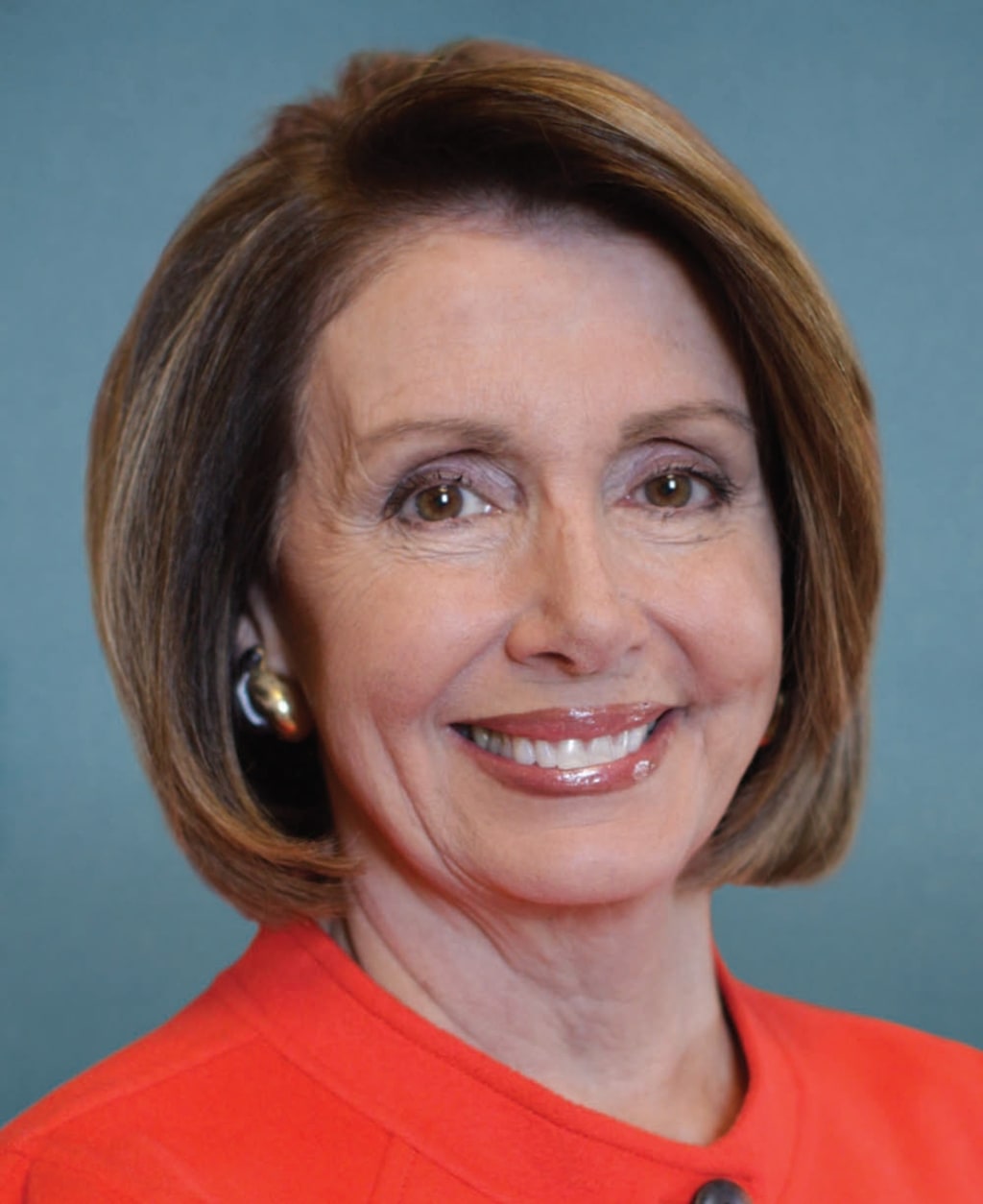
My wife Tina called my attention to a funnily annoying meme last night: Commentators on MSNBC keep saying that Nancy Pelosi (as Speaker of the House) is "third in line for the Presidency." I just heard Stephanie Ruhle and Malcolm Nance say that.
But, actually, the Speaker of the House is second, not third, in line. The President is not first in line—he's already there (unfortunately) in the White House. The first in line to succeed him is the VP. And the Speaker of House is second in line.
Look at it this way: If you're waiting in line to see a concert, the person who is lucky enough to be first in line is not yet seated or even in the theater. If the line has been moving, everyone who was first in line who entered the theater is no longer on line. (They could be online, reading their email or tweeting, but that's something else.)
Ruhle and Nance and everyone who has been getting this wrong could benefit from Bertrand Russell's theory of logical types. If you're counting all the clothespins in a bag, you don't count the bag, too. I realized a while ago that even people who pick up the trash understand this. You empty the garbage pail, but don't take the pail away with the garbage. The pail itself is not garbage.
Regarding the President, whoever is in that office is not on any line of succession. That's because the person in that Oval Office has already assumed that office. It's even incorrect to say that Nancy Pelosi is third in command. The responsibilities of government don't work that way. In many ways, the Speaker of the House is far more powerful than the Vice President.
But she does stand behind the Vice President in one very significant regard. She's second in line to succeed the President, behind the VP who is first in line.
About the Creator
Paul Levinson
Novels The Silk Code, The Plot To Save Socrates, It's Real Life: An Alternate History of The Beatles; LPs Twice Upon A Rhyme & Welcome Up; nonfiction The Soft Edge & Digital McLuhan, translated into 15 languages. Prof, Fordham Univ.
Keep reading
More stories from Paul Levinson and writers in The Swamp and other communities.
Jose Antonio Vargas and Joy Reid at Powerhouse Arena
I first heard about Jose Antonio Vargas in 2007 from my wife Tina. She was editing Barack Obama's and Hillary Clinton's Wikipedia pages, and Jose had called her for an interview in a article he was writing for The Washington Post about the impact of Wikipedia on that Presidential election. Those were early days in the advent of social media—or what I call New New Media (buying a book online is new media, creating a book online is new new media, or consumers becoming producers). Twitter and YouTube were just a year old, and Wikipedia, though a little older, was not allowed as a reference in student papers in probably every class except mine at Fordham University. But it was a new new medium par excellence —anyone who could read an article on Wikipedia could edit it—and Tina and Jose recognized its importance.
By Paul Levinson7 years ago in The Swamp
The Saddest Thing - The Billionaires Who Rule America Aren't Even Enjoying Themselves
This single post says more about our ruling class than a thousand policy papers. The saddest thing about today's system is that the men robbing the rest of us - sabotaging our economic prospects, our pensions, our access to affordable healthcare - are not even happy.
By Scott Christenson🌴6 days ago in The Swamp
Ukraine War Briefing: Rubio to Meet Zelenskyy in Munich as Russian Strikes Leave Thousands Without Power
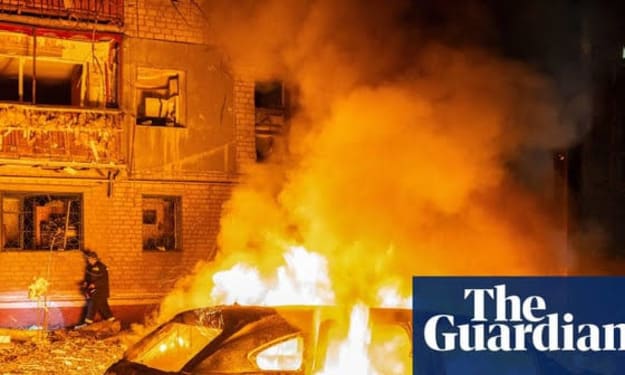
High-level diplomacy and renewed battlefield violence converge as Western leaders gather in Europe and Ukraine struggles with the humanitarian impact of fresh missile and drone attacks. Senior U.S. Senator Marco Rubio is set to meet Ukrainian President Volodymyr Zelenskyy on the sidelines of the annual Munich Security Conference, a key diplomatic gathering taking place in Munich. The meeting comes as Russia launched another wave of missile and drone strikes across Ukraine, damaging energy infrastructure and leaving tens of thousands of civilians without electricity in the middle of winter. Ukrainian officials said overnight attacks targeted power substations and transmission facilities in several regions, including central and eastern parts of the country. Emergency crews worked through the night to restore electricity, but authorities warned that full repairs could take days. Local governments urged residents to conserve energy and prepare for further outages as temperatures dropped. “This is a deliberate attempt to make civilian life unbearable,” Zelenskyy said in his nightly address, accusing Moscow of continuing its strategy of striking non-military targets to weaken morale. He added that Ukraine’s air defenses had intercepted many of the incoming missiles and drones but that the scale of the assault showed Russia’s continued capacity to mount large operations despite heavy battlefield losses. The attacks come as Ukraine faces increasing pressure on multiple fronts. Fighting remains intense in eastern regions where Russian forces have tried to gain ground through incremental advances. Military analysts say Moscow appears focused on wearing down Ukrainian defenses through constant bombardment while exploiting shortages of ammunition and air defense systems. Against this backdrop, Rubio’s planned meeting with Zelenskyy carries symbolic and political weight. The senator, a senior member of the U.S. Senate Foreign Relations Committee, is expected to discuss military aid, sanctions enforcement, and long-term security commitments. U.S. officials say the talks will also focus on sustaining international support at a time when political debates in Washington and some European capitals have slowed the delivery of weapons and financial assistance. The Munich Security Conference has traditionally served as a forum for Western allies to coordinate responses to global crises. This year, Ukraine is expected to dominate discussions as leaders debate how to counter Russia’s ongoing offensive and whether additional air defense systems and long-range weapons should be provided. Zelenskyy is also scheduled to meet several European leaders during the event. Diplomats familiar with the agenda say Rubio will emphasize the importance of unity among NATO partners and stress that Ukraine’s survival is tied directly to broader European security. “If aggression is rewarded, it sends a dangerous message to every authoritarian regime watching,” one U.S. official said. Meanwhile, the humanitarian toll of the latest Russian strikes is becoming clearer. Regional authorities reported that hospitals and schools were forced to switch to backup generators after power was cut. In some towns, public transport was suspended and water supplies were disrupted because pumping stations lost electricity. Aid organizations warned that vulnerable populations, including the elderly and displaced families, face heightened risks as winter conditions persist. Energy experts note that Russia’s renewed focus on infrastructure suggests a return to tactics seen earlier in the war, when systematic attacks on the power grid caused widespread blackouts. Ukraine has since strengthened its defenses around key facilities, but the sheer number of drones and missiles used in recent barrages makes it difficult to protect every site. International reaction to the strikes was swift. European Union officials condemned the attacks and reiterated calls for more advanced air defense equipment to be sent to Ukraine. Germany’s defense minister said the strikes demonstrated the urgency of accelerating weapons deliveries and improving coordination among allies. Russia, for its part, defended the attacks as legitimate military actions, claiming they were aimed at Ukraine’s “military-industrial complex.” The Kremlin has repeatedly denied targeting civilians, despite evidence from Ukrainian authorities and independent observers showing residential neighborhoods and civilian infrastructure among the damaged sites. The diplomatic dimension of the war is also evolving. Some Western officials hope that increased pressure on Russia through sanctions and military setbacks could eventually bring Moscow to the negotiating table. However, there are few signs of imminent talks, and both sides remain publicly committed to their military objectives. Zelenskyy is expected to use his meetings in Munich to press for additional Patriot missile systems and other advanced air defenses, arguing that protecting cities and energy infrastructure is as crucial as supporting troops on the front lines. He is also likely to warn that any slowdown in aid would embolden Russia to intensify its attacks. As Rubio prepares for his talks, political debates in the United States continue over the scale and duration of support for Ukraine. While bipartisan backing remains strong in many areas, divisions have emerged over budget priorities and foreign commitments. The senator has previously argued that helping Ukraine resist Russia is in America’s strategic interest, preventing a wider conflict in Europe. For ordinary Ukrainians, the immediate concern is survival through another round of blackouts and air raid sirens. In cities hit by the latest strikes, residents lined up for bottled water and used candles and portable heaters to cope with the outages. “We are used to this now, but it never gets easier,” said one woman in a central Ukrainian town affected by the attacks. The coming days will test both Ukraine’s resilience and the resolve of its allies. With Russian strikes continuing and diplomatic efforts intensifying, the meeting between Rubio and Zelenskyy in Munich underscores how closely military developments and international politics are now intertwined. As winter drags on, Ukraine’s battle is being fought not only on the front lines but also in conference halls where decisions about aid, security, and the future of the conflict are being shaped.
By Fiaz Ahmed about 5 hours ago in The Swamp



Comments
There are no comments for this story
Be the first to respond and start the conversation.