
The Death of the Dollar
Is the World’s Most Powerful Currency Losing Its Throne?


Have you ever wondered what it would mean if the U.S. dollar—the currency that has dominated global trade for decades—suddenly lost its power? It may sound like a distant possibility, but growing signs suggest that the dollar’s unshakable grip on the world economy may be loosening. And if history teaches us anything, no empire, not even one built on green paper, lasts forever.
The Rise of the Dollar’s Dominance
For over 70 years, the dollar has been the backbone of global finance. After World War II, the Bretton Woods Agreement established the U.S. dollar as the world’s reserve currency, tied to gold at the time. Countries trusted it, businesses traded with it, and investors stored their wealth in it. Even after the U.S. abandoned the gold standard in the 1970s, the dollar retained its crown, largely because oil and global commodities continued to be priced in it.
This dominance gave the United States a unique advantage: the power to borrow cheaply, impose sanctions effectively, and control much of the global economic system. But cracks are now starting to show in this seemingly unshakable foundation.
Why the Dollar Is Under Threat
One of the biggest challenges to the dollar today is the growing shift toward alternative currencies. Nations like China and Russia have been actively reducing their reliance on the dollar, conducting more trade in their own currencies or in alternatives like the euro and yuan. The rise of BRICS (Brazil, Russia, India, China, and South Africa) has only amplified this trend, with discussions about creating a new currency to rival the greenback.
Inflation, high U.S. debt levels, and aggressive money printing have also fueled skepticism about the dollar’s long-term stability. In fact, many global investors now see the dollar not as a safe haven but as a liability, especially in times of financial turbulence.
The Digital Currency Revolution
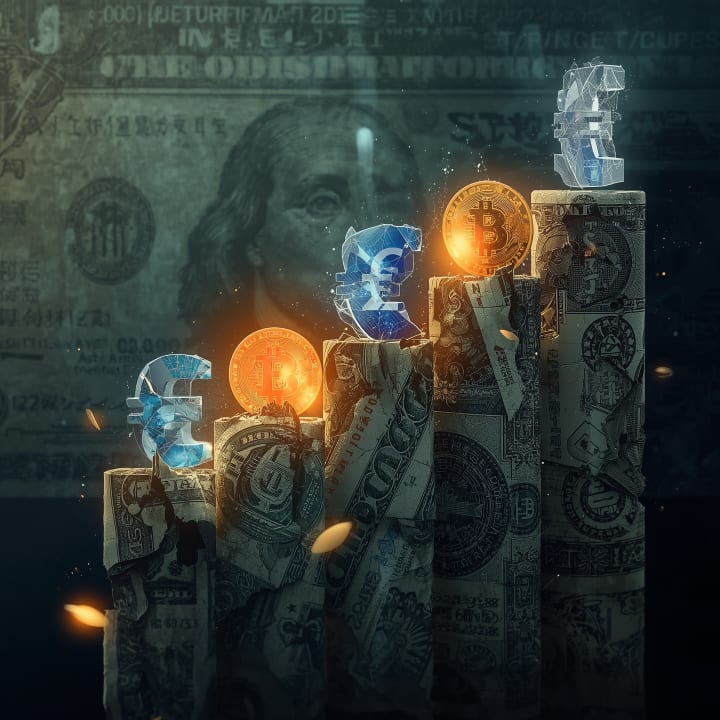
Another factor shaking the dollar’s dominance is the rise of digital currencies. Central bank digital currencies (CBDCs) are being developed worldwide, with China leading the way with its digital yuan. Meanwhile, cryptocurrencies like Bitcoin, once dismissed as experimental, are now being taken seriously as alternative stores of value.
These innovations could bypass traditional financial systems that depend heavily on the dollar, allowing countries to trade directly without U.S. oversight. Imagine a world where a farmer in Brazil pays for machinery from India using a blockchain-based currency—no dollars required. That future may not be too far away.
Real-Life Impacts of a Declining Dollar
If the dollar were to lose its global dominance, the effects would be massive. Everyday Americans could feel it in the form of higher prices for imports, as a weaker dollar would make foreign goods more expensive. Travel abroad would become costlier, and U.S. influence in global politics would shrink.
On the flip side, countries that have long been at the mercy of U.S. sanctions might suddenly find themselves freer to conduct business on their own terms. For instance, nations like Iran and Venezuela, often restricted by dollar-based trade systems, could find new opportunities in alternative financial channels.
Is the Dollar Really Dying?
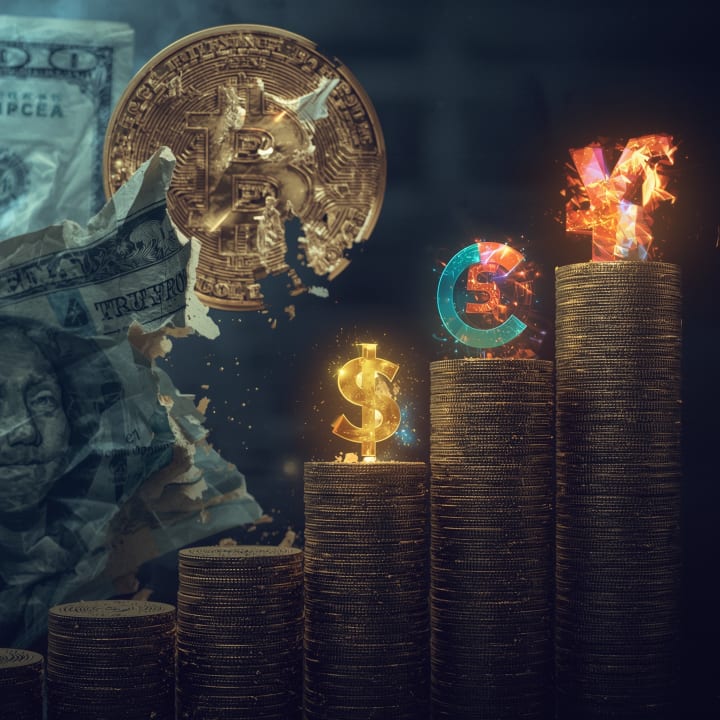
It’s important to note that the dollar isn’t going to vanish overnight. It still accounts for nearly 60% of global foreign exchange reserves and remains the most trusted currency in times of crisis. But what’s changing is the perception of its invincibility. More nations are diversifying their reserves, more deals are being struck outside the dollar, and more technologies are emerging to challenge its supremacy.
The “death of the dollar” may not mean total extinction but rather the end of its unchallenged reign. Instead of being the sole king of currencies, the dollar may soon find itself sharing the throne with multiple rivals.
A Global Shift That Affects Us All
We are living in a time of transition. The financial order that has shaped the modern world for decades is evolving, and what comes next will affect every single one of us. Whether you’re an investor, a business owner, or simply someone trying to save for the future, the shifts in global currency power will have ripple effects in your life.
So here’s the big question: if the dollar really is on the decline, are we prepared for what comes next?
Share your thoughts in the comments below—do you think the dollar will keep its crown, or is it destined to become just another currency in a multipolar world? Your voice matters in this conversation, because the death of the dollar, if it comes, will shape not only nations but also our everyday lives.
About the Creator
John Smith
Man is mortal.
Keep reading
More stories from John Smith and writers in The Swamp and other communities.
The Enigma of Putin’s “Second Body”
Have you ever heard the theory that powerful leaders use doubles to protect themselves? It’s one of those ideas that sounds straight out of a spy novel, but when it comes to Vladimir Putin, Russia’s long-time leader, the rumor has circulated for years with surprising persistence. Known popularly as the claim that Putin has a “second body” or political double, this idea mixes conspiracy, state secrecy, and the mysterious aura that has surrounded him for decades. But is there any truth to it, or is it simply another myth that keeps the intrigue around him alive?
By John Smith5 months ago in The Swamp
Silver’s Meteoric Rise: Citi Predicts $150 and Counting
In a financial market buzzing with volatility and opportunity, one story has captured the attention of investors, traders, and metal markets around the globe: Citigroup’s bold forecast that silver could surge to $150 an ounce within the next three months. This prediction — based on relentless physical demand, especially from China, and tightening market conditions — has investors debating whether silver is entering a renaissance period or an unsustainable bubble.
By Salaar Jamali4 days ago in The Swamp
Why the Cold War Pact Known as NORAD Is Making Headlines
A Relic of the Cold War Returns to the Spotlight For decades, the North American Aerospace Defense Command (NORAD) existed mostly in the background of global politics—a quiet, technical military partnership between the United States and Canada. Born during the Cold War to watch the skies for Soviet bombers, NORAD rarely made headlines unless Santa Claus was being “tracked” on Christmas Eve. But that has changed. In recent years—and especially amid renewed global tensions—NORAD has re-emerged as a key player in international security, prompting questions about why this Cold War pact suddenly matters again. The answer lies in a rapidly changing threat landscape, evolving warfare technologies, and a world edging closer to great-power competition. What Is NORAD? A Brief Overview NORAD was established in 1958 at the height of Cold War paranoia. Its mission was simple but critical: Detect incoming airborne threats Defend North American airspace Provide early warning of missile attacks Unlike most military alliances, NORAD is bi-national, jointly operated by the United States and Canada. It represents one of the deepest military partnerships in the world, with shared command structures, intelligence, and responsibilities. For much of the post–Cold War era, NORAD’s role faded from public view as traditional state-on-state threats seemed to diminish. That era is over. Why NORAD Is Back in the News NORAD is making headlines again for several interconnected reasons, all tied to the return of strategic rivalry in global politics. 1. Rising Tensions with Russia Russia’s military posture has shifted dramatically in recent years. Long-range bombers, missile tests, and aggressive air patrols near North American airspace have reignited concerns that once defined the Cold War. NORAD has increasingly: Scrambled fighter jets to intercept Russian aircraft Monitored long-range missile activity Enhanced early-warning capabilities Each interception makes headlines, reminding the public that Cold War-style deterrence is no longer theoretical. 2. China Enters the Strategic Equation While NORAD was originally designed to counter the Soviet Union, China has now become a central concern. China’s development of: Hypersonic missiles Long-range bombers Advanced space-based systems has forced NORAD to rethink its mission. The threat is no longer limited to one direction or one adversary. For the first time, NORAD planners openly discuss multi-theater threats, including missiles that could approach North America from unexpected trajectories. 3. The Missile Defense Revolution Modern warfare has transformed how threats emerge and how quickly they can strike. New challenges include: Hypersonic weapons that evade traditional radar Cruise missiles that fly low and avoid detection Space-based and cyber threats NORAD’s traditional early-warning systems are being upgraded to keep pace with these technologies. This modernization effort has placed the command at the center of defense debates and budget discussions. The Arctic: NORAD’s New Front Line One of the most important reasons NORAD is back in the spotlight is the Arctic. As climate change melts ice and opens new routes, the Arctic has become: More accessible to military forces Strategically valuable for missile trajectories A zone of competition among major powers Russia has heavily militarized its Arctic territory, and China has declared itself a “near-Arctic state.” NORAD now views the region as the most likely avenue for future threats. This shift has made NORAD less about legacy defense and more about future deterrence. Why NORAD Is Different from NATO NORAD is often confused with NATO, but the two serve very different purposes. NATO is a multilateral political-military alliance NORAD is a permanent operational command NORAD’s decisions are not debated among dozens of countries. They are executed rapidly, jointly, and with a narrow focus: defending North America itself. This operational efficiency is precisely why NORAD matters more now than ever. Domestic Politics and NORAD NORAD’s resurgence also reflects domestic political shifts in both the United States and Canada. Increased defense spending Renewed focus on border and airspace security Growing concern over foreign surveillance and espionage In both countries, NORAD has become a symbol of preparedness, reassuring the public that North America is not complacent in a dangerous world. From Bombers to Bytes: Cyber and Space Domains Modern conflict does not begin with missiles—it begins with data. NORAD’s mission now includes: Monitoring space-based threats Integrating cyber defense into early warning Coordinating intelligence across multiple domains This expansion reflects a broader truth: the next conflict may begin invisibly, long before a physical attack occurs. Why Headlines Matter: Messaging and Deterrence When NORAD intercepts aircraft or announces system upgrades, those headlines are not accidental. They serve a strategic purpose. Public visibility: Signals readiness to adversaries Reassures allies and citizens Reinforces deterrence without escalation In this sense, NORAD’s presence in the news is part of its mission—not a byproduct of it. Is This a Return to the Cold War? While comparisons to the Cold War are tempting, today’s reality is more complex. Then: Two superpowers Predictable lines of confrontation Clear rules of deterrence Now: Multiple competitors Blurred boundaries between war and peace Rapid technological escalation NORAD is adapting to a world that is more fragmented and less predictable than the one it was created to defend against. Criticism and Concerns Not everyone welcomes NORAD’s revival without reservations. Critics argue: Increased militarization fuels arms races Heavy defense spending diverts resources from domestic needs Heightened alertness risks miscalculation Supporters counter that deterrence only works when it is credible—and credibility requires readiness. What the Future Holds for NORAD Looking ahead, NORAD is likely to: Expand its space surveillance capabilities Invest heavily in Arctic infrastructure Integrate artificial intelligence into threat detection Play a central role in missile defense strategy Far from fading into history, NORAD appears poised to define the next era of North American defense. Conclusion: An Old Pact for a New Age NORAD’s return to the headlines is not about nostalgia—it is about necessity. In a world marked by renewed rivalry, advanced weapons, and blurred battlefields, the Cold War pact once designed to detect bombers now stands at the forefront of modern defense strategy. The lesson is clear: history does not disappear—it evolves. And NORAD, once a quiet sentinel of the Cold War, has become a central actor in shaping how North America prepares for an uncertain future.
By Zahid Hussain3 days ago in The Swamp


Comments (1)
I think at least for now, the dollar is here to stay.