
The Flowers" by Alice Walker: A Journey from Innocence to Awareness
How Alice Walker’s short story explores the loss of innocence and the painful realization of racial injustice.

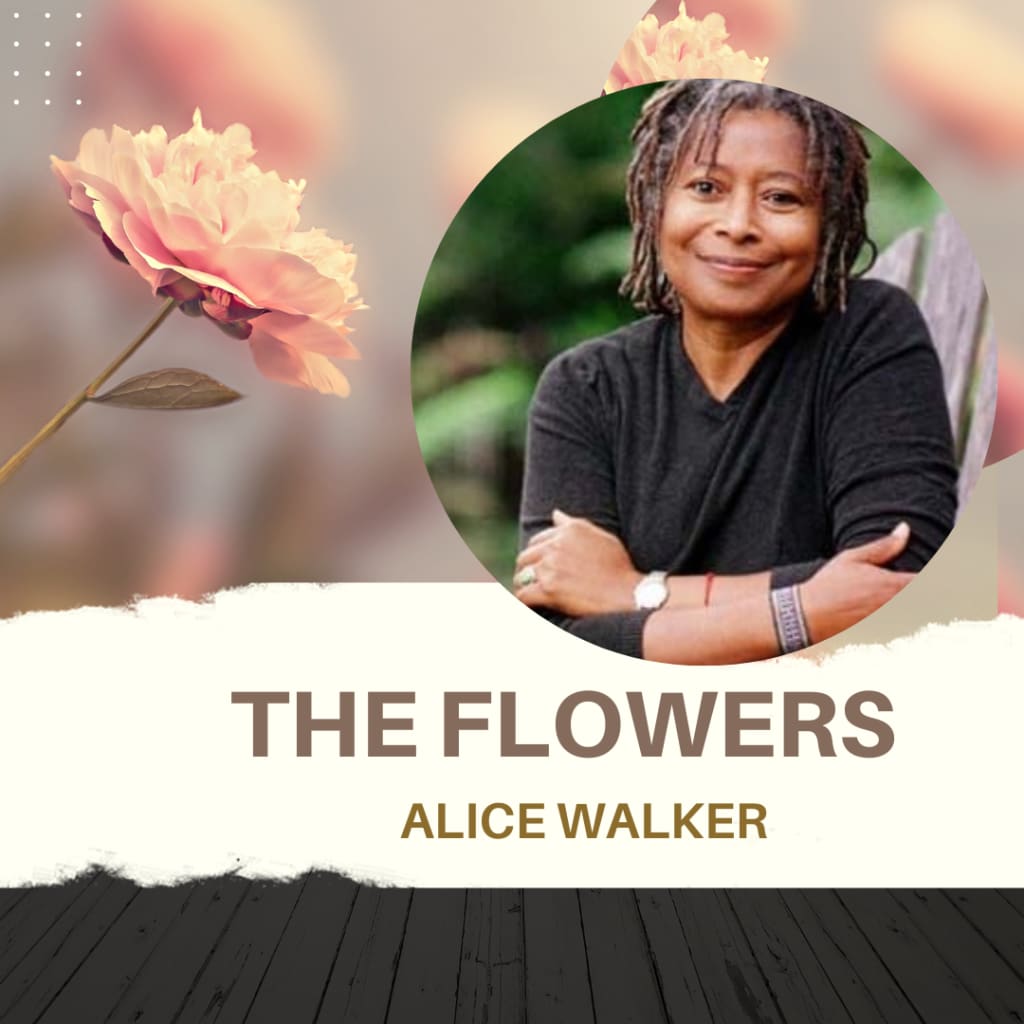
Alice Walker, the Pulitzer Prize-winning author of The Color Purple, is known for her powerful exploration of themes like race, gender, and identity. One of her earlier works, “The Flowers”, is a short but poignant story that encapsulates these themes in a deceptively simple narrative.
At its core, “The Flowers” is a tale about innocence lost, a journey that takes the main character, Myop, from a carefree childhood to a sudden, painful confrontation with the harsh realities of the world. Through vivid imagery and a shocking twist, Walker takes readers through the emotional and psychological transition from innocence to awareness.
---
The Plot: A Day in Myop’s Life
The story begins with Myop, a young African American girl of about ten years old, who is exploring the woods near her home. She picks flowers and enjoys the warmth of a bright summer day. The reader is immediately introduced to Myop’s joyful innocence — she is happy and free, unaware of the dangers or complexities that lie just beyond her world.
As Myop wanders through the woods, she comes across a decaying body hanging from a tree — a stark and horrific image that brings her joy to a sudden, violent halt. The man, identified as a victim of lynching, represents the racial violence and injustice that Myop has never had to confront. Her discovery marks the end of her childhood innocence, as she is suddenly thrust into a reality of racial violence and loss.
---
The Significance of Myop’s Journey
At first glance, the story seems simple — a young girl’s exploration of nature. But Walker uses this straightforward plot to illustrate how innocence is shaped by the world and how that innocence is often shattered by an encounter with brutality. The initial mood of the story is one of lightness and freedom, symbolized by Myop’s pick of flowers. She is at peace with herself and her environment, untroubled by anything.
However, the moment Myop stumbles upon the dead body, the tone changes abruptly. The flowers, which were once symbols of life and beauty, become symbols of the loss of innocence. They are a reminder that no matter how idyllic her world may seem, violence and injustice are never far behind.
---
Symbolism of the Flowers
The title of the story, “The Flowers”, is deeply significant. Flowers are traditionally associated with beauty, purity, and new life. In Myop’s case, they represent her untainted view of the world. As she picks the flowers, she is unburdened by any sense of danger, enjoying the simple pleasures of childhood. However, by the end of the story, the flowers have become tragic symbols. They represent the abrupt end of her childhood and the beginning of an awareness of the painful truths about her society.
The flowers also function as a metaphor for innocence itself. Myop, much like a flower, is untouched and pure at the beginning of the story. The flowers she picks are part of the natural world, something she has no reason to fear. But when she discovers the lynched man, she experiences a shocking disruption in that innocence, much like a flower being crushed underfoot.
---
The Theme of Racial Injustice
While “The Flowers” can be read as a story about the loss of innocence, it is also a powerful commentary on racism and racial violence in the United States. The man Myop discovers in the woods is the victim of a lynching, a brutal practice that was tragically common during the Jim Crow era. His body, hanging from a tree, serves as a stark reminder of the systemic violence inflicted on African Americans during that period.
This is particularly significant because Myop, a young African American girl, has been shielded from this harsh reality. Her innocence shields her from understanding the deep racial hatred that exists in the world around her. It is only when she encounters the corpse that she is forced to confront the horrors of racism — and that moment forces her to grow up, quickly and painfully.
---
The Turning Point: Loss of Innocence
The moment when Myop encounters the body is the turning point of the story. Her carefree exploration of the woods quickly shifts to a sense of terror and confusion. The discovery of the corpse represents the loss of childhood innocence, but it also serves as a moment of awakening. The realization that she is no longer safe in her world — that her environment can be cruel and unforgiving — is a profound one.
Walker doesn’t explicitly state the effect of this discovery on Myop, but the reader can infer that this will mark a significant change in her life. Myop’s carefree days of picking flowers and playing in the woods are over. The stark, brutal image of the lynched man will remain with her, shaping her understanding of the world.
---
The Conclusion: A Stark and Silent Ending
The story ends with Myop laying the flowers down at the site of the body. The image is striking: a child, once innocent and carefree, now faced with a traumatic and violent reality, abandoning her flowers in the presence of death. This final action signifies the end of innocence, but it also suggests that Myop’s journey into the world of racial injustice has only just begun.
Walker leaves the story open-ended, allowing the reader to reflect on the larger implications of Myop’s encounter. Will she ever be the same? Will she, like many others, carry the burden of this knowledge for the rest of her life? The story does not answer these questions, leaving it up to the reader to interpret the lasting impact of this traumatic event on a young girl’s psyche.
---
Conclusion: A Powerful Reflection on Innocence and Racism
Alice Walker’s “The Flowers” is a short yet powerful story that explores the abrupt loss of innocence and the painful reality of racial violence. Through the character of Myop, Walker delves into themes of race, violence, and societal injustice, offering a glimpse into how these issues shape personal identity and awareness. The story’s vivid imagery and symbolism convey a profound message: childhood innocence is fragile, and the world is not always as safe and beautiful as we wish it to be.
At its heart, “The Flowers” is a reminder of how awareness and trauma can shape our perceptions of the world, marking us forever as we confront the deeper truths about society and ourselves. It is a call to reflect on the past, understand its impacts, and work toward a future where such injustices no longer exist.
About the Creator
Fiaz Ahmed
I am Fiaz Ahmed. I am a passionate writer. I love covering trending topics and breaking news. With a sharp eye for what’s happening around the world, and crafts timely and engaging stories that keep readers informed and updated.
Keep reading
More stories from Fiaz Ahmed and writers in The Swamp and other communities.
Extreme Weather and Climate Change: The Growing Threat to Our Planet
In recent years, the world has witnessed an alarming increase in extreme weather events: wildfires, heatwaves, powerful hurricanes, severe floods, and droughts. Many experts agree that these intense occurrences are not isolated incidents but are closely tied to climate change — a phenomenon that is rapidly transforming the way our planet behaves.
By Fiaz Ahmed 4 months ago in The Swamp
The Saddest Thing - The Billionaires Who Rule America Aren't Even Enjoying Themselves
This single post says more about our ruling class than a thousand policy papers. The saddest thing about today's system is that the men robbing the rest of us - sabotaging our economic prospects, our pensions, our access to affordable healthcare - are not even happy.
By Scott Christenson🌴10 days ago in The Swamp



Comments
There are no comments for this story
Be the first to respond and start the conversation.