
U.N. Says It’s in Danger of Financial Collapse Because of Unpaid Dues
Mounting arrears, political gridlock, and rising global crises push the world body toward a fiscal breaking point

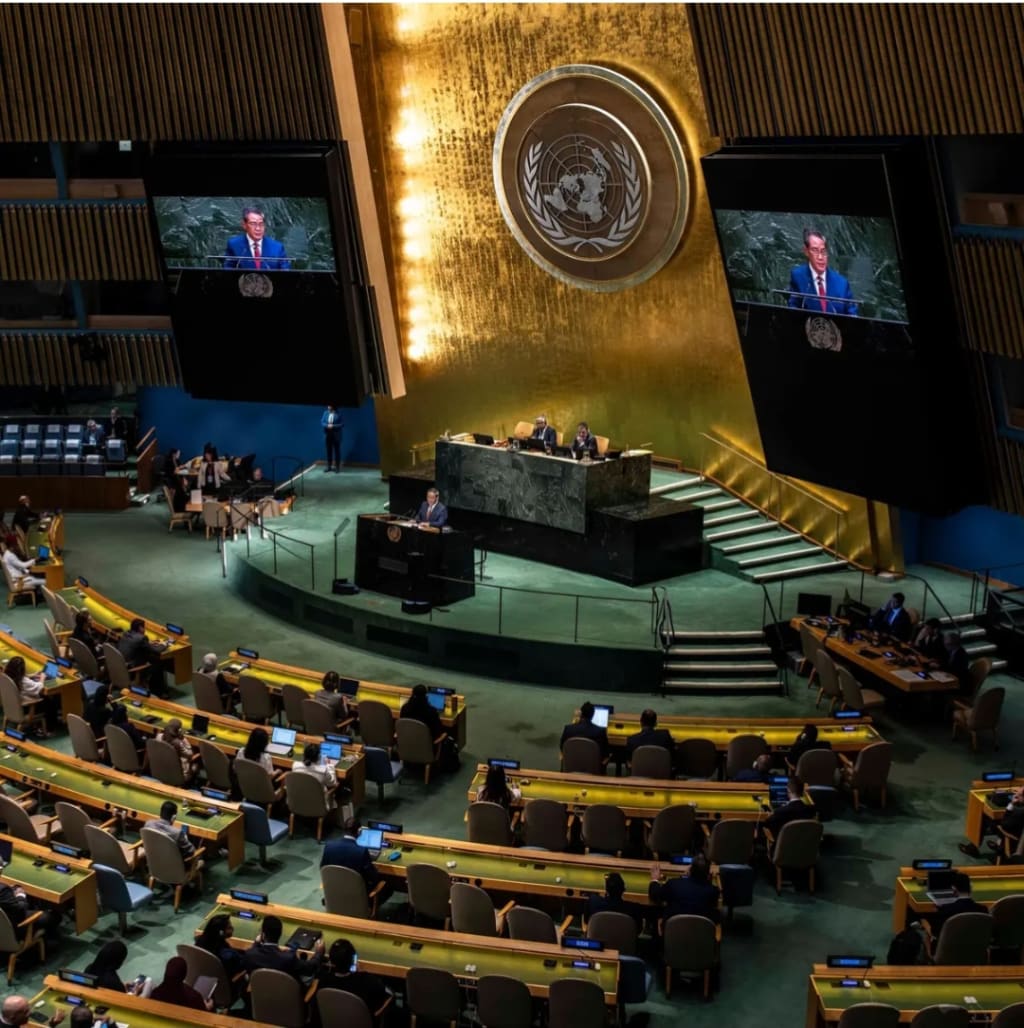
The United Nations has issued a stark warning: it is facing the risk of financial collapse due to massive unpaid dues from member states. Senior U.N. officials have cautioned that unless countries meet their financial obligations, the organization may soon be unable to carry out core functions ranging from peacekeeping and humanitarian relief to human rights monitoring and development assistance.
This warning highlights a deepening crisis at the heart of the world’s most important multilateral institution—one that comes at a time when global conflicts, climate emergencies, and humanitarian needs are at historic highs.
---
What Are U.N. Dues and Why Do They Matter?
The United Nations operates on two primary budgets: the regular budget, which funds core activities such as political missions, mediation, human rights offices, and administrative operations, and the peacekeeping budget, which supports missions in conflict zones around the world.
Every member state is legally obligated to contribute to these budgets based on an agreed-upon scale of assessments that reflects national income and economic capacity. However, when countries fail to pay on time—or at all—the U.N. cannot legally borrow money, leaving it vulnerable to cash shortages.
U.N. officials stress that this is not a theoretical problem. Cash shortfalls directly affect salaries, field missions, procurement, and humanitarian operations that millions rely on.
---
How Bad Is the Financial Situation?
According to U.N. leadership, unpaid dues have reached billions of dollars, creating a chronic liquidity crisis. While some member states eventually pay late, the timing mismatch between expenses and income forces the organization into constant austerity mode.
In recent months, the U.N. has reportedly delayed payments to vendors, frozen hiring, postponed conferences, and restricted travel. Peacekeeping missions—already under strain in volatile regions—have been particularly affected, with concerns that reduced funding could compromise troop safety and mission effectiveness.
The situation is so severe that officials have warned the U.N. may soon struggle to keep basic operations running, a scenario that would be unprecedented in the organization’s nearly 80-year history.
---
Why Are Countries Not Paying?
The reasons behind unpaid dues vary widely:
Political Disputes
Some countries withhold payments as leverage, protesting U.N. policies, leadership decisions, or resolutions they oppose. Financial pressure becomes a tool in broader diplomatic battles.
Economic Pressures
Developing countries facing debt crises, inflation, or currency shortages argue that they lack the fiscal space to pay on time. Global economic slowdowns have worsened this problem.
Domestic Politics
In certain cases, legislatures delay or block U.N. funding due to nationalist or anti-multilateral sentiment, framing contributions as wasteful or contrary to national interests.
U.N. officials emphasize that even a small number of major contributors paying late can destabilize the entire system, because the organization relies heavily on predictable cash flow.
---
Who Owes the Most?
While dozens of countries are behind on payments to varying degrees, a significant portion of arrears comes from large contributors, making the impact far more severe. When major economies delay payments, the U.N. loses access to funds that account for a substantial share of its operating budget.
Under U.N. rules, countries that fall two years behind risk losing their voting rights in the General Assembly—though waivers are often granted to avoid political escalation. Critics argue that this leniency weakens accountability and encourages continued non-payment.
---
Impact on Peacekeeping and Humanitarian Work
The financial crisis could not come at a worse time. The U.N. is currently responding to multiple armed conflicts, refugee crises, food insecurity emergencies, and climate-related disasters.
Peacekeeping missions rely on steady funding to pay troops, maintain equipment, and provide logistics in dangerous environments. Delays can erode morale and reduce operational readiness.
Humanitarian agencies working under the U.N. umbrella face similar constraints. Budget uncertainty makes it harder to plan long-term responses, pre-position aid, or retain experienced staff. Ultimately, vulnerable populations pay the price for funding gaps created far from crisis zones.
---
A Warning About the Future of Multilateralism
Beyond immediate operational risks, the U.N.’s financial crisis raises broader questions about the future of multilateral cooperation. The organization was created to prevent war, promote peace, and coordinate global action—but its ability to do so depends entirely on member states honoring their commitments.
Analysts warn that chronic underfunding undermines the U.N.’s credibility and effectiveness, creating a vicious cycle: weakened performance fuels criticism, which in turn justifies further withholding of funds.
Some observers argue that the crisis reflects a deeper shift in global politics, where rising nationalism and great-power rivalry are eroding support for shared institutions.
---
Calls for Reform and Responsibility
U.N. Secretary-General and senior officials have renewed calls for urgent payment of outstanding dues and for reforms to make the organization more financially resilient. Proposals include creating larger reserve funds, improving budget flexibility, and strengthening enforcement of payment rules.
However, reforms alone cannot solve the problem without political will. U.N. leaders stress that the organization’s financial health is a direct reflection of member states’ commitment to collective problem-solving.
As one official put it, “The United Nations is only as strong as the support it receives from its members.”
---
Conclusion
The warning that the United Nations could face financial collapse due to unpaid dues is more than an accounting issue—it is a signal of stress in the global system itself. At a moment when international cooperation is most needed, the institution designed to coordinate that cooperation is struggling to keep its lights on.
Whether the crisis becomes a turning point or a slow decline will depend on the willingness of member states to honor their obligations and reaffirm the value of multilateralism. The cost of failure would not be borne by diplomats or bureaucrats alone, but by millions around the world who depend on the U.N. in times of crisis.
About the Creator
Keep reading
More stories from Salaar Jamali and writers in The Swamp and other communities.
South Africa Orders Expulsion of Israeli Envoy, Declares Him Persona Non Grata
South Africa has taken a dramatic diplomatic step by ordering the expulsion of Israel’s envoy and declaring him persona non grata, marking one of the strongest actions yet by Pretoria in response to Israel’s military campaign in Gaza. The decision underscores South Africa’s increasingly confrontational stance toward Israel and reflects broader geopolitical fractures as governments reassess alliances amid the ongoing Middle East conflict.
By Salaar Jamaliabout 21 hours ago in The Swamp
Catherine O’Hara: The Queen of Comedy Who Redefined What It Means to Be Iconic
Catherine O’Hara is one of those rare performers whose presence alone can elevate a project from entertaining to unforgettable. With a career spanning more than four decades, she has mastered the art of comedy while also demonstrating remarkable emotional depth. Whether she is delivering exaggerated accents, embodying glamorous eccentricity, or quietly revealing vulnerability, O’Hara has earned her place as one of the most respected and beloved figures in entertainment.
By Sajida Sikandar2 days ago in The Swamp


Comments
There are no comments for this story
Be the first to respond and start the conversation.