
Ultra Ethernet: Revolutionizing Data-Center Interconnections for Tomorrow
How Open, High-Performance Ethernet Is Powering the Next Era of AI, Cloud, and Hyperscale Infrastructure
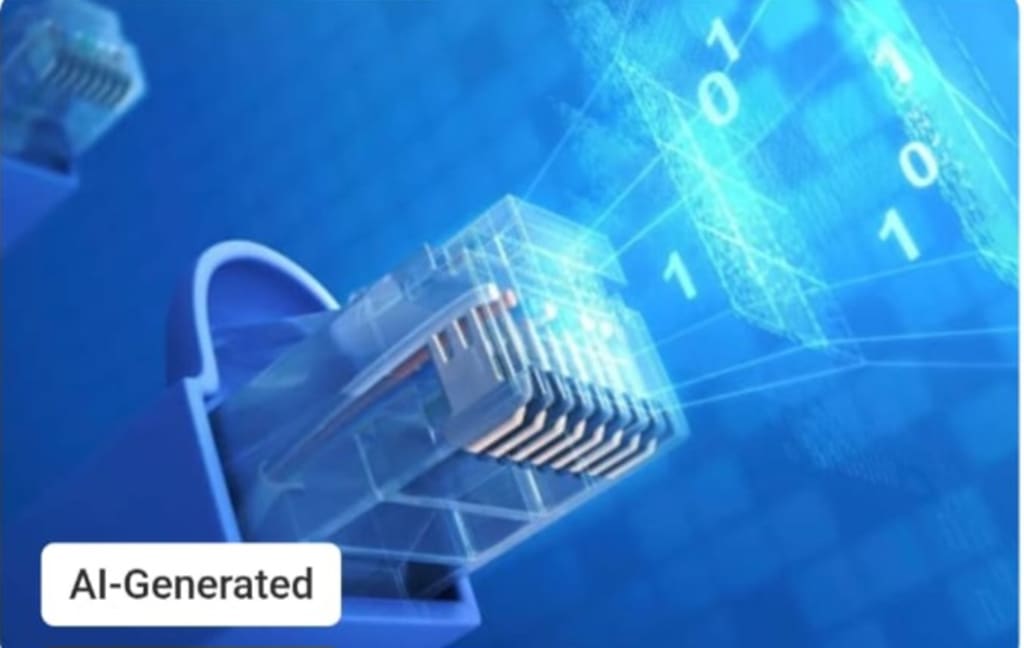
The digital economy is expanding at an unprecedented pace. From artificial intelligence (AI) and machine learning (ML) to cloud computing, edge services, and real-time analytics, modern applications demand enormous computing power and ultra-fast data exchange. At the heart of this transformation lies the data center — the engine room of the digital world. However, traditional networking technologies are increasingly being pushed to their limits. Enter Ultra Ethernet, a next-generation innovation designed to revolutionize data-center interconnections and meet the performance demands of tomorrow.
The Growing Pressure on Data-Center Networks
Data centers today must handle massive volumes of traffic generated by AI training clusters, high-performance computing (HPC), streaming services, financial platforms, and billions of connected devices. These workloads require:
Ultra-low latency
High bandwidth
Efficient congestion management
Scalable architecture
Energy efficiency
Traditional Ethernet has served data centers reliably for decades due to its flexibility, cost-effectiveness, and interoperability. However, AI and HPC workloads are highly sensitive to network delays and congestion. Even microseconds of latency or minor packet loss can reduce performance significantly, particularly in distributed AI training where thousands of GPUs must communicate simultaneously.
This is where Ultra Ethernet emerges as a transformative solution.
What Is Ultra Ethernet?
Ultra Ethernet refers to an enhanced, high-performance evolution of Ethernet technology specifically engineered for modern data-center and AI-driven workloads. It builds upon the foundation of standard Ethernet while introducing advanced features such as improved congestion control, lower latency, higher throughput, and better support for large-scale parallel computing environments.
Unlike proprietary networking technologies that lock customers into specific vendors, Ultra Ethernet is being developed through open industry collaboration. This ensures interoperability, innovation, and broader adoption across hardware and software ecosystems.
Ultra Ethernet is designed to compete with specialized high-performance networking technologies by combining Ethernet’s openness with performance levels traditionally associated with custom interconnect solutions.
Why AI and HPC Need Ultra Ethernet
Artificial intelligence workloads are fundamentally different from traditional enterprise applications. AI training involves splitting massive datasets across thousands of GPUs or accelerators. These processors must constantly exchange model updates in real time. Any delay in communication slows down the entire training process.
Similarly, high-performance computing applications such as weather forecasting, genomics research, and financial modeling rely on synchronized communication between compute nodes.
Ultra Ethernet addresses these needs by offering:
Low Latency Communication – Minimizing delays between servers and accelerators.
Advanced Congestion Control – Preventing network bottlenecks that degrade AI performance.
High Bandwidth Capacity – Supporting 400G, 800G, and beyond to handle massive data flows.
Scalable Architecture – Enabling hyperscale data centers to expand seamlessly.
By optimizing Ethernet specifically for AI clusters and HPC environments, Ultra Ethernet enables faster model training, improved resource utilization, and better overall efficiency.
Open Standards and Industry Collaboration
One of the most significant advantages of Ultra Ethernet is its foundation in open standards. Industry leaders across semiconductor, networking, and cloud sectors are collaborating to enhance Ethernet performance rather than replacing it with proprietary systems.
This collaborative approach provides several benefits:
Vendor neutrality
Lower costs through competition
Faster innovation cycles
Easier integration into existing infrastructure
Open ecosystems prevent fragmentation and allow organizations to deploy best-of-breed components without compatibility concerns. As AI adoption accelerates globally, open networking standards ensure that infrastructure can evolve rapidly without creating technological silos.
Powering Hyperscale and Cloud Environments
Hyperscale cloud providers operate data centers containing hundreds of thousands of servers. These environments require networks that can scale efficiently while maintaining consistent performance.
Ultra Ethernet enhances data-center fabrics by enabling:
High-density switching
Efficient east-west traffic management
Improved load balancing
Reduced packet loss
As cloud providers continue expanding AI-as-a-service offerings, robust interconnection frameworks become critical. Ultra Ethernet ensures that compute resources can communicate at scale without performance degradation.
Moreover, with edge computing becoming more prominent, low-latency interconnection between distributed micro data centers is increasingly important. Ultra Ethernet supports this distributed architecture by delivering reliable, high-speed connectivity across diverse environments.
Energy Efficiency and Sustainability
Modern data centers consume vast amounts of electricity, both for computing and networking. As sustainability becomes a global priority, energy-efficient networking solutions are essential.
Ultra Ethernet incorporates intelligent traffic management and optimized hardware designs that reduce unnecessary retransmissions and congestion-related power waste. By improving network efficiency, organizations can lower operational costs and reduce their environmental footprint.
Energy-efficient interconnects are especially important in AI clusters, where thousands of accelerators operate simultaneously. Even marginal efficiency improvements can translate into substantial energy savings at scale.
Economic Impact and Business Advantages
Beyond technical performance, Ultra Ethernet has significant economic implications. Faster AI training cycles mean quicker time-to-market for products and services. Enterprises can deploy AI models more rapidly, respond to market changes faster, and gain competitive advantages.
Additionally, leveraging Ethernet-based infrastructure avoids the high costs associated with proprietary networking systems. Organizations can modernize their networks incrementally rather than completely overhauling existing environments.
For startups and emerging markets, open and scalable technologies like Ultra Ethernet lower entry barriers to advanced computing capabilities.
Challenges and Future Outlook
While Ultra Ethernet presents enormous potential, its widespread implementation requires careful standardization, hardware upgrades, and software optimization. Data-center operators must ensure compatibility with legacy systems while planning for future expansion.
However, the momentum behind enhanced Ethernet technologies suggests strong industry commitment. As speeds progress beyond 800G toward terabit-scale networking, Ultra Ethernet will likely play a central role in shaping next-generation infrastructure.
Looking ahead, the convergence of AI, 5G/6G, edge computing, and quantum research will further intensify the need for ultra-fast, reliable data exchange. Ultra Ethernet is poised to become the backbone of this interconnected future.
Conclusion
Ultra Ethernet represents more than just a networking upgrade — it is a strategic evolution designed to meet the extraordinary demands of modern computing. By combining the openness of Ethernet with cutting-edge performance enhancements, it bridges the gap between traditional data-center networking and the high-performance requirements of AI and hyperscale environments.
As digital transformation accelerates worldwide, the infrastructure supporting it must evolve accordingly. Ultra Ethernet offers a scalable, efficient, and collaborative pathway forward. It empowers organizations to unlock the full potential of AI, cloud computing, and next-generation applications.
In the coming years, as data continues to grow exponentially, Ultra Ethernet will not merely support tomorrow’s data centers — it will define them.
About the Creator
Keep reading
More stories from Ayesha Lashari and writers in The Swamp and other communities.
The Paradox of Indian Literature Festivals: Why a Country That Rarely Reads Loves Literary Gatherings
India presents a curious contradiction. On one hand, surveys repeatedly suggest that a large segment of the population does not read books regularly, especially literary fiction or serious non-fiction. On the other, the country hosts dozens of literary festivals every year, many of them lavish, well-attended, and heavily publicized. From the globally renowned Jaipur Literature Festival to smaller regional events across cities and towns, literary gatherings have become cultural spectacles.
By Ayesha Lashariabout 13 hours ago in The Swamp
The Saddest Thing - The Billionaires Who Rule America Aren't Even Enjoying Themselves
This single post says more about our ruling class than a thousand policy papers. The saddest thing about today's system is that the men robbing the rest of us - sabotaging our economic prospects, our pensions, our access to affordable healthcare - are not even happy.
By Scott Christenson🌴5 days ago in The Swamp
Iran Suggests It Could Dilute Highly Enriched Uranium for Sanctions Relief
Iran has indicated that it may be willing to dilute its stockpile of highly enriched uranium (HEU) in exchange for relief from crippling international sanctions, a move that has reignited diplomatic debate over the future of its nuclear program and the broader stability of the Middle East. The suggestion, made amid mounting economic pressure and regional uncertainty, represents one of the clearest signals in recent months that Tehran could be open to compromise—if its core demands are met.
By Sadaqat Alia day ago in The Swamp



Comments
There are no comments for this story
Be the first to respond and start the conversation.