
Vladimir Putin’s Imperialism and Military Goals Against Ukraine
Vladimir Putin’s Imperialism and Military Goals Against Ukraine
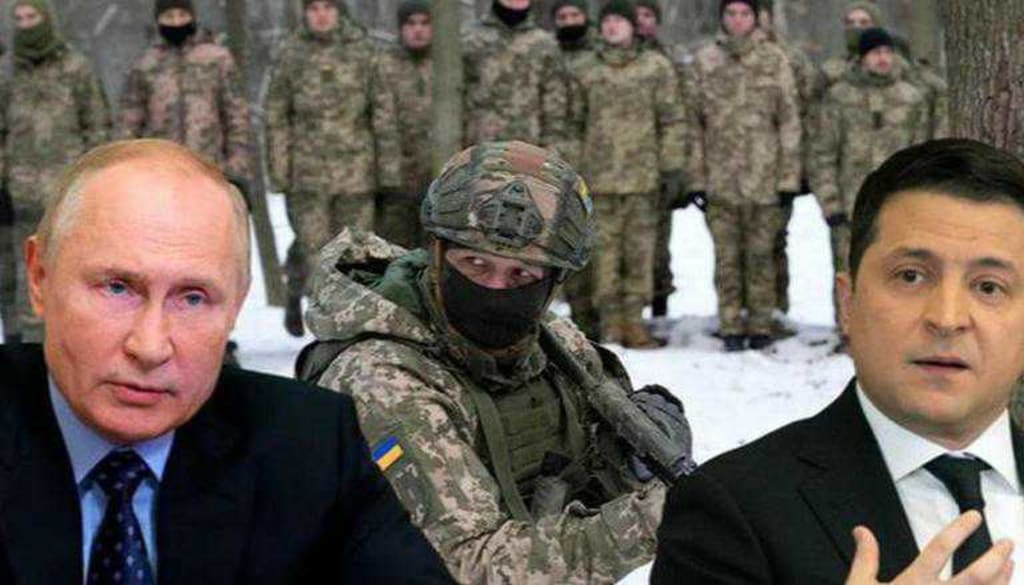
The unbelievable has happened. The world is faced with a crisis on the magnitude of that which it faced in 1961 in Cuba. The Russian invasion of Ukraine is likely to become the biggest war in Europe since World War II. The destruction of Ukraine’s democracy through a Russian invasion and installation of a pro-Kremlin puppet regime, would energise the anti-democratic onslaught of autocrats, such as China and Iran, around the world and send a signal that the democratic West is in decline.
Russian invasion of Ukraine
A successful overthrow of democracy in Ukraine would increase the threat to the three Baltic states of Lithuania, Latvia, and Estonia, all NATO members, and encourage China to consider a military conquest of Taiwan. Russia has demanded since the mid-1990s that Eurasia be recognised as Russia’s exclusive sphere of influence where countries cannot integrate with, or join, NATO and the EU.
Russia has also been opposed to Eurasian countries using UN peacekeepers in frozen conflicts artificially manufactured by the Kremlin to thwart pro-Western countries integrating into NATO and the EU. Ranked by the human rights monitoring think tank Freedom House as a “consolidated authoritarian regime”, Russia aggressively opposes the spread of democracy in Eurasia. The existence of a successful democracy in Ukraine is viewed by the Kremlin as a threat to the autocracy built by President Vladimir Putin.
The Kremlin’s seeks the consolidation of the three eastern Slavs (Russians, Ukrainians, Belarusians) into the Russian World, a concept created in 2007. Ukraine is important to Russian nationalist mythology because it includes the city of Kyiv, the birthplace of the medieval Kyiv Rus state. In 2016, a monument to Grand Prince Volodymyr the Great was unveiled next to the Kremlin in Moscow, a city that was founded in 1146 and did not therefore exist when Grand Prince Volodymyr the Great ruled Kyiv Rus in 980-1015.
The city of Kyiv is at least 600 years older than Moscow. In 2010–2014, Ukraine pursued a “non-bloc” foreign policy where it did not seek NATO membership. This “non-bloc” status did not prevent Russia invading and annexing Crimea in February–March 2014 and launching a military invasions and hybrid warfare against Ukraine. Russia always interpreted “neutrality” in a different manner to that of Finland or Austria during the Cold War. As witnessed by the Kremlin’s aggressive policies towards Ukraine in 2012-2014, Russia understands “neutral” status or Ukraine as the country returning to Russia’s sphere of influence.Russia seeks not only Ukraine’s formal renunciation of NATO membership.
The Kremlin would also apply pressure on Ukraine to renounce all forms of military cooperation with NATO. Since the launch of the EU’s Eastern Partnership in 2010, Russia has strongly opposed EU “enlargement” alongside its long-standing hostility to NATO enlargement into Eurasia. As seen in Russian pressure on President Viktor Yanukovych in 2012-2013, Ukraine would be also pressured to withdraw from the EU Association Agreement and DCFTA (Deep and Comprehensive Free Trade Agreement), two elements of the EU’s Eastern Partnership.
A “neutral” Ukraine no longer integrating into NATO and the EU would be pressured to join the Eurasian Economic Union, the Kremlin’s alternative to the EU. This was Putin’s goal towards Ukraine in 2013-2014 which was thwarted by the Euromaidan Revolution of Dignity.
The Kremlin’s central demand is Ukraine must be a part of the Russian World which is viewed as the core of the Eurasian Economic Union. The three eastern Slavs were viewed in the same manner as the core of the Soviet Union. Without Ukraine and the city of Kyiv, Putin cannot claim to have united the Russian World which he sees as his historic legacy.
Since 2000, when Putin was first elected president, the Kremlin has adopted Tsarist imperial nationalism towards Ukraine and Ukrainians that denies the existence of the country and people. In the eyes of the Kremlin, Ukraine is a “Russian land” and Ukrainians are one of three (alongside Russians and Belarusians) branches of a pan-Russian nation. Putin’s Russian nationalism views Ukrainians as “Little Russians” –as was clear in his long July 2021 article. President Putin views his historical legacy as a “Gatherer of Russian Lands”.
The first territory to be “gathered” was Crimea in 2014, and the second Belarus in 2021. Ukraine is the third and last part of “Russian lands” which Putin seeks to “gather.” Since the 2014 crisis, the Kremlin has pressured Ukraine to implement the Russian interpretation of the Minsk agreements. Because Ukraine always opposed this, Russia moved to using military threats in late 2021.
Russia’s interpretation of the Minsk Agreements would have created a weak central government, federalised state, and Kremlin influence exerted through the Russian-controlled Donetsk and Luhansk Peoples Republics. This would have been coupled with Ukraine’s “neutrality”; that is, Kyiv’s rejection of cooperation with and membership of NATO and EU. NATO was never offering Ukraine membership.
The US was never planning to instal surface to air missiles in Ukraine that could threaten Russia. And Ukraine and NATO have undertaken military cooperation since the mid-1990s when the Partnership for Peace Programme (PfP) was created. The real factors underlying the crisis were as follows. Firstly, treason charges were leveled against Ukraine’s pro-Russian politician Viktor Medvedchuk and his 4 proRussian TV channels were closed in February (ZiK, 112, NewsOne) and December 2021 (First Independent).
As leader of the pro-Russian Opposition Platform-For Life party, Medvedchuk is Putin’s political representative in Ukraine. Putin is also the Godfather of his daughter. Secondly, Medvedev’s 11 October 2021 article in Kommersant demonstrated the Kremlin had lost patience with President Zelenskyy who was ridiculed Zelenskyy as a US puppet. The Kremlin said it would no longer talk to Kyiv and would only negotiate with its “puppet masters” in Washington DC. Medvedev warned that Russia would “wait for the emergence of a sane leadership in Ukraine” that “is aimed not at a total confrontation with Russia on the brink of war…but at building equal and mutually beneficial relations with Russia.”
About the Creator
Keep reading
More stories from writers in The Swamp and other communities.
A Gathering of Evil Bosses
“I’m the queen of chin jutting while I smooth my hair, attacking, insulting, and deflecting to protect my appointer.” “Oh, please, Blondi, my hair is curled, highlighted, and longer than yours. I feature television commercials telling immigrants that we will give them a free plane ride home, and if they voluntarily turn themselves in, they will be allowed to legally apply for re-entry. It runs everywhere, and I look good in it! You can’t compete because of your blond hair. Mine is nicer, and my lips are prettier than yours.”
By Andrea Corwin 6 days ago in The Swamp
Sudan Atrocities Are ‘Hallmarks of Genocide,’ UN Says
The international community has once again been shaken by devastating findings from the United Nations regarding the ongoing war in Sudan. According to a newly released UN investigation, the atrocities committed in the Darfur region, particularly in the city of El-Fasher, display what experts describe as the “hallmarks of genocide.”
By Sajida Sikandar4 days ago in The Swamp



Comments
There are no comments for this story
Be the first to respond and start the conversation.