
Why Trump Doesn’t Care About Climate Change?
Read the most dangerous face of the World

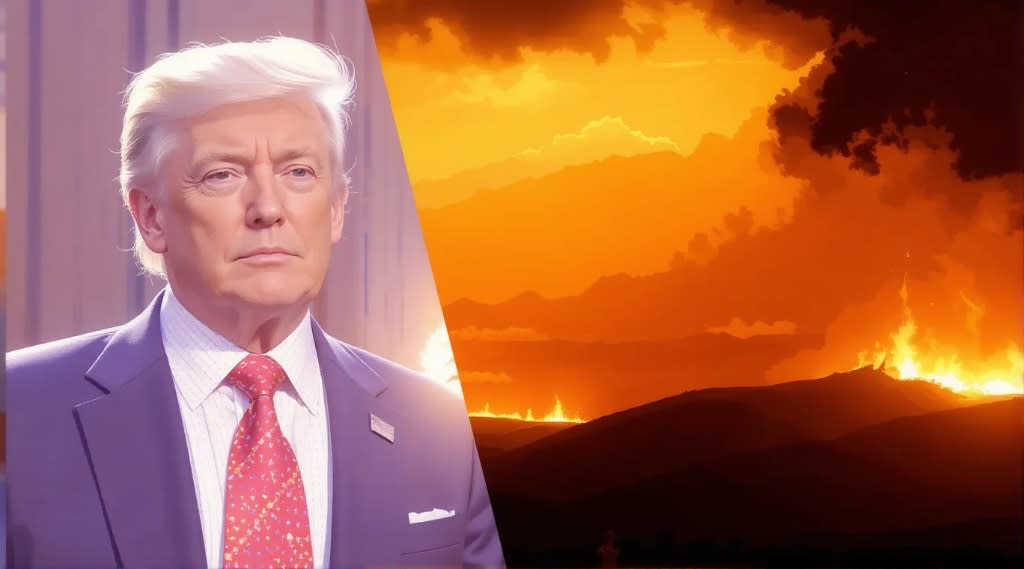
Donald Trump, the current president of the United States, remains one of the most polarizing figures in modern politics. His position on climate change has sparked worldwide criticism, yet it perfectly aligns with his political identity and personal philosophy. Trump is a right-wing politician, a nationalist, and above all, a businessman who sees the world through the lens of profit and power rather than sustainability and science. His refusal to take climate change seriously is not accidental; it reflects his deep commitment to economic nationalism and his belief that environmental concerns should never outweigh America’s industrial and financial interests.
Trump’s governing philosophy is rooted in the slogan “America First.” This simple phrase captures the essence of his worldview: protecting U.S. industries, rejecting foreign influence, and maximizing national strength even if it means dismissing global cooperation. Within that mindset, international climate agreements and environmental regulations appear to him as constraints that hold America back while helping other nations rise. Trump sees climate change not as a shared global threat but as a political tool used by rivals and global institutions to weaken the United States economically.
As a businessman turned president, Trump applies corporate thinking to governance. His life in real estate and media taught him that success is measured by visible growth, profits, and deals—not by invisible goals like reducing carbon emissions. In his eyes, environmental regulations are red tape, climate warnings are overreactions, and renewable energy is an unproven gamble. He once described climate policies as “job killers,” arguing that the push for clean energy sacrifices American workers to satisfy environmental activists. This mindset explains why his administration prioritizes oil, gas, and coal industries—the sectors that fuel America’s traditional economy and, more importantly, his political base.
Trump’s rejection of climate change, however, comes at a time when the United States itself faces increasing climate disasters. From hurricanes devastating Florida and Louisiana to raging wildfires across California and record-breaking heatwaves nationwide, the evidence is undeniable. The U.S. economy loses billions each year from climate-related disasters, and yet Trump continues to downplay the issue. He has publicly mocked climate science, once claiming that “it’s just weather” and insisting that “scientists have their own agendas.” For him, acknowledging the seriousness of climate change would mean accepting limits on business growth and international pressure—two things he instinctively resists.
Trump’s stance also reflects a powerful political calculation. Many of his supporters come from regions dependent on fossil fuel production or from communities that distrust federal authority and global institutions. In these circles, climate activism is seen as liberal elitism—a movement that threatens their livelihoods. By denying or minimizing climate change, Trump strengthens his bond with these voters. He presents himself as their defender against what he portrays as “left-wing alarmism.” In this way, his climate denial is not just an opinion; it’s a political strategy designed to preserve his image as the champion of America’s working class.
During his first presidency, Trump withdrew the United States from the Paris Climate Agreement, arguing that the deal unfairly benefited countries like China and India while burdening American industries. In his second term, he continues this skepticism toward global environmental cooperation. Instead of promoting renewable energy research, he supports deregulation and expanded fossil fuel production, claiming it strengthens national independence. Yet, while he celebrates short-term job gains and cheaper fuel, he overlooks the long-term risks—rising sea levels, droughts, floods, and storms that threaten the very economic stability he promises to protect.
The irony of Trump’s position is that climate change does not care about ideology or borders. The same industrial success he protects could collapse under environmental pressure. Agricultural zones in the Midwest are already suffering from unpredictable weather, water shortages are threatening cities in the West, and coastal infrastructure faces billions in damage from flooding. Ignoring these realities may give the illusion of strength today, but it weakens the nation’s resilience tomorrow. Even major corporations, including oil companies, now acknowledge the financial danger of climate inaction—yet the president remains unmoved.
Trump’s approach to leadership leaves little room for humility or long-term planning. He measures victory by immediate results: higher GDP, job numbers, and strong markets. Environmental protection, in contrast, demands foresight, cooperation, and sacrifice—values that rarely fit into his political brand. For him, to accept climate change as real would mean conceding that America cannot always act alone, that it must adapt rather than dominate. Such an idea conflicts directly with his vision of national greatness.
Advisors, scientists, and even military experts have warned that climate change poses a direct threat to national security. Rising sea levels could displace millions, resource shortages could fuel conflict, and extreme weather could damage infrastructure critical to defense and economy. Yet Trump continues to view environmentalism as a distraction, not a duty. His resistance to climate science reveals the limits of a leadership style built on confrontation instead of collaboration.
In truth, Donald Trump doesn’t care about climate change because it challenges everything he stands for. He is a businessman who sees the planet as a marketplace, not a living system that needs care. He is a right-wing populist who distrusts global cooperation and rejects anything that appears to limit U.S. sovereignty. And he is a politician who thrives on division, where accepting scientific truth would mean aligning with the very people he defines himself against.
But as the evidence of global warming grows clearer each year, history will judge the cost of his choices. Climate change is not a political debate—it is a physical reality that affects every nation, every economy, and every generation. By ignoring it, Trump may secure short-term political victories, but he risks leaving behind a weakened America facing irreversible environmental damage.
Donald Trump doesn’t care about climate change because caring requires patience, partnership, and vision beyond profit and power. His belief in economic strength blinds him to ecological truth. Yet, no matter how powerful the economy or how dominant a nation may become, no one can bargain with nature. The storms, fires, and floods that follow will not respect borders or politics. And in that reckoning, America may pay the highest price for its leader’s denial.
About the Creator
Keramatullah Wardak
I write practical, science-backed content on health, productivity, and self-improvement. Passionate about helping you eat smarter, think clearer, and live better—one article at a time.
Keep reading
More stories from Keramatullah Wardak and writers in The Swamp and other communities.
What the U.S. Wants from Venezuela?
In recent months, tensions between the United States and Venezuela have sharply escalated, bringing the two countries once again into the global spotlight. U.S. military vessels patrolling near Venezuelan waters, a series of strikes under the pretext of counter-narcotics missions, and mutual accusations in the United Nations have reignited the question: What does the United States really want from Venezuela?
By Keramatullah Wardak3 months ago in The Swamp
“Storm on Ice: Why the U.S. Deployment of ICE Agents to the Winter Olympics Has Sparked Italian Fury”
the 2026 Winter Olympics in Milan and Cortina d’Ampezzo draw near, an unexpected diplomatic storm has erupted — not over medals or weather, but over the proposed involvement of U.S. federal agents from Immigration and Customs Enforcement (ICE) in security operations on Italian soil. What began as a technical announcement of logistical support has swiftly spiraled into one of the most contentious pre‑Games controversies yet, triggering sharp criticism from political leaders, civil society, and ordinary Italians who see the move as deeply incompatible with Italian values and Olympic ideals. �
By Ayesha Lashari6 days ago in The Swamp



Comments
There are no comments for this story
Be the first to respond and start the conversation.