
Why Your Phone Feels Fast One Day and Slow the Next
Background Tasks, Heat Cycles, and Why Performance Feels Inconsistent

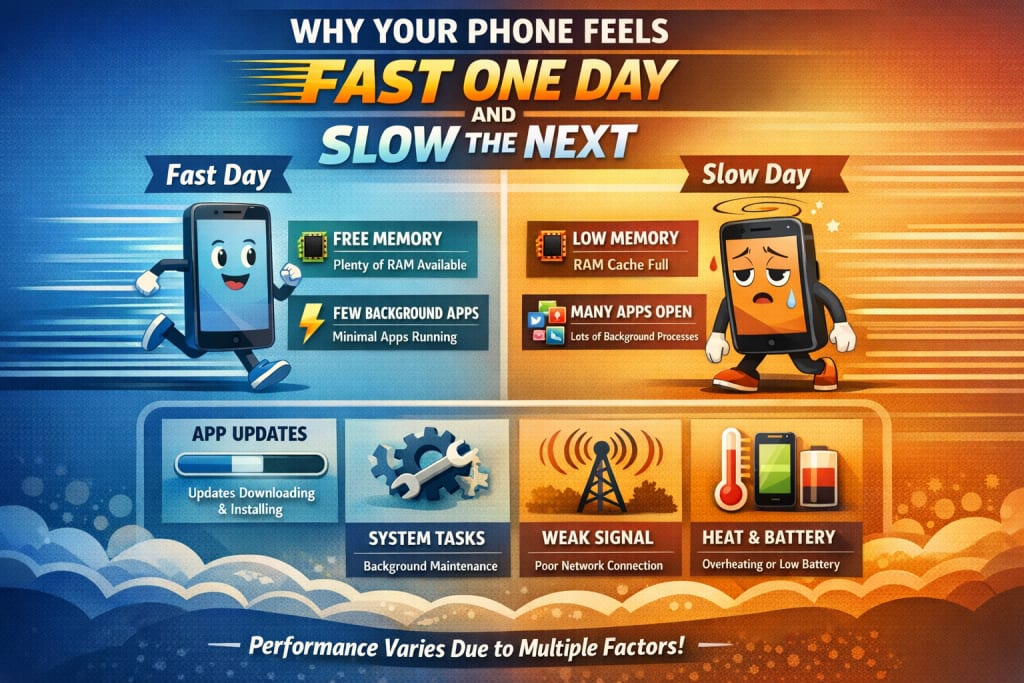
Some days, your phone feels perfect.
Apps open immediately.
Scrolling is smooth.
Everything responds the way you predict.
Then, the next day—sometimes the very next morning—it feels odd.
Apps hesitate.
Animations stutter.
The keyboard develops late.
Nothing changed.
No update.
No fresh applicants.
So why does the same phone operate like two independent devices?
This isn’t fantasy, and it isn’t technical failure.
It’s how modern electronics respond continuously to shifting conditions.
Phones Don’t Run at One Fixed Speed
Most people assume phones have a single performance level.
They don’t.
Modern cellphones adjust performance minute by minute based on:
temperature
battery condition
background activity
network behavior
recent use patterns
What you sense as “fast” or “slow” is the outcome of these traits varying throughout the day.
Background Tasks Change Daily Behavior
Your phone does distinct tasks on various days.
Some days it’s quiet.
Other days it’s frenetic behind the scenes.
Background responsibilities include:
photo backups
cloud syncing
app updates
data indexing
system maintenance
If multiple of these processes run simultaneously, the phone appears slower—even if you’re doing the same thing as yesterday.
The phone isn’t weaker.
It’s multitasking more.
Heat Cycles Affect Performance More Than People Realize
Heat doesn’t only come from games.
It arises from:
charging poor signal
background syncing
heavy camera processing
extended screen-on time
If your phone ran warmer yesterday, today it may operate more carefully to protect itself.
That leads to:
lower peak performance
gentler animations
delayed app launches
This protective reflex could linger for hours—even after the phone cools.
Battery State Changes System Decisions
Phones manage battery levels differently.
At increasing battery percentages:
performance is more versatile
background tasks run freely
At lower or strained battery states:
the system becomes conservative
power-hungry activities are delayed
responsiveness may diminish somewhat
This is why your phone may feel amazing in the morning and sluggish by evening—without anything being “wrong.”
Network Conditions Create Hidden Load
Network quality affects performance more than people predict.
When the signal is intermittent, phones:
retry connections
switch going across networks
keep radios active longer
That increased work competes with foreground tasks.
So if:
you’re inside one day
traveling the next
traveling between places
Performance could appear inconsistent—even with the same usage.
Apps Don’t Behave the Same Every Day
Apps are not static.
They:
refresh content
sync data
respond to notifications
update background services
Some days, multiple programs wake up simultaneously.
Other days, they stay mute.
When multiple programs demand attention at once, the phone feels slower—not because it is sluggish, but because it’s busy.
Memory management shifts constantly.
Modern phones aggressively manage memory.
They decide:
which applications remain ready
which applications get stopped
some tasks are delayed
If memory demand is high one day and low the next, app switching feels significantly different.
This provides the illusion of random performance changes.
Why Restarting Feels Like a “Reset Button”
Restarting works because it:
stops all background tasks
clears temporary states
resets performance assumptions
cools the system
That’s why phones generally look speedy again after a restart.
But if daily behaviors don’t adjust, inconsistency returns.
Restarting treats the symptom, not the cause.
Why This Isn’t a Sign You Need a New Phone
Many folks upgrade because of inconsistency—not because of actual failure.
They think: “
My phone is unreliable now.”
In reality:
hardware is normally fine
software is adapting
Usage behaviors are changing
A new phone looks consistent at first because everything is fresh and quiet.
Over time, it learns, adapts, and behaves differently again.
What Actually Improves Consistency (Not Speed)
If you want your phone to feel consistently smooth, concentrate on removing variation—not adding power.
These habits help:
prohibit background activity for unused apps
avoid intense use while charging
minimize notification overload
giving the phone cooling breaks
guarantee stable network conditions whenever feasible
Consistency rises when stress is predictable.
The Key Mental Shift
Stop asking, “Why is my phone slow today?”
Start asking, “What is my phone dealing with today?”
Once you accept performance as transient, unhappiness drops—and trust returns.
Final Reflection
Phones don’t randomly change personalities.
They respond to heat, load, battery status, and background demands.
Fast days emerge when conditions are light.
Slow days come when everything heaps at once.
Your phone isn’t broken.
It’s adapting.
And once you get it, fluctuating performance stops being mysterious—and starts seeming controlled.
Disclaimer
This post describes my observations and general smartphone system behavior. Performance may vary dependent on device kind, software version, environment, and usage patterns.

About the Creator
abualyaanart
I write thoughtful, experience-driven stories about technology, digital life, and how modern tools quietly shape the way we think, work, and live.
I believe good technology should support life
Abualyaanart
Keep reading
More stories from abualyaanart and writers in The Swamp and other communities.
The Saddest Thing - The Billionaires Who Rule America Aren't Even Enjoying Themselves
This single post says more about our ruling class than a thousand policy papers. The saddest thing about today's system is that the men robbing the rest of us - sabotaging our economic prospects, our pensions, our access to affordable healthcare - are not even happy.
By Scott Christenson🌴5 days ago in The Swamp
10 Countries With the Most Billionaires in 2025–26: Where Does India Rank?
The world’s billionaires have always captured our imagination. From tech innovators to industrial moguls, these individuals don’t just hold immense wealth—they shape industries, influence economies, and sometimes even politics. But have you ever wondered which countries produce the most billionaires? And more importantly, where does India stand in this elite club in 2025–26?
By Aqib Hussainabout 24 hours ago in The Swamp




Comments
There are no comments for this story
Be the first to respond and start the conversation.