
Australia Energy Efficiency Retrofits Market 2026: Transforming Buildings Through Sustainable Upgrades
Government incentives and smart technologies are accelerating energy-efficient building modernization across Australia.

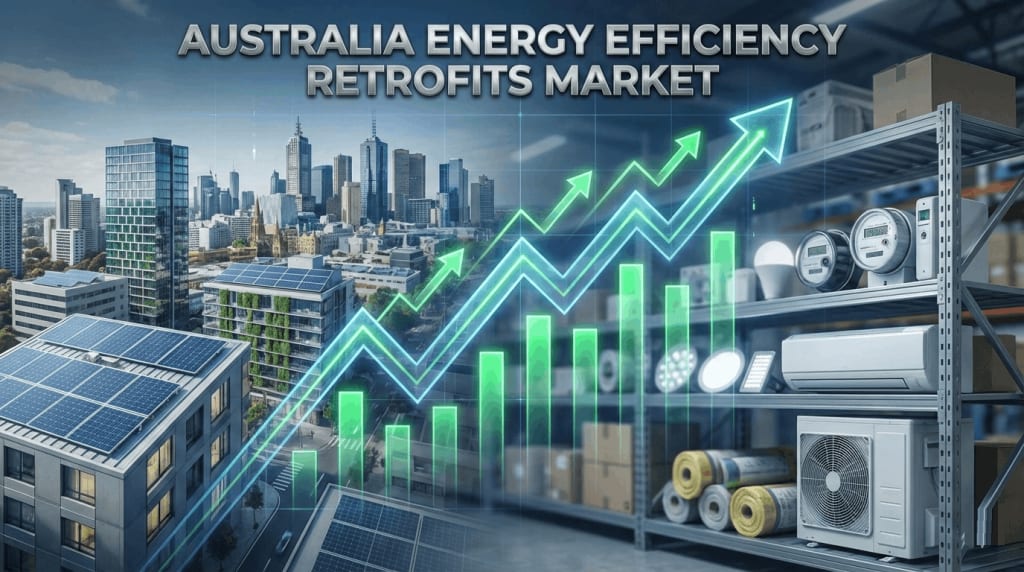
Australia Energy Efficiency Retrofits Market Overview
The Australia energy efficiency retrofits market size is expanding rapidly as property owners upgrade existing buildings to reduce energy consumption and operating costs. Energy efficiency retrofitting involves improving older residential, commercial, and institutional structures using modern insulation, efficient lighting, HVAC systems, and smart energy monitoring technologies. These upgrades enhance building performance while lowering carbon emissions and electricity usage.
The market reached approximately USD 2,599.2 million in 2025 and is projected to reach USD 5,146.2 million by 2034, growing at a compound annual growth rate (CAGR) of 7.89% during 2026-2034. Growth is driven by strict environmental regulations, rising electricity prices, and advancements in smart energy management systems that make retrofits more practical and cost-effective.
Why the Market Is Growing So Rapidly
Government policies are one of the strongest growth drivers. Regulations encouraging energy-efficient buildings and financial incentives such as grants and subsidies are motivating homeowners and businesses to upgrade aging infrastructure. These programs reduce upfront investment costs and accelerate adoption across multiple sectors.
Increasing energy prices are also encouraging property owners to improve efficiency. By upgrading insulation, lighting, and climate control systems, buildings can significantly lower energy bills while maintaining comfort and operational efficiency.
Technological advancements are further accelerating the market. Smart meters and energy monitoring systems allow real-time tracking of electricity usage, enabling consumers to identify inefficiencies and optimize consumption. Automation systems, efficient HVAC equipment, and high-performance materials make retrofits more effective than ever.
Environmental awareness is another major factor. Businesses and institutions are adopting sustainability practices to reduce emissions and meet climate targets. Retrofitting is often more affordable and faster than constructing new energy-efficient buildings, making it a preferred solution for achieving carbon reduction goals.
Request a Sample Report with the Latest 2026 Data & Forecasts
What the Opportunities Are
1. Residential Energy Upgrade Programs:
Homeowners are increasingly investing in efficient insulation, LED lighting, and modern appliances to reduce long-term electricity expenses.
2. Commercial Building Modernization:
Offices, shopping centers, and hospitality buildings require efficient climate control and lighting systems to reduce operational costs and meet sustainability certifications.
3. Smart Meter Deployment:
Real-time monitoring systems allow energy optimization and open opportunities for energy-management service providers.
4. HVAC Replacement and Optimization:
Replacing outdated heating and cooling systems with efficient alternatives represents one of the largest retrofit investment areas.
5. Renewable Energy Integration:
Solar panels and battery storage combined with efficiency retrofits create complete energy management solutions for buildings.
6. Public Infrastructure Upgrades:
Schools, hospitals, and municipal facilities are adopting efficiency retrofits to lower government operating expenses and emissions.
7. Green Financing and Loans:
Low-interest financing programs encourage adoption by reducing upfront costs for building owners.
8. Industrial Facility Efficiency Improvements:
Manufacturing facilities benefit from efficient motors, automation, and monitoring technologies that improve productivity while lowering energy use.
9. Carbon Reduction Initiatives:
Companies seeking sustainability certification and net-zero targets rely on retrofits to meet environmental commitments.
Recent News & Developments
February 2025: The Australian Government announced the first round of the Community Energy Upgrades Fund, providing $50 million in grants to 58 local governments for efficiency improvements in community buildings. Projects include solar installations, electrification upgrades, and EV charging infrastructure designed to reduce long-term operational costs.
April 2025: Australia introduced the National Energy Performance Strategy supported by funding through 2026 to improve electrification, energy flexibility, and emission reduction. The initiative aims to lower power costs while strengthening grid reliability through large-scale retrofit adoption.
December 2025: The government launched a $1 billion Household Energy Upgrades Fund offering low-cost loans for rooftop solar systems, batteries, and energy efficiency improvements. The program is expected to assist over 110,000 households and potentially save families up to $1,600 annually on energy bills.
2026 (Ongoing Implementation): Nationwide rollout of smart meters continues following funding support to improve energy tracking, demand flexibility, and renewable integration. These upgrades enable consumers to manage consumption more efficiently and support grid stability as electrification increases.
Why Should You Know About the Australia Energy Efficiency Retrofits Market?
The Australia energy efficiency retrofits market highlights the global transition toward sustainable infrastructure. Instead of replacing buildings entirely, upgrading existing structures offers a practical and cost-effective solution to reduce emissions and energy expenses. These improvements help households save money while supporting national climate goals.
For businesses, the market offers opportunities in construction, smart technology, and renewable energy services. For investors, it represents steady growth supported by government policy and long-term energy demand. Understanding this market provides insight into how modern cities will evolve into efficient, low-carbon environments powered by intelligent infrastructure.
About the Creator
Amyra Singh
Market research analyst who loves spotting patterns, digging into data, and turning insights into strategies that help brands grow and stay ahead of the curve.
Keep reading
More stories from Amyra Singh and writers in Trader and other communities.
Australia Veterinary Healthcare Market 2026: Advancing Animal Health Through Modern Care and Technology
Australia Veterinary Healthcare Market Overview The Australia veterinary healthcare market size is experiencing steady growth as animal health becomes an increasing priority for households, livestock owners, and veterinary professionals. Veterinary healthcare includes therapeutics, diagnostics, preventive treatments, and surgical procedures designed to maintain animal well-being. With pets increasingly considered family members and livestock health directly affecting food production, veterinary services have become an essential part of the healthcare ecosystem.
By Amyra Singhabout 23 hours ago in Trader




Comments
There are no comments for this story
Be the first to respond and start the conversation.