
Australia Ferrous Scrap Recycling Market Set to Surge as Sustainable Steel Demand and Policy Support Intensify
Australia’s ferrous scrap recycling industry is growing steadily, driven by decarbonization goals, construction demand, and advanced processing investments — projected to nearly double in value by 2034.

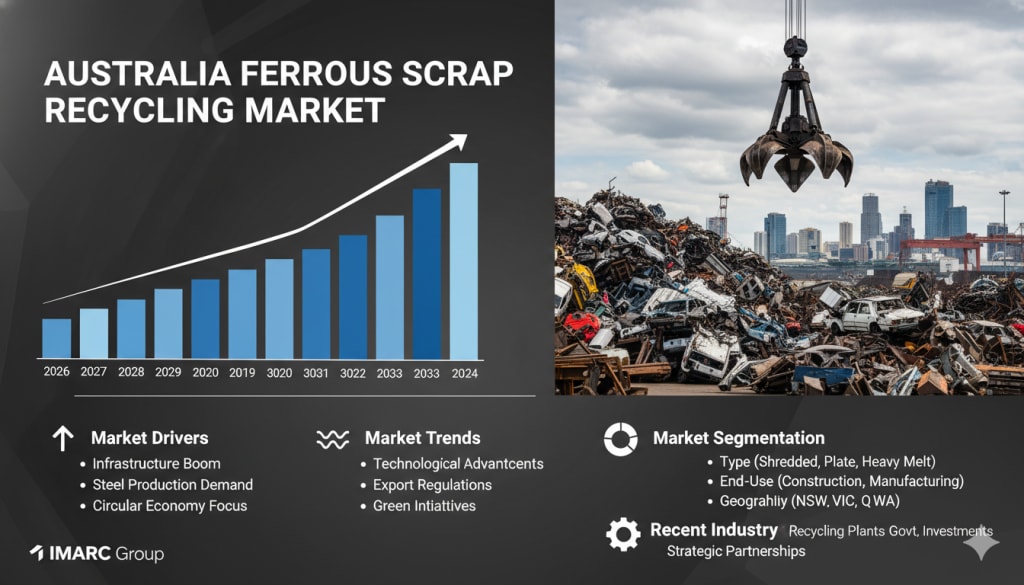
The Australia ferrous scrap recycling market reached USD 4.6 Million in 2025 and is forecast to grow to USD 7.6 Million by 2034, expanding at a CAGR of 5.85% during 2026–2034.
This strong growth is rooted in Australia’s shifting industrial landscape, where sustainability, circular economy principles and the need for cost-effective steel production are driving demand for recycled ferrous inputs. The market is evolving from waste disposal toward a strategic supply chain component for domestic steelmakers and manufacturing sectors.
Why the Market Is Growing So Rapidly
One of the most critical drivers of growth in the Australia ferrous scrap recycling market is the transition toward sustainable steelmaking technologies. Traditional steel production using blast furnaces is energy-intensive and carbon-heavy, but electric arc furnace (EAF) technology — which uses up to 100% recycled scrap — is becoming the preferred choice for steel fabrication in Australia. This has increased the strategic value of ferrous scrap as a primary feedstock for domestic steel mills.
This shift is reinforced by government policy and investment. In 2025, the Commonwealth announced significant investment plans aimed at decarbonizing heavy industries and supporting domestic steel production. These measures include substantial grants to accelerate new capabilities in sustainable steel applications, including wind tower steel fabrication and other advanced manufacturing uses. Policy signals like these are shaping long-term demand for recycled ferrous materials across the industrial value chain.
Regulatory frameworks are also encouraging local recycling over export of raw waste. A federal ban on unprocessed waste exports has forced a structural shift toward domestic processing of scrap, supporting investments in shredding, sorting and advanced material recovery equipment. These changes are enhancing the capacity and quality of ferrous scrap output in Australia while strengthening local supply networks.
Environmental pressures — including landfill constraints in major cities — further elevate the importance of ferrous recycling. With metropolitan waste capacity nearing critical limits, policymakers and private stakeholders alike are seeking alternatives that reduce landfill burden and minimize embodied carbon in materials. Circular procurement and resource recovery policies across several states reinforce this trend.
Finally, structural demand from construction and manufacturing sectors is adding momentum. As Australia invests in infrastructure renewal, urban regeneration, and industrial expansion, demand for cost-effective, sustainable steel and metal components rises. Recycled ferrous metals are increasingly preferred over virgin materials because they reduce both costs and environmental footprints, making them attractive to developers and industrial buyers alike.
What the Opportunities Are
The forecast expansion of the ferrous scrap recycling market presents several compelling business and investment opportunities:
1. Vertically Integrated Supply Chains: Recyclers can collaborate with regional steel producers to establish integrated supply chains that deliver high-quality scrap feedstock directly to EAF furnaces, reducing logistics costs and improving material traceability.
2. Green Infrastructure Projects: Australia’s burgeoning infrastructure program offers recyclers opportunities to supply recycled ferrous materials for bridges, rail systems and urban builds, particularly where government green procurement policies reward recycled content.
3. Advanced Processing Technologies: Continued investment in sensor-based sorting, electromagnet separation, and automated recovery systems can increase scrap quality and enable recyclers to target higher-margin applications, such as precision machine parts and aerospace components.
4. Specialized Alloy Production: Partnerships with research institutions and manufacturers can unlock new market segments for specialty recycled alloys tailored to electric vehicle components, renewable energy structures, and high-performance industrial uses.
5. Export-Ready Recycled Products: While raw scrap export bans limit exports of unprocessed material, there is scope to create value-added recycled products for export — such as shredded, sorted, and certified ferrous recyclates — tapping into regional demand in Asia Pacific.
6. Regulatory Compliance Consulting: As environmental regulations tighten, providers of compliance and lifecycle assessment services can advise recyclers and end users on ESG reporting, carbon accounting, and sustainability certification.
7. Community and Municipal Programs: Local councils and waste managers can collaborate with recyclers to establish ferrous collection networks, diverting metal waste from landfills while strengthening feedstock availability.
Recent News & Developments in Australia Ferrous Scrap Recycling
January 2025: The domestic recycling landscape expanded with the announcement of a new processing plant in Canning Vale, Western Australia focused on recovering and processing ferrous and non-ferrous metals into specialty alloys for industrial clients in Australia, Japan, Korea and Southeast Asia. This facility is expected to enhance regional scrap recovery capacity and supports export-oriented value creation.
August 2025: Sims Ltd., a Sydney-based recycling company, signed a memorandum of understanding to supply scrap to the planned Alter Steel mill in Queensland. The new mill — centered on recycled-content EAF production — signals a shift toward domestic steel fabrication using high volumes of recycled ferrous input, illustrating how partnership models are reconfiguring supply chains.
October 2025: The Australian government introduced enhanced decarbonization targets for the steel and recycling sectors, aligning public procurement guidelines with circular economy outcomes. The updated policy framework includes tax incentives for processed scrap use in public infrastructure projects, aiming to increase certified recycled content by over 20% in government contracts.
Why Should You Know About Australia Ferrous Scrap Recycling?
The Australia ferrous scrap recycling market is more than a niche waste-handling sector — it is a strategic enabler of sustainable industrial transformation. Investors, businesses, and policymakers should pay attention because:
• Industrial decarbonization is reshaping traditional metal value chains, creating new demand for sustainable feedstock.
• Domestic policy support — from export bans to procurement mandates — is aligning private investment with circular economy goals.
• Infrastructure and manufacturing growth ensures ongoing demand for recycled ferrous components.
• Technological advancement in recycling processes enhances competitiveness and opens high-value downstream opportunities.
In an era where environmental sustainability and economic resilience are paramount, ferrous scrap recycling is emerging as both an economic growth vector and an essential contributor to Australia’s net-zero ambitions.
About the Creator
Rashi Sharma
I am a market researcher.
Keep reading
More stories from Rashi Sharma and writers in Trader and other communities.
Australia Industrial Air Blowers Market: Steady Industrial Growth and Efficiency Drive Demand
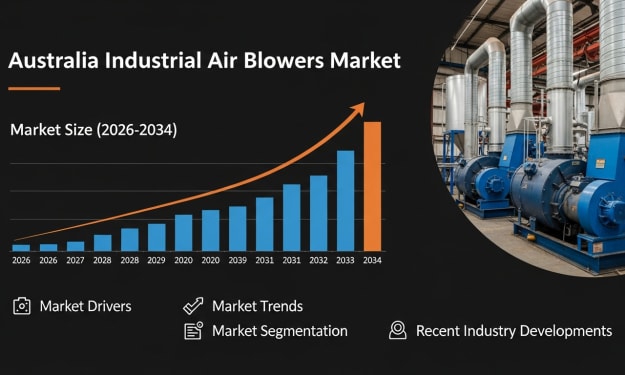
The Australia industrial air blowers market is witnessing consistent growth as key industrial sectors — including wastewater treatment, chemical processing, food and beverage, and mining — adopt more efficient air movement solutions to optimise performance, reduce energy costs and improve environmental compliance. According to the latest IMARC Group analysis, the market was valued at USD 114.05 million in 2025 and is forecast to reach USD 155.88 million by 2034, showing a steady compound annual growth rate (CAGR) of 3.53% between 2026 and 2034.
By Rashi Sharma9 days ago in Trader
Google Stock Analysis: Is Alphabet Still a Dominant Force in the Digital Economy?
Introduction Google stock has long been considered a pillar of the technology sector, driven by its dominance in online search, digital advertising, and data-driven innovation. Operated under its parent company Alphabet Inc., Google has built a vast ecosystem that touches billions of users daily. For investors, Google stock represents exposure to the backbone of the modern digital economy, but questions remain about how future growth will evolve in an increasingly competitive and regulated environment.
By Hammad Nawazabout 24 hours ago in Trader
Philippines Online Food Delivery Market 2026: Powered by Digital Adoption and Changing Consumer Habits
Philippines Online Food Delivery Market Overview The Philippines online food delivery market size is emerging as a high-growth segment within the country’s digital economy, offering consumers unprecedented access to convenient, app-based meal ordering and delivery services. According to the latest IMARC Group analysis, the market was valued at USD 4.8 billion in 2025 and is projected to expand to USD 11.3 billion by 2034, registering a compound annual growth rate (CAGR) of 9.71 % between 2026 and 2034.
By Manisha Dixit5 days ago in Trader
The Tango Connection
I suppose I've become a writer so I wouldn't bore everyone to death telling them my stories. Reading them is reading. Not the same. There's rhythm. And timing and, most importantly, drama and suspense. Unless you have tremendous magnetism and an undeniable stage presence, there's no way you can engage an audience the way you can by writing your story. That's my opinion.
By Rene Volpi 4 days ago in Beat


Comments
There are no comments for this story
Be the first to respond and start the conversation.