
Australia Industrial Filtration Market Set to Almost Double to USD 1.95 Billion by 2034 as Environmental and Manufacturing Pressures Fuel Adoption
A detailed market analysis reveals drivers, segmentation trends, and strategic opportunities in Australia’s rapidly growing industrial filtration landscape.

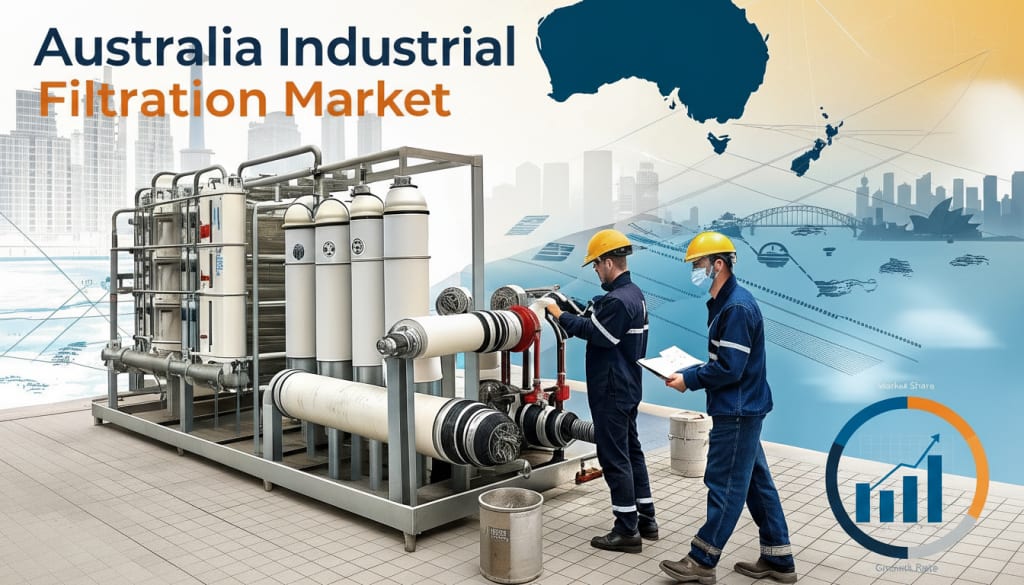
The Australia industrial filtration market is gaining strong traction as strategic sectors — from mining to manufacturing — intensify efforts to improve operational efficiency and meet tightening environmental compliance requirements. According to the latest IMARC Group analysis, the market reached USD 1,064.6 million in 2025 and is expected to grow to USD 1,946.7 million by 2034, displaying a healthy compound annual growth rate (CAGR) of 6.73% from 2026 to 2034.
Industrial filtration systems — covering both liquid and air filtration — are increasingly deployed to remove contaminants, control emissions, protect equipment, and purify process fluids in industrial settings. The market’s robust growth reflects a confluence of regulatory, technological, and sector-specific pressures that are reshaping demand for filtration solutions across Australia’s economy.
Why the Market Is Growing So Rapidly
A decisive driver of growth in the industrial filtration market is the implementation of stringent environmental regulations and compliance measures. Regulatory bodies in Australia, such as state-level environmental protection authorities, have tightened standards for industrial emissions and wastewater discharge — compelling manufacturers to install advanced filtration systems to remain compliant and avoid penalties. Industries like chemicals, power generation, and mining, traditionally high in particulate and effluent output, are increasingly investing in high-efficiency particulate air (HEPA) filters, membrane filters, and electrostatic precipitators to meet regulatory benchmarks.
The expansion of mining and resource extraction activities — a core pillar of the Australian economy — has also significantly bolstered the demand for industrial filtration solutions. Mining operations require robust filtration to manage dust suppression, prevent equipment breakdowns, and purify water used in mineral processing. With global demand for resources such as iron ore, lithium, and coal remaining strong, Australian mining companies are expanding extraction and processing activities, thus increasing their reliance on sophisticated air and liquid filtration systems.
Another growth vector is the adoption of advanced manufacturing technologies and automation across Australian industrial sectors. Industry 4.0 practices — including robotics, IoT-enabled systems, and smart factory implementations — require high levels of air and liquid purity to protect sensitive equipment and processes. Sectors like pharmaceuticals, food and beverage, electronics, and automotive manufacturing are prioritizing clean production environments to ensure product quality and operational reliability. Filtration systems that integrate real-time monitoring and automated maintenance alerts are thus increasingly preferred as part of broader digital transformation strategies.
Structural shifts in the economic landscape, such as the rise of clean energy infrastructure and decarbonization efforts, further elevate filtration demand. Power plants, chemical facilities, and industrial plants are investing in advanced filtration to manage emissions as part of broader sustainability commitments. This trend aligns with both corporate environmental responsibility goals and national policy frameworks aimed at minimizing industrial ecological footprints.
Lastly, the increasing focus on worker safety and industrial hygiene — especially in sectors with high levels of airborne particulates and liquid contaminants — has raised the importance of having reliable filtration systems. Improved filtration not only enhances compliance with occupational health standards but also supports productivity by reducing equipment downtime and maintenance costs.
What the Opportunities Are
The Australia industrial filtration market presents multiple value creation paths for businesses, technology providers, and investors:
1. Advanced Filtration Technologies Adoption: With stringent performance requirements, manufacturers that offer cutting-edge solutions like high-efficiency membrane filtration, electrostatic precipitators, and ULPA filters can secure premium positioning.
2. IoT-Enabled and Smart Filtration Solutions: Integrating sensors and digital monitoring tools into filtration systems enables predictive maintenance, reduces downtime, and enhances system responsiveness — increasingly important in automated industrial environments.
3. Sector-Focused Customization: Tailored filtration systems for distinct applications — such as metal and mining, power generation, or chemical processing — allow suppliers to match performance criteria and compliance needs effectively.
4. Environmental Forward Filtration Products: Solutions emphasizing reduced environmental impact and energy efficiency can appeal to firms with eco-friendly commitments and sustainability targets, enabling shared value.
5. Aftermarket Services and Maintenance: Offering comprehensive service contracts, replacement parts, and performance optimization services can generate recurring revenue and strengthen client relationships.
6. Export Growth Strategies: Australian filtration manufacturers with globally competitive technology, particularly around air quality and emissions control, can explore export opportunities in other high-growth Asia Pacific markets.
7. Training and Compliance Support Services: As regulations evolve, consultancy on compliance, environmental best practices, and filtration system upgrades can provide significant business development avenues.
Recent News & Developments in Australia Industrial Filtration Market
• January 2025: Government Environmental Policy Rollout – Australia’s federal and state environmental agencies introduced enhanced emission and discharge monitoring requirements for industrial facilities. The new regulatory framework mandates tighter control of particulate and effluent outputs, prompting many plants to upgrade existing filtration systems with higher-efficiency units to comply and avoid fines.
• June 2025: Company Expansion and Product Showcase – Jingjin, a global industrial equipment provider, expanded its operations in Australia by presenting advanced filter press and industrial filtration technologies at IMARC 2025. This strategic move strengthened partnerships with local mining and manufacturing clients and broadened the availability of cutting-edge filtration solutions across key applications.
• September 2025: Operational Efficiency Milestones – Industry reports highlighted that facilities deploying smart-monitoring filtration systems reported up to 18% improvement in uptime and maintenance efficiency, showcasing how digitized filtration solutions are driving performance gains and strengthening market adoption of innovative technologies.
Why Should You Know About the Australia Industrial Filtration Market?
For investors, manufacturers, and policymakers, the Australia industrial filtration market represents a strategic intersection of environmental compliance, industrial modernization, and sustainable growth. With an expected rise from USD 1,064.6 million in 2025 to USD 1,946.7 million by 2034 and a CAGR of 6.73%, the sector underscores its importance across foundational industries.
Companies that innovate with high-performance, smart, and eco-efficient filtration systems are poised to capture significant market share. At the same time, regulatory bodies and industrial stakeholders can leverage filtration technology to align economic growth objectives with environmental stewardship and worker safety. As Australia continues to balance industrial expansion with sustainability goals, understanding this market’s dynamics is essential for informed decision-making and future-proof investment strategies.
About the Creator
Amélie Belle
Hi, I’m Amélie Belle—27, New York writer, lover of quiet moments and honest words. I share poetry and reflections on love, healing, and life’s small miracles. If my writing makes you feel seen, I’m exactly where I’m meant to be.
Keep reading
More stories from Amélie Belle and writers in Trader and other communities.
Australia Frozen Food Market Expected to Reach USD 8.3 Billion by 2034 as Convenience and Innovation Drive Demand
The Australia frozen food market is experiencing significant growth as consumer lifestyles shift toward convenience, quality, and variety in meal solutions. According to the latest IMARC Group data, the market reached USD 4.7 billion in 2025 and is projected to expand to USD 8.3 billion by 2034, representing a compound annual growth rate (CAGR) of 6.43% during 2026–2034.
By Amélie Belle2 days ago in Trader
Oracle Share Price Forecast: Should You Buy Now?
Oracle Share Price has been making waves as it reaches new levels in the market. Many investors are asking: is now the right time to buy, or is it too late? They will explore the factors driving Oracle Share Price, what to expect in the future, and strategies for making smart investment decisions.
By hamza mirza7 days ago in Trader
Stanislav Kondrashov on Airbus A350 and the Technical Importance of Advanced Materials
Long-haul aviation places demanding requirements on aircraft design. Extended flight times, high utilisation rates and strict safety standards require structures that are both lightweight and durable. The Airbus A350 has become one of the most recognised examples of how advanced materials are meeting those demands in contemporary aircraft engineering.
By Stanislav Kondrashov6 days ago in Trader
Part 2 Interview With Joe Patterson, Author Of Melanin Memoirs
This is my second interview with Joe Patterson. His 4th anniversary writing on Vocal will be in March 2026. He has one achievement on Vocal, The Other Foot. He has over 17,000 reads on Vocal since he started on Vocal in 2022. Joe Patterson is very creative poet and rapper. Joe is deep thinker and I feel it is reflected in his latest published book, Melanin Memoirs.
By Mariann Carroll5 days ago in Interview




Comments
There are no comments for this story
Be the first to respond and start the conversation.