
Australia’s Crane Market 2026: Infrastructure Expansion, Mining Demand and Advanced Lifting Technologies
How construction growth, resource sector activity and equipment innovation are driving Australia’s crane industry evolution


Australia Crane Market Overview
Australia’s crane market is witnessing steady growth as infrastructure investment, mining expansion and urban construction activities continue to reshape demand for heavy lifting solutions. Cranes play a critical role across construction, energy, transport and industrial projects, enabling efficient material handling and supporting complex engineering operations. As Australia advances large-scale infrastructure development and resource sector investments, crane utilisation remains central to project execution and operational productivity.
According to IMARC Group, the Australia crane market size reached USD 651.7 million in 2025 and is projected to grow to USD 1,069.8 million by 2034, exhibiting a compound annual growth rate (CAGR) of 5.49% during 2026–2034. Growth is supported by infrastructure development, mining activity expansion, renewable energy projects and adoption of advanced lifting technologies.
Key Market Drivers
Infrastructure Development and Public Investment
Government investment in transport networks, airports, bridges and rail systems is a major demand catalyst for crane deployment. Large infrastructure projects require reliable lifting solutions for material placement, structural assembly and equipment installation across diverse project environments.
Mining and Resource Sector Activity
Australia’s strong mining industry — particularly across Western Australia and Queensland — generates sustained crane demand for facility construction, equipment installation and ongoing maintenance operations in remote environments.
Urbanisation and High-Rise Construction
Population growth in metropolitan centres such as Sydney, Melbourne and Brisbane is driving high-rise residential and commercial construction, increasing utilisation of tower cranes, mobile cranes and specialised lifting solutions in dense urban environments.
Technological Advancements and Safety Requirements
The introduction of telematics, automation features and improved safety systems is enhancing crane performance and operational reliability. Contractors increasingly prioritise advanced equipment that supports productivity, monitoring and regulatory compliance.
Request a Sample Report with the Latest 2026 Data & Forecasts
What the Opportunities Are
Australia’s crane market presents significant opportunities as infrastructure investment, industrial activity and technological innovation continue to evolve.
Growth in Crane Rental and Fleet Services
Contractors increasingly favour rental models to reduce capital expenditure and maintain operational flexibility. Rental providers offering diverse equipment fleets, maintenance services and flexible contracts can capture rising demand across project-based construction environments.
Expansion of Renewable Energy Projects
Wind farm installations, solar infrastructure development and energy transition initiatives require heavy lifting equipment for turbine erection, structural assembly and logistics operations. This trend creates long-term opportunities for specialised crane providers.
Advanced Automation and Remote Operation Integration
Automation technologies, remote operation capabilities and predictive maintenance solutions are transforming crane utilisation. Equipment manufacturers and technology providers can capitalise on demand for intelligent lifting solutions that improve safety and operational efficiency.
Infrastructure Corridor and Regional Development Projects
Large regional infrastructure corridors, port expansions and industrial development zones present opportunities for sustained crane deployment across multiple project phases, supporting equipment suppliers and service providers.
Compact and High-Capacity Equipment Innovation
Urban construction constraints and complex industrial projects are driving demand for cranes combining compact footprints with high lifting capacities. Manufacturers offering versatile equipment tailored to varied site requirements can strengthen market competitiveness.
Collectively, these opportunities highlight a shift toward flexible ownership models, advanced technology integration and diversified application growth within Australia’s crane ecosystem.
Recent News and Developments
February 2026: The Australian government committed A$3.9 billion (US$2.76 billion) toward expansion of the Osborne submarine shipyard as part of the AUKUS program, supporting major heavy-lift construction requirements and long-term crane deployment across defence infrastructure projects.
January 2026: A modular housing factory announced in Adelaide will utilise 14 industrial robots and automated overhead crane systems capable of producing over 2,000 homes annually, highlighting increasing adoption of automated lifting solutions within construction manufacturing environments.
2025 Infrastructure Trend: Australia’s infrastructure pipeline reached approximately $242 billion in public investment, creating sustained demand for construction equipment and lifting machinery across transport, energy and housing developments nationwide.
2025 Industry Development: Legal proceedings linked to $28.8 million port upgrade works in South Australia underscored ongoing large-scale marine infrastructure activity requiring specialised lifting operations and construction equipment deployment.
Why You Should Know About the Australia Crane Market?
The Australia crane market reflects broader economic activity across construction, mining, energy and infrastructure sectors. As Australia continues investing in transport networks, urban development and resource projects, cranes remain indispensable for project delivery and industrial operations.
With projected growth to USD 1,069.8 million by 2034, supported by infrastructure investment, mining expansion and technological advancement, the sector presents meaningful opportunities for equipment manufacturers, rental providers and investors seeking exposure to heavy equipment markets.
As automation, sustainability and project scale continue to shape equipment requirements, Australia’s crane market is positioned for steady expansion while evolving toward more technologically advanced and service-oriented operating models.
About the Creator
Amyra Singh
Market research analyst who loves spotting patterns, digging into data, and turning insights into strategies that help brands grow and stay ahead of the curve.
Keep reading
More stories from Amyra Singh and writers in Trader and other communities.
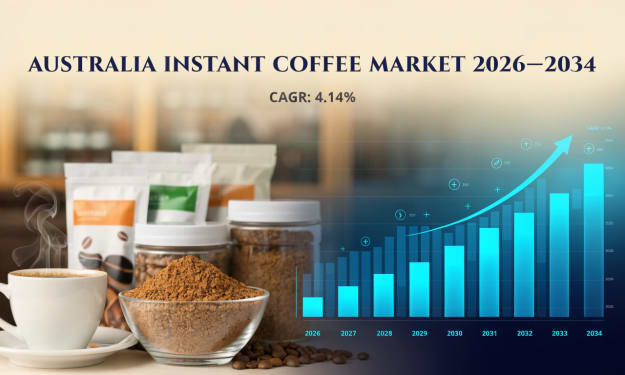
Australia’s Instant Coffee Market 2026: Convenience Culture, Premium Blends and Home Consumption Growth
Australia Instant Coffee Market Overview Australia’s instant coffee market continues to demonstrate steady expansion as convenience-led consumption, product innovation and omnichannel retail availability reshape consumer behaviour. Instant coffee has evolved beyond its traditional perception as a basic alternative to brewed coffee, emerging as a diversified category offering premium blends, specialty formats and single-serve innovations. As Australians increasingly balance strong café culture with rising at-home beverage preparation, instant coffee remains a practical and cost-effective solution for daily consumption.
By Amyra Singhabout 18 hours ago in Trader
Coinbase Secrets: Simple Strategies to Grow Your Crypto Profits
Coinbase is a popular platform for buying, selling, and storing digital coins. Many people start with Coinbase because it is simple and easy to use. If you want to grow your crypto profits safely, Coinbase provides tools and options to make trading easier and smarter. In this article, you will learn practical strategies to boost your earnings while managing risk effectively using Coinbase.
By John.doe7983 days ago in Trader
North America Salmon Fish Market Trends & Summary (2025–2033)
North America Salmon Fish Market at a Glance The North America Salmon Fish Market is entering a strong growth phase, reflecting changing consumer lifestyles, rising health awareness, and the rapid evolution of seafood supply chains. According to Renub Research, the market is expected to expand from US$ 6.22 billion in 2024 to US$ 12.33 billion by 2033, growing at a CAGR of 7.90% from 2025 to 2033.
By shibansh kumar5 days ago in Trader
Goodbye, Mr. Duvall
It is turning out to be an interesting year. I was in the middle of teaching a class when a pop-up appeared on the screen announcing the death of Mr. Robert Seldon Duvall (yes, that was his full name). I was in the middle of a discussion on the obsession we have with winning when it comes to sports (the Winter Olympics was a theme), and I felt as though things were coming full circle. We had already lost Gene Hackman last year, and along with that titan, it feels though one particular golden age has closed off to be replaced by...?
By Kendall Defoe 4 days ago in Geeks


Comments
There are no comments for this story
Be the first to respond and start the conversation.