
Australia’s Fast Food & Quick Service Restaurant Market 2026: Convenience Culture, Digital Ordering and Menu Reinvention
How urban lifestyles, delivery ecosystems and evolving consumer preferences are transforming Australia’s fast food and quick service restaurant landscape

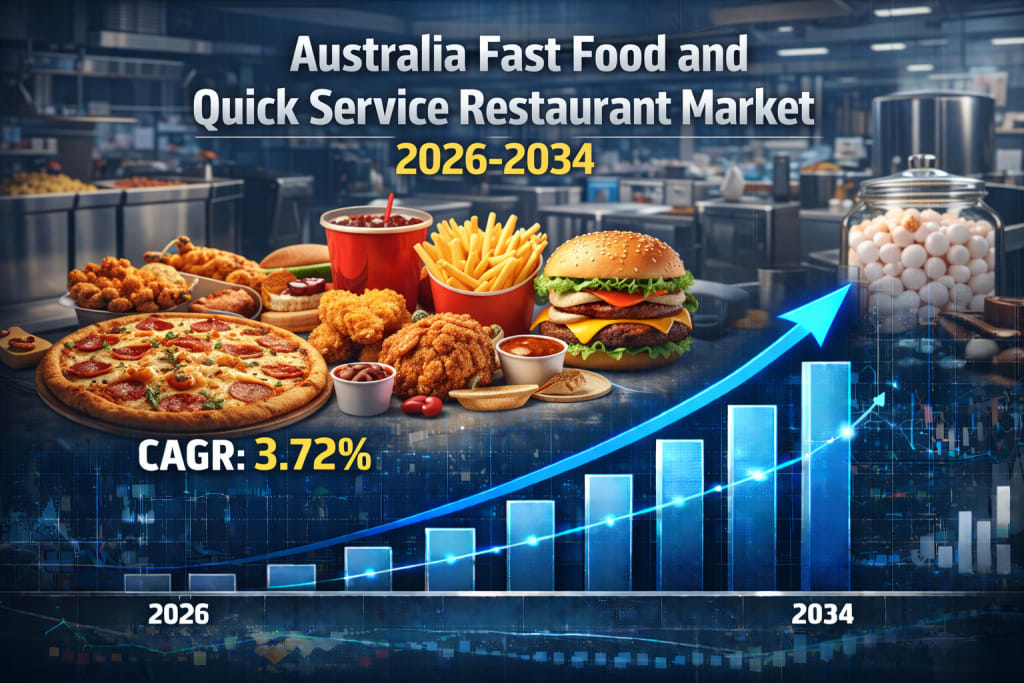
Australia Fast Food & Quick Service Restaurant Market Overview
Australia’s fast food and quick service restaurant (QSR) market remains a vital pillar of the country’s broader food service industry, catering to consumers seeking convenience, affordability and consistent dining experiences. The sector spans international franchise chains, domestic fast-casual brands and takeaway-focused operators, all competing to deliver speed without compromising quality. As modern consumers increasingly balance busy schedules with dining expectations, QSR operators are redefining offerings through digital ordering, menu innovation and expanded service formats.
The Australia fast food and quick service restaurant market size reached USD 5.5 billion in 2025 and is projected to grow to USD 7.7 billion by 2034, exhibiting a compound annual growth rate (CAGR) of 3.72% during 2026–2034. Growth is largely driven by rising convenience demand, urban living trends, increasing disposable incomes and evolving consumer lifestyles.
Key Market Drivers
Convenience-Led Consumer Behaviour
Fast food and QSR formats align closely with time-constrained lifestyles, offering quick meal preparation, accessible pricing and standardised product quality. Urbanisation and increased workforce participation continue to reinforce reliance on convenient dining options.
Expansion of Delivery and Takeaway Ecosystems
The growth of takeaway and delivery models represents a defining market trend. Operators are optimising menus for transport, investing in packaging innovation and partnering with third-party platforms to expand customer reach beyond dine-in environments.
Menu Diversification and Health-Driven Innovation
Changing consumer expectations are prompting QSR brands to broaden menus with plant-based alternatives, fresh ingredients and customised meal options. This evolution enables operators to appeal to broader demographic segments while retaining speed and affordability positioning.
Rising Disposable Income and Urban Population Density
Higher disposable incomes and dense metropolitan populations are encouraging increased frequency of fast food consumption, strengthening demand across major Australian cities and suburban regions.
Request a Sample Report with the Latest 2026 Data & Forecasts
What the Opportunities Are
Australia’s QSR sector presents substantial opportunities as operators navigate digital transformation, competitive dynamics and evolving customer expectations.
Delivery-First and Cloud Kitchen Expansion
Delivery-optimised kitchens and hybrid service formats provide cost-efficient growth pathways, enabling brands to expand geographic coverage without heavy investment in physical storefront infrastructure. This model supports experimentation with virtual brands and niche cuisine concepts.
Premium Fast-Casual Positioning
A growing consumer segment seeks convenience combined with higher-quality ingredients and customisation. Premium fast-casual formats that blend speed with freshness, transparency and experiential store design can capture this demand and command stronger brand loyalty.
Technology-Enabled Operational Optimisation
Automation, AI-driven demand forecasting, self-service kiosks and digital queue management systems can improve operational efficiency, reduce labour pressures and enhance order accuracy. Technology adoption also enables deeper customer insights and targeted marketing strategies.
Retail Channel Extensions and Brand Ecosystem Growth
QSR brands are increasingly exploring packaged product launches in grocery retail channels, including sauces, frozen meals and ready-to-cook items. This omnichannel strategy expands consumer touchpoints and diversifies revenue streams.
Sustainability and Packaging Innovation
Environmental considerations present opportunities for eco-friendly packaging, waste reduction initiatives and responsible sourcing practices. Brands integrating sustainability into operations can strengthen consumer trust while aligning with regulatory and societal expectations.
These opportunities collectively highlight a shift toward a digitally integrated, experience-driven and sustainability-aware fast food ecosystem.
Recent News and Developments
January 2025: QSR operators strengthened digital ordering capabilities and delivery partnerships to capture continued growth in off-premise dining and convenience-focused consumption patterns.
March 2025: Industry analysis highlighted rapid store expansion across major chains, with hundreds of new outlets opening nationwide as brands pursued suburban growth and drive-through accessibility strategies.
August 2025: Market observers reported increasing movement of QSR brands into retail grocery categories, launching packaged products such as frozen meals and sauces to extend brand presence beyond restaurant locations.
October 2025: Restaurant groups accelerated investments in self-service kiosks, automation technologies and contactless payment systems to enhance operational efficiency and customer experience across outlets.
Why You Should Know About the Australia Fast Food & Quick Service Restaurant Market?
The Australia fast food and quick service restaurant market reflects evolving consumer lifestyles and the growing importance of convenience-led dining solutions. While affordability and speed remain foundational attributes, innovation in digital engagement, menu diversity and sustainability is redefining competitive positioning within the sector.
With market value projected to reach USD 7.7 billion by 2034, supported by urbanisation, delivery ecosystem growth and consumer demand for accessible dining, the industry offers steady opportunities for operators, investors and suppliers.
As digital ordering continues to expand, fast-casual concepts mature and operational technologies advance, Australia’s fast food and QSR market is positioned to remain a central and adaptive component of the country’s hospitality landscape.
About the Creator
Amyra Singh
Market research analyst who loves spotting patterns, digging into data, and turning insights into strategies that help brands grow and stay ahead of the curve.
Keep reading
More stories from Amyra Singh and writers in Trader and other communities.
Australia’s Confectionery Market 2026: Indulgence, Premiumisation and the Future of Sweet Innovation
Australia Confectionery Market Overview Australia’s confectionery market continues to demonstrate resilience and steady expansion, supported by strong consumer affinity for sweet treats across everyday consumption, celebrations and gifting occasions. The category encompasses chocolates, sugar confectionery, gums, jellies, mints and specialty products, all widely available through diverse retail channels. While indulgence remains central to consumption, the industry is increasingly adapting to shifting consumer priorities around health, sustainability and premium experiences.
By Amyra Singhabout 7 hours ago in Trader
Coca-Cola Stock Analysis: Is Coca-Cola Still a Reliable Dividend Growth Investment?
Introduction Coca-Cola stock has long been recognized as a staple for long-term investors seeking stability and income. As a leading global beverage company, The Coca-Cola Company operates in nearly every country and boasts one of the most recognizable brands worldwide. With a diversified portfolio of beverages and a consistent history of dividend growth, Coca-Cola stock continues to appeal to investors looking for a mix of stability, income, and moderate growth.
By Hammad Nawaz3 days ago in Trader


Comments
There are no comments for this story
Be the first to respond and start the conversation.