
Australia’s Food Service Market 2026: Dining Culture Evolution, Digital Ordering and Experience-Driven Growth
How tourism recovery, changing dining preferences and technology integration are reshaping Australia’s dynamic food service landscape

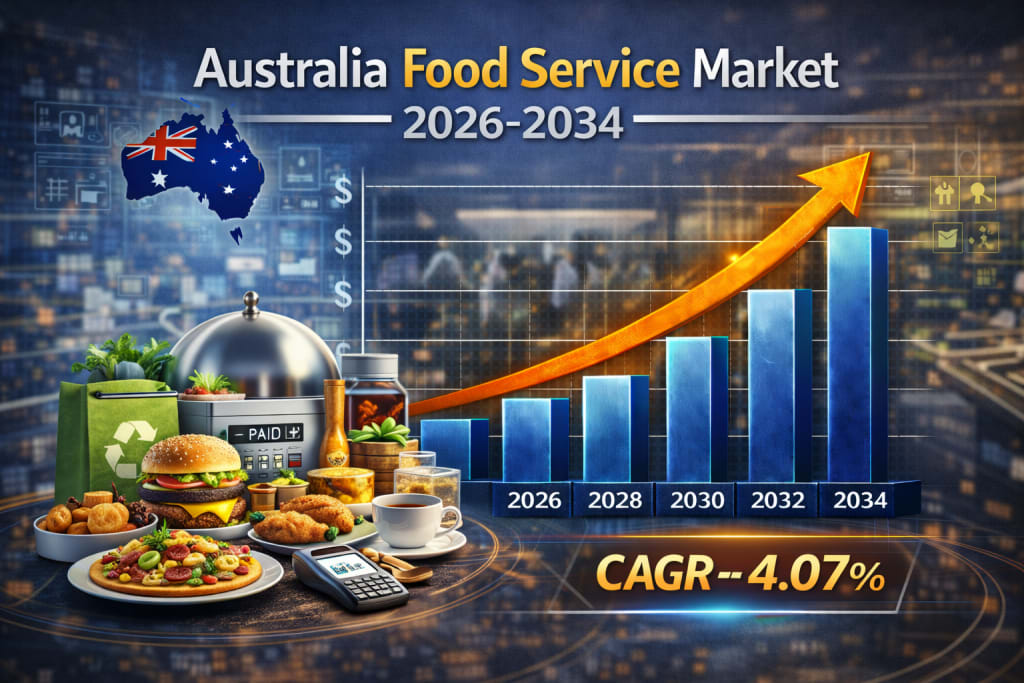
Australia Food Service Market Overview
Australia’s food service market continues to expand as dining habits evolve alongside broader lifestyle, tourism and technology trends. The sector — spanning restaurants, cafes, quick-service outlets, catering providers and delivery-focused kitchens — plays a central role in Australia’s hospitality ecosystem. Consumers increasingly view dining out as both a convenience and an experience, driving demand for diverse cuisines, premium ingredients and seamless service formats.
According to IMARC Group, the Australia food service market size reached USD 90.1 billion in 2025 and is projected to grow to USD 130.4 billion by 2034, exhibiting a compound annual growth rate (CAGR) of 4.07% during 2026–2034. The growth trajectory reflects rising visitor volumes, menu innovation and increasing consumer preference for healthy and organic dining options.
Key Market Drivers
Tourism Recovery and Visitor Growth
The resurgence of domestic and international tourism is a major driver of food service demand across Australia. Tourist destinations, metropolitan hubs and regional attractions continue to see elevated restaurant footfall as travel rebounds, supporting industry revenue expansion.
Health-Conscious and Premium Dining Preferences
Australian consumers are placing greater emphasis on nutritional value, ingredient transparency and dietary inclusivity. This shift is encouraging restaurants and cafes to introduce plant-based meals, organic ingredients, gluten-free dishes and low-sugar alternatives, strengthening market growth.
Urban Lifestyle and Convenience Culture
Busy urban lifestyles are driving demand for convenient dining formats such as takeaway meals, quick-service restaurants and delivery-focused kitchens. Consumers increasingly seek fast yet high-quality food solutions that align with time constraints and modern routines.
Digitalisation and Online Food Ordering
Technology adoption — including mobile ordering, digital payments, delivery platforms and integrated loyalty programs — is transforming customer engagement. Digital ordering capabilities are enhancing accessibility, improving operational efficiency and expanding customer reach for food service operators.
Request a Sample Report with the Latest 2026 Data & Forecasts
What the Opportunities Are
Australia’s food service market presents extensive opportunities across multiple strategic dimensions as operators respond to evolving consumer expectations and competitive pressures.
Expansion of Experiential Dining Concepts
Consumers increasingly seek immersive dining experiences that combine ambiance, storytelling and culinary creativity. Themed restaurants, chef-driven concepts, pop-up dining events and destination restaurants offer opportunities for differentiation and premium pricing.
Growth of Delivery-Optimised and Cloud Kitchen Models
Delivery-first formats and ghost kitchens are gaining traction as cost-efficient operational models. Brands can expand geographic reach without heavy investment in physical storefronts, allowing experimentation with new cuisines and digital-only brands.
Premiumisation and Specialty Cuisine Development
The growing willingness of consumers to spend on unique culinary experiences creates opportunities for premium dining offerings, including fine dining, fusion cuisine, regional specialty menus and artisanal food concepts.
Integration of Technology and Data-Driven Operations
Advanced analytics, AI-powered demand forecasting and digital customer engagement tools can help operators optimise inventory, personalise marketing and improve customer retention. Technology-driven operational efficiency will be a key competitive advantage.
Sustainability and Ethical Sourcing Initiatives
Restaurants that prioritise sustainable ingredients, local sourcing, waste reduction and eco-friendly packaging can strengthen brand positioning among environmentally conscious consumers. Sustainability also offers opportunities for regulatory alignment and long-term cost optimisation.
Collectively, these opportunities indicate a shift toward a more innovative, digitally enabled and experience-focused food service ecosystem.
Recent News and Developments
January 2025: Several Australian restaurant groups introduced expanded plant-based menu offerings across metropolitan outlets, reflecting rising consumer demand for health-oriented and sustainable dining options.
March 2025: Food delivery platforms reported strong growth in order volumes across major Australian cities, prompting restaurants to invest further in digital ordering infrastructure and delivery-optimised kitchen operations.
July 2025: Tourism data indicated increased international visitor arrivals in key Australian destinations, contributing to higher restaurant occupancy and supporting revenue growth across hospitality establishments.
October 2025: Industry operators accelerated investments in automation technologies such as self-service kiosks, contactless payments and digital table ordering systems to enhance operational efficiency and customer experience.
Why You Should Know About the Australia Food Service Market?
The Australia food service market reflects broader shifts in consumer behaviour, urban lifestyles and digital adoption. Dining has evolved into a hybrid experience that blends convenience, social interaction and lifestyle expression, making food service one of the most dynamic segments within the hospitality sector.
With market value projected to reach USD 130.4 billion by 2034, supported by tourism recovery, health-driven consumption patterns and technological innovation, the sector presents compelling opportunities for restaurant operators, investors, suppliers and technology providers.
As experiential dining, delivery ecosystems and sustainability initiatives continue to shape consumer expectations, Australia’s food service market stands positioned for steady and innovation-led growth within the global hospitality landscape.
About the Creator
Amyra Singh
Market research analyst who loves spotting patterns, digging into data, and turning insights into strategies that help brands grow and stay ahead of the curve.
Keep reading
More stories from Amyra Singh and writers in Trader and other communities.
Australia Residential Battery Storage Market 2026: Powering Energy Independence Through Smart Home Solutions
Australia Residential Battery Storage Market Overview The Australia residential battery storage market size is rapidly evolving as households shift toward energy self-sufficiency and sustainable power usage. With the country already having one of the highest rooftop solar adoption rates in the world, homeowners are increasingly installing battery storage systems to store excess solar energy for later use. This transition enables households to reduce dependence on the electricity grid, improve resilience during outages, and better manage rising utility costs. As a result, residential battery storage is transforming from a backup power solution into a central component of modern home energy systems.
By Amyra Singhabout 10 hours ago in Trader
How to Analyze Stocks: A Beginner’s Guide to Fundamental and Technical Analysis
Introduction Analyzing stocks is a crucial skill for investors who want to make informed decisions in the stock market. Whether your goal is long-term investing or short-term trading, understanding both fundamental and technical analysis helps you identify opportunities and manage risk effectively.
By Hammad Nawaz4 days ago in Trader
Part 2 Interview With Joe Patterson, Author Of Melanin Memoirs
This is my second interview with Joe Patterson. His 4th anniversary writing on Vocal will be in March 2026. He has one achievement on Vocal, The Other Foot. He has over 17,000 reads on Vocal since he started on Vocal in 2022. Joe Patterson is very creative poet and rapper. Joe is deep thinker and I feel it is reflected in his latest published book, Melanin Memoirs.
By Mariann Carroll6 days ago in Interview




Comments
There are no comments for this story
Be the first to respond and start the conversation.