
Australia’s Retail Bags Market: Sustainability, Policy Shifts & Consumer Demand
Exploring how environmental policy, changing retail behaviour, and rising sustainability awareness are reshaping the retail bags landscape in Australia

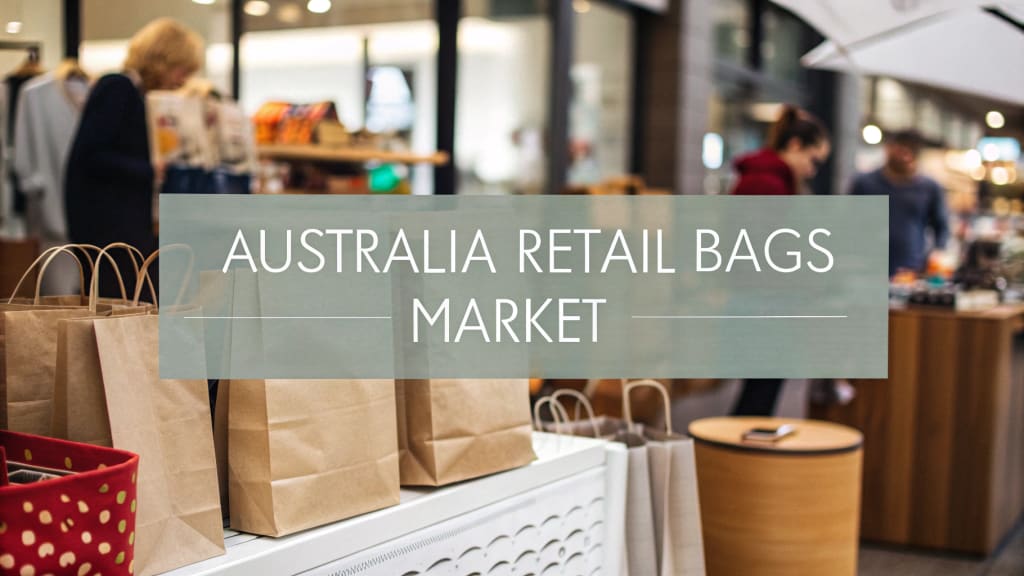
Australia Retail Bags Market
The Australia retail bags market is undergoing meaningful transformation as consumer behavior, regulatory mandates, sustainability initiatives and retail innovation drive a shift in demand patterns. The Australia retail bags market size reached USD 374.1 Million in 2025. Looking forward, IMARC Group expects the market to reach USD 587.4 Million by 2034, exhibiting a growth rate (CAGR) of 5.14% during 2026-2034.
This growth signals that the retail bags industry — once dominated by inexpensive, single-use plastic bags — is being redefined by sustainable alternatives, reusable solutions, higher-value packaging and evolving retail commitment to circular economy principles.
What’s Driving Market Growth
1. Regulatory Push and Sustainability Mandates
Australia’s environmental policy landscape has increasingly focused on reducing single-use plastics, improving recyclability and encouraging reusable packaging formats. Federal and state governments are implementing measures that restrict problematic plastics, incentivise recycled content, and promote the adoption of sustainable retail bags.
This regulatory momentum is pushing retailers and brands to shift toward reusable, recyclable, biodegradable and compostable bag formats — effectively boosting demand for alternative materials and higher-quality products.
2. Retailer Initiatives and Consumer Awareness
Leading supermarket chains, specialty retailers and fashion brands in Australia are actively promoting reusable bags and responsible packaging. Initiatives such as paid reusable bags, loyalty rewards for sustainable choices, in-store recycling stations and branded totes are encouraging shoppers to adopt durable alternatives over single-use options.
At the same time, increasing consumer awareness about environmental issues — including plastic waste, marine pollution and carbon footprint — is influencing purchase behavior. Many shoppers now prefer reusable or recyclable retail bags as part of their broader lifestyle choices.
3. E-Commerce Growth and Packaging Innovation
The rapid growth of online retail has created demand not only for traditional retail bags but also for ecommerce-friendly packaging solutions — including sustainable mailer bags, padded bags made from recycled materials and paper bags optimized for shipping protection.
E-commerce retailers and marketplaces are responding by investing in packaging that balances durability, branding appeal and environmental performance — a shift that is broadening the definition of “retail bags” beyond in-store carry bags alone.
Request a Sample Report with the Latest 2026 Data & Forecasts
What the Opportunities Are
The retail bags market offers several promising business, investment and innovation opportunities:
1. Premium Reusable Bag Solutions
Branded reusable bags — crafted from cotton, canvas, jute or recycled polyester — can command higher prices and reinforce retailer sustainability commitments. Premium reusables also enhance brand visibility and customer recall.
2. Sustainable Materials & Circular Supply Chains
Companies that invest in recycled content, biodegradable materials or compostable bag solutions can align with regulatory targets and corporate ESG goals. Partnerships with recycling facilities and circular-economy-enabled material streams create long-term differentiation.
3. E-Commerce-Optimized Packaging
Innovation in e-commerce-ready retail bags — such as padded recyclable mailers, tear-resistant printed bags, and branded sustainability-certified packaging — allows companies to expand beyond traditional in-store bags into high-growth online segments.
4. Retailer Transition & Advisory Services
Supporting retailers with product selection, compliance advice, sourced materials and labelling solutions (for recyclability claims) helps lower adoption barriers and speeds transitions from single-use plastics to sustainable alternatives.
5. Regional & Local Production Hubs
Local manufacturing and regional distribution hubs can reduce lead times, support quick replenishment, attract quality control benefits, and tap into growing regional demand — especially outside major cities.
Recent News & Developments in Australia Retail Bags Market
Jul 2025: The Australian Packaging Covenant Organisation (APCO) released updated implementation guidance for the 2025 National Packaging Targets, providing retailers with structured roadmaps to adopt reusable and recyclable bag solutions — accelerating supply-chain transitions.
Mar 2025: National supermarket chains expanded reusable bag programs, introducing certified recycled-content options and increasing the price tier for premium reusable fabric bags — boosting consumer uptake and margin opportunities for bag suppliers.
Sep 2025: Fashion and specialty retailers partnered with local designers to launch limited-edition reusable bags, merging sustainability credentials with lifestyle and fashion appeal — pointing to the role of branding and limited drops in premiumizing the retail bags category.
Why Should You Know About Australia Retail Bags Market?
You should know this market because it is where environmental policy, consumer behavior and retail strategy converge — and that convergence is a source of durable demand and investable opportunity.
For investors and businesses, the retail bags sector showcases how regulatory mandates (like plastic bans and recycled content targets) can stimulate premiumization, product differentiation and new revenue avenues — not just cost substitution. The shift toward reusable solutions and sustainable materials is creating value at multiple points: from manufacturing and material sourcing to branded retail products and ecommerce packaging solutions.
For retailers, embracing sustainable retail bags isn’t only compliance—it’s a brand differentiator. It reinforces customer trust, aligns with conscious consumption and taps into broader lifestyle values. Recyclability credentials, certified materials and visible sustainability moves can increase loyalty among younger consumers, eco-aware households and trend-driven shoppers.
About the Creator
Amyra Singh
Market research analyst who loves spotting patterns, digging into data, and turning insights into strategies that help brands grow and stay ahead of the curve.
Keep reading
More stories from Amyra Singh and writers in Trader and other communities.
Australia’s Automotive Market: EV Adoption, Digitisation & Structural Growth
Australia Automotive Market Australia’s automotive market is navigating a period of transformation, driven by evolving consumer behavior, electrification, digital integration and broad structural shifts across manufacturing, retail and mobility services. The Australia automotive market size was valued at 1.22 Million Units in 2024. Looking forward, the market is expected to reach 2.50 Million Units by 2033, exhibiting a CAGR of 7.60% from 2025-2033.
By Amyra Singh2 months ago in Trader



Comments
There are no comments for this story
Be the first to respond and start the conversation.