
Australia Sterilization Equipment Market: Healthcare Demand, Infection Control & Technology Adoption
How hospital expansion, regulatory standards and medical device usage are shaping Australia’s sterilization equipment market

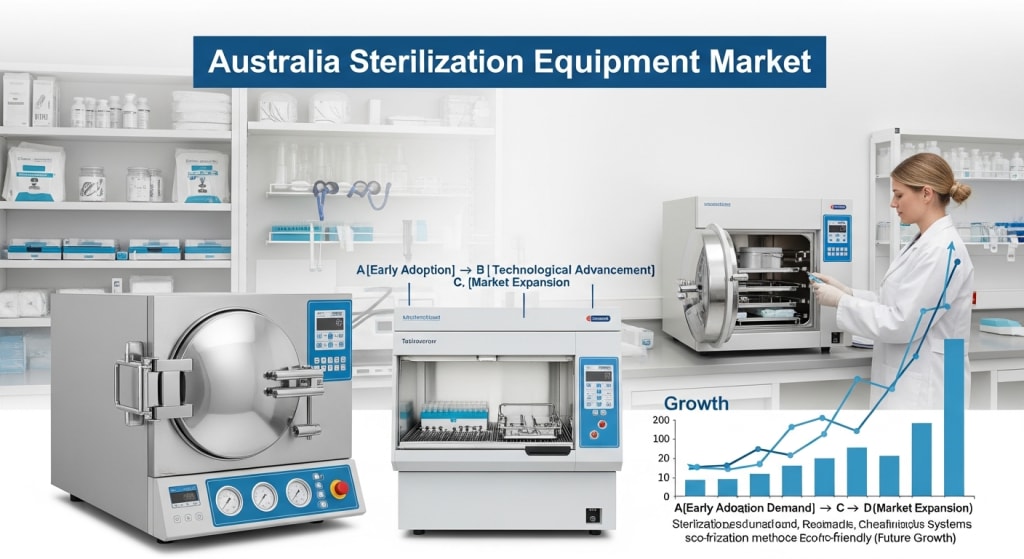
Australia Sterilization Equipment Market Overview
The Australia sterilization equipment market is developing steadily as healthcare facilities, laboratories and medical device manufacturers place increasing emphasis on infection prevention and patient safety. Sterilization equipment is used to eliminate microorganisms from medical instruments, surgical tools, laboratory equipment and pharmaceutical products. These systems play a critical role in maintaining hygienic environments and ensuring compliance with healthcare quality standards. The Australia sterilization equipment market growth reached USD 326.00 Million in 2024. Looking forward, IMARC Group expects the market to reach USD 690.69 Million by 2033, exhibiting a growth rate (CAGR) of 8.70% during 2025-2033. This growth reflects rising healthcare utilization, expansion of hospital infrastructure and continuous technological advancement.
Sterilization equipment includes steam sterilizers (autoclaves), low-temperature sterilizers, hydrogen peroxide systems, ethylene oxide sterilizers and radiation-based technologies. These systems are used across hospitals, clinics, dental practices, pharmaceutical manufacturing sites and research laboratories. As medical procedures become more complex and device-intensive, reliable sterilization processes become even more essential.
Driving Growth in the Australia Sterilization Equipment Market
One of the primary drivers of market growth is expansion of healthcare infrastructure. Australia continues to invest in hospital construction, facility upgrades and outpatient centers to meet growing demand. New and modernized facilities require advanced sterilization systems to support higher patient volumes and complex procedures.
Another important factor is rising surgical and diagnostic procedure volumes. An aging population and increasing prevalence of chronic diseases contribute to higher numbers of surgeries, endoscopic procedures and diagnostic tests, all of which rely on sterilized instruments.
Stricter infection control regulations further influence market expansion. Healthcare providers must comply with rigorous standards regarding sterilization validation, documentation and traceability. This encourages adoption of automated and digitally monitored systems that reduce human error.
Growth in medical device usage also supports demand. While single-use devices are common, many reusable instruments still require reliable sterilization. Increasing use of advanced instruments in minimally invasive surgery increases the need for low-temperature sterilization technologies.
Technological improvements, such as faster cycle times, better material compatibility and energy-efficient operation, make modern sterilizers more attractive to healthcare facilities seeking operational efficiency.
What the Opportunities Are
The Australia sterilization equipment market presents several attractive opportunity areas for manufacturers, service providers and healthcare technology suppliers.
1. Low-Temperature Sterilization Technologies
Demand is growing for systems that can safely sterilize heat-sensitive instruments, including endoscopes and delicate surgical tools. Low-temperature hydrogen peroxide and plasma-based technologies are gaining attention.
2. Automation and Digital Monitoring
Sterilizers integrated with software platforms enable real-time cycle tracking, automated documentation and compliance reporting. These features support workflow efficiency and regulatory adherence.
3. Energy-Efficient and Water-Saving Systems
Hospitals are increasingly focused on sustainability. Equipment designed to reduce energy and water consumption aligns with environmental goals.
4. Service, Maintenance and Validation Contracts
Ongoing equipment servicing, calibration and validation services create recurring revenue streams and improve customer retention.
5. Expansion in Dental and Outpatient Clinics
Smaller healthcare facilities require compact, cost-effective sterilization solutions that fit limited space.
6. Pharmaceutical and Laboratory Applications
Sterilization equipment used in drug manufacturing and research supports market diversification beyond hospitals.
Operational Considerations
High equipment acquisition costs can influence purchasing decisions, particularly for smaller facilities. Budget constraints may lead to phased equipment upgrades.
Proper installation, routine maintenance and staff training are essential to ensure reliable operation. Shortages of skilled technicians can affect servicing turnaround times.
Regulatory compliance requires extensive documentation and validation, adding administrative complexity.
Supply chain disruptions and component availability may impact delivery schedules.
Recent News & Developments in the Australia Sterilization Equipment Market
• Feb 2025: Several public and private hospitals announced modernization projects for central sterile processing departments. These projects focus on replacing older autoclaves with automated, digitally monitored systems to improve workflow and traceability.
• Jun 2025: Medical equipment suppliers introduced compact low-temperature sterilizers designed specifically for dental clinics and outpatient surgery centers. The systems emphasize faster cycle times and lower energy usage.
• Oct 2025: Industry tracking indicated a 14% year-on-year increase in sales of automated sterilization systems across Australian healthcare facilities, supported by hospital renovation and capacity expansion programs.
Why Should You Know About Australia Sterilization Equipment Market?
Understanding the Australia sterilization equipment market provides insight into how healthcare systems prioritize safety, quality and operational efficiency. The sector reflects ongoing investment in infection prevention and compliance with evolving standards.
For businesses, the market highlights opportunities in advanced technologies, digital integration and service-based offerings. For policymakers, it underscores the importance of maintaining strong healthcare infrastructure and regulatory frameworks. Overall, the sterilization equipment market demonstrates how science-driven technologies support public health and sustainable healthcare delivery.
About the Creator
Amyra Singh
Market research analyst who loves spotting patterns, digging into data, and turning insights into strategies that help brands grow and stay ahead of the curve.
Keep reading
More stories from Amyra Singh and writers in Trader and other communities.
Australia Vending Machine Market: Automated Retail, Cashless Payments & Location Expansion
Australia Vending Machine Market Overview The Australia vending machine market is evolving as automated retail solutions become an increasingly common part of everyday consumer purchasing. Vending machines provide quick access to snacks, beverages and convenience products across workplaces, transportation hubs, educational institutions and public spaces. The Australia vending machine market growth reached USD 428.0 Million in 2024. Looking forward, IMARC Group expects the market to reach USD 617.1 Million by 2033, exhibiting a growth rate (CAGR) of 4.15% during 2025-2033. This growth reflects rising demand for contactless purchasing, expansion of smart vending technologies and wider deployment across diverse locations.
By Amyra Singhabout 13 hours ago in Trader
Stanislav Kondrashov on the Shifting Role of the US Dollar Amid Historic Moves in Global Commodities
Gold has reached its highest recorded price, silver continues its upward climb, and the US dollar is showing signs of strain. These developments, unfolding simultaneously, suggest a deeper shift in how global currencies and commodities interact. According to Stanislav Kondrashov, economic analyst and founder of TELF AG, this moment reflects more than a typical market fluctuation.
By Stanislav Kondrashov6 days ago in Trader
The Illusion of Liquidity: A Forensic Review of ZSZRUN
In the decentralized era of finance, freedom is the primary selling point. We are told we can trade anywhere, anytime, with anyone. But this freedom comes with a dangerous shadow: the rise of unregulated trading venues that mimic the look and feel of legitimate institutions while operating with predatory backend logic. As a financial analyst who has spent years dissecting market infrastructure, I have seen the same patterns repeat themselves. Today, we need to have a serious conversation about ZSZRUN.
By AequiAssets4 days ago in Trader


Comments
There are no comments for this story
Be the first to respond and start the conversation.