
Best investments during war
The world did not wake up to peace this year. It woke up to sirens, sanctions, and shockwaves.

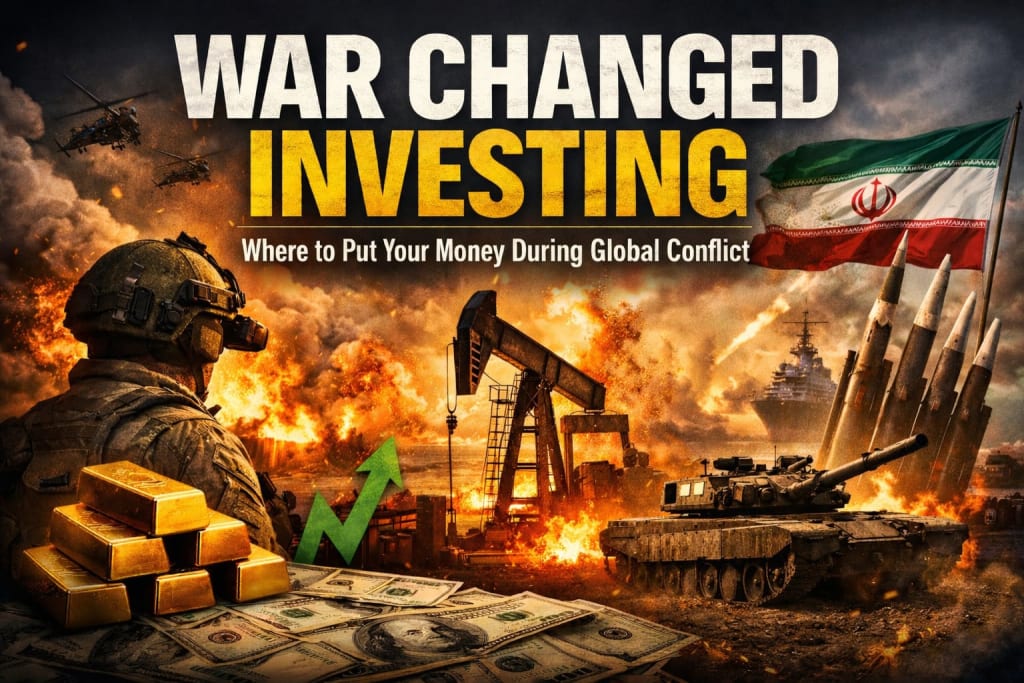
War Changed Investing
From Eastern Europe to the Middle East, conflicts are no longer distant headlines — they are market-moving events. And when investors talk about war today, one name dominates the conversation more than any other: Iran and the United States.
This is not just a military standoff.
This is an economic earthquake in slow motion.
The question is no longer “Will war affect markets?”
The real question is:
Where should money go when the world feels unsafe?
Chapter 1: Why War Changes Money Behavior
War does one thing immediately:
It creates fear and uncertainty.
When uncertainty rises, investors stop chasing dreams and start protecting reality.
Historically, during wars:
Risky assets lose trust
Defensive assets gain demand
Governments spend more
Inflation pressure increases
Energy and security become national priorities
This pattern has repeated for decades — from World War II to the Gulf War to modern proxy conflicts.
The Iran–U.S. tension magnifies this effect because:
Iran controls access near critical oil routes
The U.S. controls global financial influence
Sanctions disrupt supply chains instantly
Markets react before bombs fall.
Chapter 2: Asset #1 — Gold (The Fear Barometer)
Gold is not just a metal.
It is a psychological refuge.
Whenever war headlines intensify:
Central banks buy gold
Investors move money from volatile assets
Currency trust weakens
In real-time conflict scenarios, gold often reacts within hours, not days.
Investment Logic
Gold is not tied to one country
It performs well during inflation and war
It protects purchasing power
Time Horizon
Short to medium term (3–12 months)
Growth Expectation (Scenario-Based)
Calm headlines: slow, steady movement
Escalation news: sharp short-term spikes
Long wars: sustained upward pressure
Gold rarely explodes overnight — but it survives everything.
Chapter 3: Asset #2 — Energy (Oil & Gas)
If war had a heartbeat, it would sound like oil prices moving.
The Iran-U.S. conflict directly threatens:
Strait of Hormuz
Middle Eastern oil supply
Global shipping routes
Even rumors of disruption push prices higher.
Investment Logic
War increases military and logistics demand
Energy supply fears raise prices fast
Governments cannot function without fuel
Time Horizon
Short term (weeks) to medium term (6 months)
Growth Expectation
News-driven volatility
Sudden jumps on conflict escalation
Pullbacks when diplomacy headlines appear
Energy investments are not peaceful — but they are powerful during conflict.
Chapter 4: Asset #3 — Defense & Security Stocks
Wars do not reduce spending.
They redirect it.
Defense budgets rise quietly and consistently during global tensions.
Missiles, cybersecurity, drones, surveillance — none of these pause during negotiations.
Investment Logic
Governments sign long-term contracts
Defense companies gain predictable revenue
Spending continues even after wars end
Time Horizon
Medium to long term (1–3 years)
Growth Expectation
Slower than crypto
More stable than tech during crises
Compounding effect over time
Defense stocks don’t hype.
They execute.
Chapter 5: Asset #4 — Cash & Strong Currencies
Sometimes the smartest move is not moving at all.
During wars:
Liquidity becomes power
Cash allows fast decisions
Strong currencies act as shock absorbers
This is not about profit.
This is about positioning.
Investment Logic
Markets overreact during fear
Cash allows buying dips
Preserves capital during chaos
Time Horizon
Immediate to short term
Smart investors treat cash as a weapon — not weakness.
Chapter 6: What to Avoid During War Hype
Not everything that moves up is safe.
Historically risky during war panic:
Over-leveraged crypto trades
Meme stocks
Highly speculative startups
Emotion-driven decisions
War rewards patience, not gambling.
Chapter 7: The Truth About “Next-Day Profits”
Real wars don’t reward impatience.
Anyone promising:
Guaranteed daily percentages
Instant doubling
Risk-free war profits
…is selling hope, not strategy.
Real investors think in phases, not hours.
Final Chapter: The Real Lesson of War Investing
War does not create opportunity.
It reveals priorities.
Money flows where:
Safety matters
Survival is essential
Governments cannot compromise
Gold.
Energy.
Defense.
Liquidity.
These are not trends.
They are human reactions.
When the world feels unsafe, money stops chasing growth — and starts chasing survival.
And survival always comes first.
“In times of war, the smartest investment is not bravery — it is clarity.”
About the Creator
USA daily update
News, Politics, Technology Updates
Keep reading
More stories from USA daily update and writers in Trader and other communities.
Australia Asphalt Pavers Market: Paving the Way to USD 119M by 2033
The Australia asphalt pavers market is set on a steady growth trajectory, with current demand underpinned by ongoing infrastructure spending and increasing adoption of efficient, mobile paving solutions. According to the latest research from IMARC Group, the market was valued at USD 67.76 million in 2024 and is expected to reach USD 119.08 million by 2033, growing at a CAGR of 5.8% between 2025 and 2033.
By Rashi Sharmaabout 22 hours ago in Trader



Comments
There are no comments for this story
Be the first to respond and start the conversation.