
Digital Signage for Outdoor: Why Visibility, Durability, and Control Matter More Than Size
Digital Signage for Outdoor


Outdoor communication has always been about visibility. Billboards, storefront signs, transit boards, and street displays are designed to capture attention in high-traffic public spaces. But static signage struggles in environments where messaging changes quickly and conditions are unpredictable.
Digital Signage for Outdoor environments is not simply a larger version of indoor screens. It is a specialized communication system built for exposure, durability, and real-time control.
When implemented properly, outdoor digital signage becomes infrastructure combining hardware resilience with software agility to deliver consistent messaging in public environments.
Outdoor Signage Is About Environment First, Messaging Second
Indoor screens operate in controlled lighting and temperature conditions. Outdoor displays face sunlight glare, rain, dust, wind, and fluctuating temperatures. This changes everything.
Digital Signage for Outdoor deployments must consider:
- High-brightness displays for sunlight visibility
- Weather-resistant enclosures
- Temperature control systems
- Durable mounting and structural safety
Without these foundations, content quality becomes irrelevant. Outdoor signage begins with environmental readiness.
Real-Time Messaging in Public Spaces
Outdoor messaging often needs to adapt instantly. Retail storefronts change promotions daily. Municipal boards update public notices. Transit displays shift schedules in real time.
Static posters require printing and manual replacement. Digital Signage for Outdoor installations allow content to be updated remotely and instantly across multiple locations.
This capability is especially valuable in environments where speed of communication directly affects public response.
Location Strategy Determines Impact
Outdoor digital signage succeeds or fails based on placement. Unlike indoor environments, outdoor viewers are often moving walking, driving, or commuting.
Effective deployments consider:
- Viewing distance
- Traffic flow
- Dwell time
- Surrounding visual noise
Content must be concise, legible, and readable within seconds. Long text blocks are ineffective outdoors. Clarity and contrast matter more than design complexity.
From Advertising to Information Infrastructure
Historically, outdoor signage focused primarily on advertising. Today, Digital Signage for Outdoor environments supports broader use cases:
- Public service announcements
- Emergency alerts
- Community updates
- Event promotions
- Wayfinding in open spaces
In urban environments, outdoor digital signage often serves as a real-time information channel rather than a static promotional board.
Managing Outdoor Displays at Scale
One challenge unique to outdoor deployments is distribution. Screens may be located across cities, campuses, or transportation networks.
Digital signage platforms enable centralized management of distributed displays. Operators can schedule content, push updates, and monitor screen health remotely.
Platforms such as AIScreen are commonly used in outdoor environments because they allow operators to manage multiple displays from a single interface while maintaining uptime and content control.
The ability to monitor screens remotely reduces maintenance overhead and ensures consistency across locations.
Energy Efficiency and Operational Cost Considerations
Outdoor digital signage requires thoughtful energy management. High-brightness screens consume more power, especially during daylight hours.
Modern systems often include:
- Automatic brightness adjustment
- Scheduled operating hours
- Remote diagnostics
These features help balance visibility with energy efficiency, ensuring long-term sustainability.
Regulatory and Community Considerations
Outdoor digital signage must also comply with local regulations. Brightness levels, content restrictions, and placement rules vary by municipality.
Successful deployments align with zoning requirements and community standards. Clear governance policies ensure signage enhances public spaces rather than disrupting them.
This regulatory layer makes outdoor digital signage more complex than indoor installations but also more impactful when done correctly.
Industry Context
Outdoor and public-space digital signage continues to expand globally as cities and businesses adopt real-time communication systems.
For broader industry insights, Digital Signage Today provides coverage on outdoor and public digital signage applications:
What Makes Outdoor Digital Signage Effective
The effectiveness of Digital Signage for Outdoor environments depends on a balance of:
- Environmental durability
- Strategic placement
- Real-time content control
- Centralized management
- Regulatory compliance
When these elements align, outdoor digital signage becomes more than a display it becomes a reliable public communication channel.
Key Takeaways
Digital Signage for Outdoor environments requires more than a screen. It demands durability, brightness, remote control, and strategic placement.
When implemented thoughtfully, outdoor digital signage delivers timely information, supports public engagement, and scales across distributed locations without sacrificing reliability.
In high-visibility public environments, clarity and control are not optionalthey are essential.
About the Creator
AIScreen
AIScreen is a reliable, easy-to-use cloud-based digital signage software for managing content across industries affordable, scalable, and trusted worldwide.
Artificial Sweetener Market Size and Forecast 2025–2033: The Global Shift Toward Sugar-Free Living
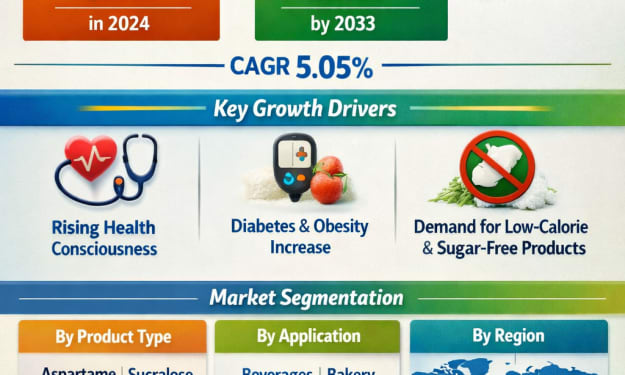
Artificial Sweetener Market Overview The global artificial sweetener market is undergoing a steady and transformative expansion as consumers increasingly move away from traditional sugar and toward healthier, low-calorie alternatives. According to Renub Research, the Artificial Sweetener Market is expected to reach US$ 10.86 billion by 2033, up from US$ 6.97 billion in 2024, growing at a CAGR of 5.05% from 2025 to 2033. This growth reflects a broader global shift in dietary habits, driven by rising health consciousness, increasing prevalence of lifestyle diseases, and strong demand for sugar-free and low-calorie food and beverage products.
By Sakshi Sharma3 days ago in Trader
Stanislav Kondrashov on AI’s Role in Software Volatility and Wall Street’s Shifting Centre of Gravity
Artificial intelligence is reshaping the balance of influence on Wall Street. But behind the headlines and corporate presentations, something more subtle is happening: the software sector—once a predictable driver of tech strength—is showing signs of strain.
By Stanislav Kondrashov4 days ago in Trader
I've Just Realized
The President doesn't understand music. There. It felt very good to write that; it's some thing I just realized today. Oh , yes; he plays it. He TRUMPets it in rallies and meetings, pumps it across the airwaves when he gathers up our minutes waiting for his late arrival.
By Judey Kalchik 5 days ago in Beat


Comments
There are no comments for this story
Be the first to respond and start the conversation.