
Global Candy Market Size, Trends, and Forecast 2025–2033: Sweet Growth Driven by Premiumization and Innovation
Rising demand for premium, sugar-free, and innovative confectionery products is reshaping the global candy industry as the market grows from USD 65.22 billion in 2024 to USD 93.07 billion by 2033.

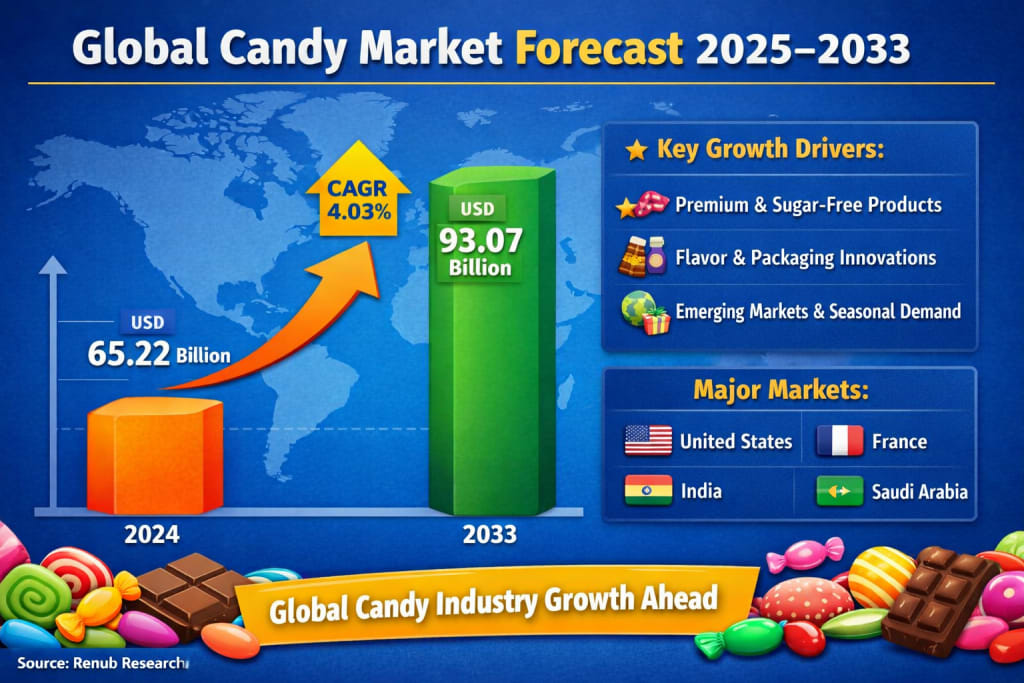
Global Candy Market Overview
The Global Candy Market is set for steady and resilient growth over the coming decade, reflecting the enduring appeal of confectionery across cultures, age groups, and income segments. According to industry estimates, the market is expected to expand from USD 65.22 billion in 2024 to USD 93.07 billion by 2033, registering a compound annual growth rate (CAGR) of 4.03% during the forecast period. This growth is being fueled by a combination of rising consumer demand for indulgent treats, continuous innovation in flavors and packaging, and the increasing popularity of premium and sugar-free alternatives.
Candy, in its many forms, has always been more than just a sweet snack. It is deeply embedded in global traditions, celebrations, and everyday moments of indulgence. From chocolates exchanged on Valentine’s Day to candies shared during festivals like Halloween, Christmas, Diwali, and Eid, confectionery plays a symbolic role in gifting, hospitality, and celebration. Beyond emotional and cultural value, candy also represents a significant segment of the global food and beverage industry, supporting large retail ecosystems, tourism, entertainment venues, and impulse-driven point-of-sale purchases.
The modern candy market is evolving rapidly. While traditional favorites continue to enjoy strong demand, consumers are increasingly drawn to premium, artisanal, organic, and health-conscious options. This shift is encouraging manufacturers to rethink product formulations, invest in new product development, and adopt more sophisticated branding strategies. At the same time, emerging markets, seasonal consumption patterns, and gifting trends are providing fresh momentum to the global confectionery industry.
What Is Candy and Why It Matters Globally
Candy is a sweet confection typically made from sugar, chocolate, or a combination of ingredients such as fruits, nuts, milk, and flavorings. It comes in a wide variety of forms, including hard candies, gummies, chocolates, caramels, toffees, jellies, mints, and licorice. This diversity allows candy to appeal to consumers across different age groups, taste preferences, and cultural backgrounds.
Worldwide, candy is consumed as a treat, a comfort food, and a celebratory item. It is often associated with happiness, reward, and sharing, which explains its strong emotional connection with consumers. In many cultures, offering sweets is a gesture of hospitality and goodwill. From wedding celebrations in Asia to holiday traditions in Western countries, confectionery plays a central role in social rituals.
In economic terms, the candy industry contributes significantly to the broader food and beverage sector. It supports large-scale manufacturing, packaging, logistics, marketing, and retail operations. With rising disposable incomes, expanding urban populations, and the globalization of brands, candy has become more accessible and more diversified than ever before.
Key Growth Drivers in the Global Candy Market
1. Growing Demand for Premium and Healthier Options
One of the most important trends shaping the global candy market is the shift toward premium and better-for-you products. Today’s consumers, particularly millennials and Gen Z, are more health-conscious than previous generations. They are seeking products that align with their wellness goals without completely giving up on indulgence.
This has led to a surge in demand for organic, low-sugar, sugar-free, gluten-free, and vegan candies. Brands are responding by reformulating products, introducing natural ingredients, and highlighting functional benefits such as added protein or reduced calories. For example, in April 2025, Hormbles Chormbles launched its first line of zero-sugar, high-protein candy bars, offering a 100-calorie product with 10 grams of protein as a healthier alternative within the confectionery space.
Premiumization is also playing a major role. Consumers are increasingly willing to pay more for high-quality ingredients, unique flavor combinations, artisanal production methods, and attractive packaging. This trend is particularly strong in developed markets but is also gaining traction in urban centers across emerging economies.
2. Expanding Middle-Class Population and Urbanization
The growth of the middle class in countries such as India, China, Brazil, and other emerging markets is significantly boosting candy consumption. As disposable incomes rise, consumers have more spending power for discretionary items, including confectionery products. Urbanization further amplifies this effect by improving access to organized retail, international brands, and modern shopping formats.
Urban lifestyles also encourage impulse buying, especially in supermarkets, convenience stores, and transit hubs. Eye-catching packaging, affordable price points, and strong brand recognition make candy an easy and frequent purchase. With more than half of the world’s countries now classified as middle-income, the long-term demand outlook for confectionery remains highly favorable.
3. Innovative Advertising and Seasonal Promotions
Marketing and branding play a crucial role in the candy industry. Creative advertising campaigns, social media promotions, influencer partnerships, and collaborations with pop culture franchises have significantly increased brand visibility and consumer engagement. Seasonal promotions tied to events like Halloween, Valentine’s Day, Easter, Christmas, Diwali, and Eid continue to generate sharp spikes in demand.
Limited-edition flavors, themed packaging, and festive gift packs create a sense of urgency and excitement among consumers. In February 2025, Tic Tac introduced a new marketing campaign for its product “Tic Tac Chewy!”, using short, creative videos set in different locations such as a courtroom, tattoo parlor, and biker bar to showcase the product’s broad appeal. Such campaigns demonstrate how storytelling and creativity can reinvigorate even well-established brands.
Challenges Facing the Global Candy Industry
1. Rising Health Concerns and Regulatory Pressure
Despite its popularity, the candy industry faces increasing scrutiny due to growing awareness of obesity, diabetes, and other lifestyle-related health issues. Governments in many countries are introducing stricter regulations, including sugar taxes, clearer nutritional labeling, and advertising restrictions, especially for products targeted at children.
These measures are pushing manufacturers to reformulate products and invest more in research and development. However, balancing taste, texture, shelf life, and cost while reducing sugar or using alternative ingredients is a complex and expensive process. Brands must carefully navigate this transition to meet both regulatory requirements and consumer expectations.
2. Supply Chain Disruptions and Raw Material Costs
The global candy market is also affected by fluctuations in the prices of key raw materials such as cocoa, sugar, and milk. Climate change, geopolitical tensions, and logistical bottlenecks can disrupt supply chains and create uncertainty in production planning. Rising input costs can squeeze profit margins or lead to higher retail prices, potentially impacting demand in price-sensitive markets.
Maintaining a stable and efficient supply chain has therefore become a strategic priority for major confectionery companies, especially those operating on a global scale.
Market Insights by Product and Channel
Global Chocolate Candy Segment
Chocolate candy continues to hold a dominant position in the global candy market due to its universal appeal and strong emotional connection with consumers. From milk and dark chocolate to white and filled varieties, chocolate is widely perceived as both an indulgent treat and a comfort food. The trend toward premium and artisanal chocolates, featuring unique ingredients such as sea salt, chili, and exotic fruits, is further enhancing the segment’s value.
Sustainability and ethical sourcing are becoming increasingly important, with many brands highlighting fair-trade cocoa and environmentally responsible practices. Chocolate’s strong association with gifting and holidays also ensures consistent demand across regions.
Global Hard Boiled Candy Segment
Hard boiled candies remain popular due to their long shelf life, affordability, and broad flavor range. They appeal to a wide demographic, offering both nostalgic value and everyday convenience. Innovations such as sugar-free versions and natural colorings are helping this segment stay relevant amid changing health trends. Their low production cost and easy distribution make them attractive for mass-market strategies, particularly in emerging economies.
Global Mints Candy Segment
Mints occupy a unique position as both a confectionery product and a functional breath freshener. They are commonly purchased for daily use, after meals, or during social interactions. Sugar-free and naturally flavored variants are gaining popularity, especially among health-conscious consumers. Compact, resealable packaging also supports on-the-go consumption and impulse buying, expanding their presence beyond traditional retail into travel and corporate channels.
Distribution Channels: Convenience Stores and Online Retail
Convenience stores play a critical role in driving candy sales, largely due to impulse purchases. Strategically placed near checkout counters, candy products benefit from high visibility and frequent consumer exposure. Small pack sizes and affordable price points further encourage quick buying decisions.
At the same time, online retail is transforming how consumers buy candy. E-commerce platforms provide access to a wider variety of products, including international and specialty items. Subscription boxes, personalized gift options, and exclusive online promotions are boosting digital sales. Improved user experiences, mobile shopping, and targeted digital marketing are expected to keep this channel growing rapidly.
Regional Market Highlights
United States
The United States remains one of the largest candy markets in the world, with strong consumption driven by holidays such as Halloween, Easter, and Christmas. American consumers are increasingly interested in premium, organic, and innovative flavors, alongside classic favorites. Health trends are also encouraging the growth of sugar-free and plant-based options. In November 2024, Swedish candy brand Goodis launched its U.S. online shop, making it easier for consumers to access its products nationwide.
France
France has a long-standing confectionery tradition focused on quality, craftsmanship, and refined taste. Premium chocolates and high-end sweets dominate the market, supported by strong seasonal demand during Christmas and Easter. The shift toward organic and sugar-free alternatives is also gaining momentum. Both domestic and international brands compete in this sophisticated and highly competitive market.
India
India’s candy market is expanding rapidly, driven by a large youth population, urbanization, and rising disposable incomes. Affordable pricing, innovative flavors, and strong appeal among children support growth. Traditional sweets are also being reimagined in modern candy formats. In August 2024, Mondelez India introduced “Cadbury Silk Desserts,” blending chocolate with cake-like fillings to tap into the premium indulgence segment.
Mexico
Mexico’s confectionery market is known for its distinctive flavors, including tamarind, chili, and tropical fruits. Cultural traditions, urbanization, and rising incomes are driving demand, while increasing health awareness is encouraging the development of low-sugar and fortified options. Local brands remain strong, though international players are gradually expanding their presence.
Saudi Arabia
Saudi Arabia’s candy market is benefiting from a young population, growing tourism, and expanding retail infrastructure, particularly in malls and airports. Candy consumption rises significantly during Ramadan and Eid, when sweets are commonly used for gifting and hospitality. Demand for premium and health-oriented products is also increasing, reflecting global trends.
Market Segmentation Snapshot
By Type:
Chocolate Candy
Non-chocolate Candy
Hard Boiled Candies
Pastilles, Gums, Jellies, and Chews
Toffees, Caramels, and Nougat
Mints
Other Non-chocolate Candies
By Distribution Channel:
Supermarkets/Hypermarkets
Convenience Stores
Specialist Retailers
Online Retail
Other Distribution Channels
By Region and Countries:
North America (United States, Canada)
Europe (France, Germany, Italy, Spain, United Kingdom, Belgium, Netherlands, Turkey)
Asia Pacific (China, Japan, India, Australia, South Korea, Thailand, Malaysia, Indonesia, New Zealand)
Latin America (Brazil, Argentina, Mexico)
Middle East & Africa (South Africa, Saudi Arabia, United Arab Emirates)
Competitive Landscape
Leading companies in the global candy market include Perfetti Van Melle Group, The Topps Company, Mondelez International, Haribo, Mars, Ferrero Group, Nestlé, The Hershey Company, Grupo Arcor, and Cloetta. These companies compete on the basis of brand strength, product innovation, distribution reach, and marketing capabilities. Their strategies typically focus on expanding product portfolios, entering new markets, improving sustainability practices, and responding to evolving consumer preferences.
Final Thoughts
The global candy market is on a steady growth path, supported by strong consumer demand, continuous product innovation, and expanding opportunities in both developed and emerging markets. While health concerns, regulatory pressures, and supply chain challenges present real obstacles, they are also driving the industry toward more sustainable, transparent, and consumer-friendly practices.
With the market projected to grow from USD 65.22 billion in 2024 to USD 93.07 billion by 2033 at a CAGR of 4.03%, the future of the candy industry looks both dynamic and resilient. Brands that successfully balance indulgence with health, tradition with innovation, and global scale with local relevance will be best positioned to capture the next wave of sweet growth in the global confectionery landscape.
About the Creator
Australia Fertilizer Market — Growth, Forecast & Strategic Outlook 2026–2034
The Australia fertilizer market continues to grow as agricultural producers increasingly adopt nutrient management solutions to boost crop productivity and soil fertility. According to IMARC Group, the market reached USD 2.8 billion in 2025 and is expected to grow to USD 3.9 billion by 2034, exhibiting a compound annual growth rate (CAGR) of 3.43% during 2026–2034.
By Rashi Sharma5 days ago in Trader




Comments
There are no comments for this story
Be the first to respond and start the conversation.