
Global Honey Market Size and Forecast 2025–2033: Sweet Growth in a Health-Conscious World
From natural sweeteners to wellness and beauty products, honey’s global appeal is reshaping food, pharma, and personal care markets

Introduction: Why Honey Is More Than Just a Sweetener
Honey is one of the oldest natural foods known to humankind, yet in 2026 it feels more relevant than ever. Made by bees from flower nectar, honey is valued not only for its rich taste and golden color but also for its impressive nutritional and medicinal profile. Packed with antioxidants, enzymes, and trace minerals, honey has long been used in traditional medicine, home remedies, and wellness diets across cultures.
Today, honey sits at the crossroads of several powerful global trends: rising health awareness, growing demand for natural and clean-label foods, and a consumer shift away from refined sugar. Beyond the kitchen, honey has found a firm place in cosmetics, personal care, and even pharmaceutical formulations thanks to its antibacterial, anti-inflammatory, and moisturizing properties.
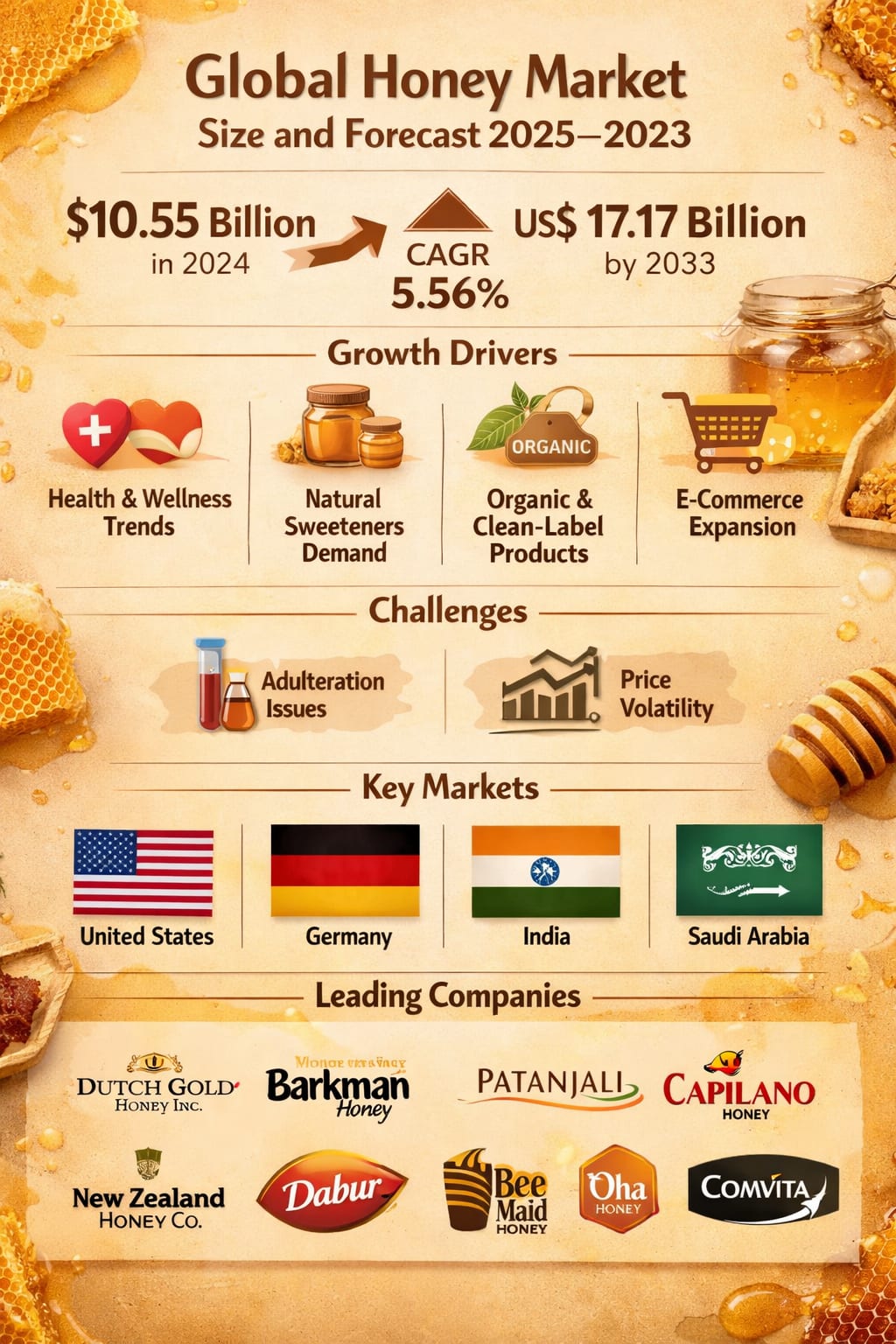
According to Renub Research, the global honey market is expected to reach US$ 17.17 billion by 2033, up from US$ 10.55 billion in 2024, growing at a CAGR of 5.56% from 2025 to 2033. This steady growth reflects not only rising consumption but also the expanding role of honey in multiple industries, from functional foods to beauty and wellness.
Global Honey Market Outlook: A Naturally Sweet Growth Story
The honey market’s growth story is being shaped by a combination of lifestyle changes, consumer preferences, and innovation in product offerings. As people become more conscious of what they eat and apply to their bodies, honey’s image as a “natural, wholesome, and functional” ingredient continues to strengthen.
Urbanization and rising disposable incomes, especially in emerging economies, are helping boost demand for premium and specialty honey varieties. At the same time, improvements in packaging, better branding, and the rapid expansion of e-commerce platforms are making honey more accessible to consumers worldwide.
Another important factor is diversification. The market is no longer limited to plain table honey. Today, consumers can choose from raw honey, organic honey, monofloral varieties like acacia or buckwheat, and even flavored or infused honey products such as hot honey or turmeric honey. This product innovation is helping brands reach new customer segments and increase per-capita consumption.
Key Growth Drivers Fueling the Honey Market
1. Health and Wellness Trends
One of the strongest engines behind the honey market is the global shift toward health and wellness. Consumers are actively searching for ingredients that offer functional benefits in addition to taste, and honey fits perfectly into this narrative. Its antioxidant, antibacterial, and anti-inflammatory properties make it a popular choice for boosting immunity, soothing sore throats, and supporting overall well-being.
With lifestyle diseases such as obesity, diabetes, and cardiovascular conditions on the rise, many people are trying to reduce their intake of refined sugar. While honey is still a sweetener, it is widely perceived as a more natural and less processed alternative. This perception, combined with its long history in traditional medicine and home remedies, continues to drive demand across both developed and developing markets.
2. Rising Demand for Natural Sweeteners
Another major growth driver is the increasing preference for natural sweeteners over artificial or heavily refined options. Consumers today are more aware of ingredient lists and are actively avoiding products with synthetic additives or high levels of refined sugar.
Honey’s natural origin, distinctive flavor profile, and added nutritional benefits make it a favored substitute in a wide range of applications, including baked goods, beverages, breakfast foods, and even savory recipes. The clean-label movement is also pushing food and beverage manufacturers to reformulate products using natural ingredients, further strengthening honey’s position in the global sweetener landscape.
3. Growth of Organic and Clean-Label Products
The surge in demand for organic and clean-label products is giving a strong boost to the honey market. Shoppers want transparency, traceability, and assurance that what they consume is free from harmful chemicals, pesticides, and artificial additives.
Organic honey, produced using sustainable beekeeping practices and without chemical interventions, aligns perfectly with these expectations. Raw and unprocessed honey varieties are also gaining popularity, especially among health-conscious consumers who prefer minimally processed foods. This trend is encouraging producers to invest in certification, quality control, and premium product lines, adding further value to the market.
Challenges Facing the Honey Market
Adulteration and Quality Concerns
Despite its positive growth outlook, the honey market faces a serious challenge in the form of adulteration. In many regions, honey is mixed with cheaper sugar syrups or artificial sweeteners, compromising both quality and nutritional value. This not only harms consumer trust but also damages the reputation of genuine producers.
Detecting adulteration requires advanced testing methods, which can be costly and difficult for small-scale beekeepers to access. Inconsistent regulations and enforcement across countries further complicate the issue. Strengthening certification systems, improving traceability, and increasing consumer awareness will be critical to maintaining confidence in honey products over the long term.
Price Fluctuations and Supply Uncertainty
Honey production is highly dependent on environmental factors such as climate conditions, bee health, and seasonal variations. Changes in weather patterns, disease outbreaks among bee populations, and habitat loss can all impact supply, leading to price volatility.
For producers, especially small and medium-sized beekeepers, these fluctuations create financial uncertainty and can discourage long-term investment. For consumers, sharp price changes may affect purchasing behavior. Building more resilient supply chains and supporting sustainable beekeeping practices will be essential to stabilizing the market.
Regional Market Highlights
United States Honey Market
The United States honey market continues to grow steadily, driven by strong demand for natural and health-oriented sweeteners. While conventional honey remains widely consumed, organic and specialty honey varieties are gaining traction among health-conscious consumers.
Supermarkets and hypermarkets remain the dominant distribution channels, but online sales are expanding rapidly as e-commerce becomes a preferred shopping option. Despite being a significant producer, the U.S. still relies heavily on imports to meet domestic demand, highlighting an ongoing supply-demand gap. Overall, wellness trends and clean-label preferences are expected to keep the U.S. market on a growth path.
Germany Honey Market
Germany is one of the largest and most sophisticated honey markets globally. Consumers here place a strong emphasis on quality, sustainability, and ethical sourcing, which drives demand for organic and fair-trade honey.
Although Germany has substantial domestic production, it still imports large volumes to satisfy growing consumption. Health food stores, supermarkets, and online platforms all play important roles in distribution. The country’s strong culture of healthy eating and transparency in food sourcing continues to support steady market expansion.
India Honey Market
India’s honey market is experiencing rapid growth, fueled by rising health awareness, urbanization, and increasing use of honey in both traditional and modern lifestyles. Honey is widely used in cooking, Ayurveda, home remedies, and as a sugar substitute, particularly among urban consumers.
The rise of e-commerce has made premium, raw, and organic honey more accessible across the country. Government initiatives supporting beekeeping and sustainable agriculture are also helping boost production. However, challenges related to adulteration and quality control remain key concerns. Even so, changing consumer preferences and greater awareness of honey’s health benefits point to strong long-term growth.
Saudi Arabia Honey Market
In Saudi Arabia, honey holds both cultural and culinary significance, ensuring consistent demand. The market is being further strengthened by rising health consciousness and a growing preference for natural sweeteners.
Consumers are increasingly seeking organic and pure honey products, reflecting a broader shift toward clean-label and chemical-free foods. E-commerce platforms are expanding access to a wide range of honey varieties, including premium and specialty products. Despite ongoing challenges related to quality control, the Saudi honey market is expected to continue growing on the back of lifestyle changes and wellness trends.
Recent Developments Shaping the Market
The honey market has seen a wave of innovation and product launches in recent years:
March 2025: Wisdom Natural Brands launched Drizzle Honey in the United States after acquiring the Canadian company. The range includes Golden Raw Honey, White Raw Honey, and Turmeric Gold Raw Honey, available through Fresh Thyme, Amazon, and the brand’s website. More products and retail expansions are planned, along with the launch of SweetLeaf Beverage Syrups with Collagen.
February 2025: Blue Diamond Almonds partnered with Mike’s Hot Honey to introduce Hot Honey Almonds, blending sweet and spicy flavors. Available on Amazon and in select Walmart stores, the product reflects consumers’ growing appetite for bold and innovative taste combinations.
May 2024: Rowse Honey reintroduced its limited-edition “Hot Honey” in the UK, available both online and in Waitrose stores. The spicy-sweet variant targets food enthusiasts looking for exciting flavor twists.
January 2024: Apis India Ltd. launched its Organic Honey, emphasizing ethical sourcing and sustainability. The move highlights the company’s focus on purity and environmentally responsible practices.
These developments show how brands are using innovation, flavor experimentation, and sustainability positioning to differentiate themselves in a competitive market.
Honey Market Segmentation Overview
By Type:
Alfalfa
Date
Buckwheat
Acacia
Clover
Linden
Others
By Application:
Food and Beverages
Personal Care and Cosmetics
Pharmaceuticals
Others
By Distribution Channel:
Supermarkets and Hypermarkets
Convenience Stores
Online Stores
Others
By Geography (25-Country View):
North America: United States, Canada
Europe: France, Germany, Italy, Spain, United Kingdom, Belgium, Netherlands, Turkey
Asia Pacific: China, Japan, India, Australia, South Korea, Thailand, Malaysia, Indonesia, New Zealand
Latin America: Brazil, Mexico, Argentina
Middle East & Africa: South Africa, United Arab Emirates, Saudi Arabia
Competitive Landscape: Key Players in Focus
The global honey market is moderately fragmented, with both large brands and regional producers competing on quality, sourcing, and branding. Companies are increasingly focusing on product differentiation, organic certification, and premium positioning.
Key players include:
Dutch Gold Honey Inc.
Barkman Honey LLC
Patanjali Ayurved Limited
Beeyond the Hive
Capilano Honey Ltd.
New Zealand Honey Co.
Dabur India Ltd.
Bee Maid Honey Limited
Oha Honey LP
Comvita Limited
These companies are analyzed across multiple dimensions, including company overview, key management, recent developments and strategies, SWOT analysis, and sales performance, reflecting the competitive and dynamic nature of the market.
Final Thoughts: A Golden Future for the Honey Market
The global honey market is on a sweet growth trajectory. With the market expected to rise from US$ 10.55 billion in 2024 to US$ 17.17 billion by 2033, and a CAGR of 5.56%, honey is proving that it is far more than just a traditional pantry staple.
Driven by health and wellness trends, the shift toward natural sweeteners, and the growing popularity of organic and clean-label products, honey is expanding its footprint across food, cosmetics, and pharmaceutical industries. While challenges such as adulteration and price volatility remain, increasing focus on quality, certification, and sustainable beekeeping offers a path toward a more transparent and resilient market.




Comments
There are no comments for this story
Be the first to respond and start the conversation.