
Global Skateboard Market Size and Forecast 2025–2033: Rolling Into a New Era of Urban Sports Culture
From street culture to Olympic recognition, the global skateboard market is gaining momentum as youth trends, innovation, and sustainability reshape the future of the sport.

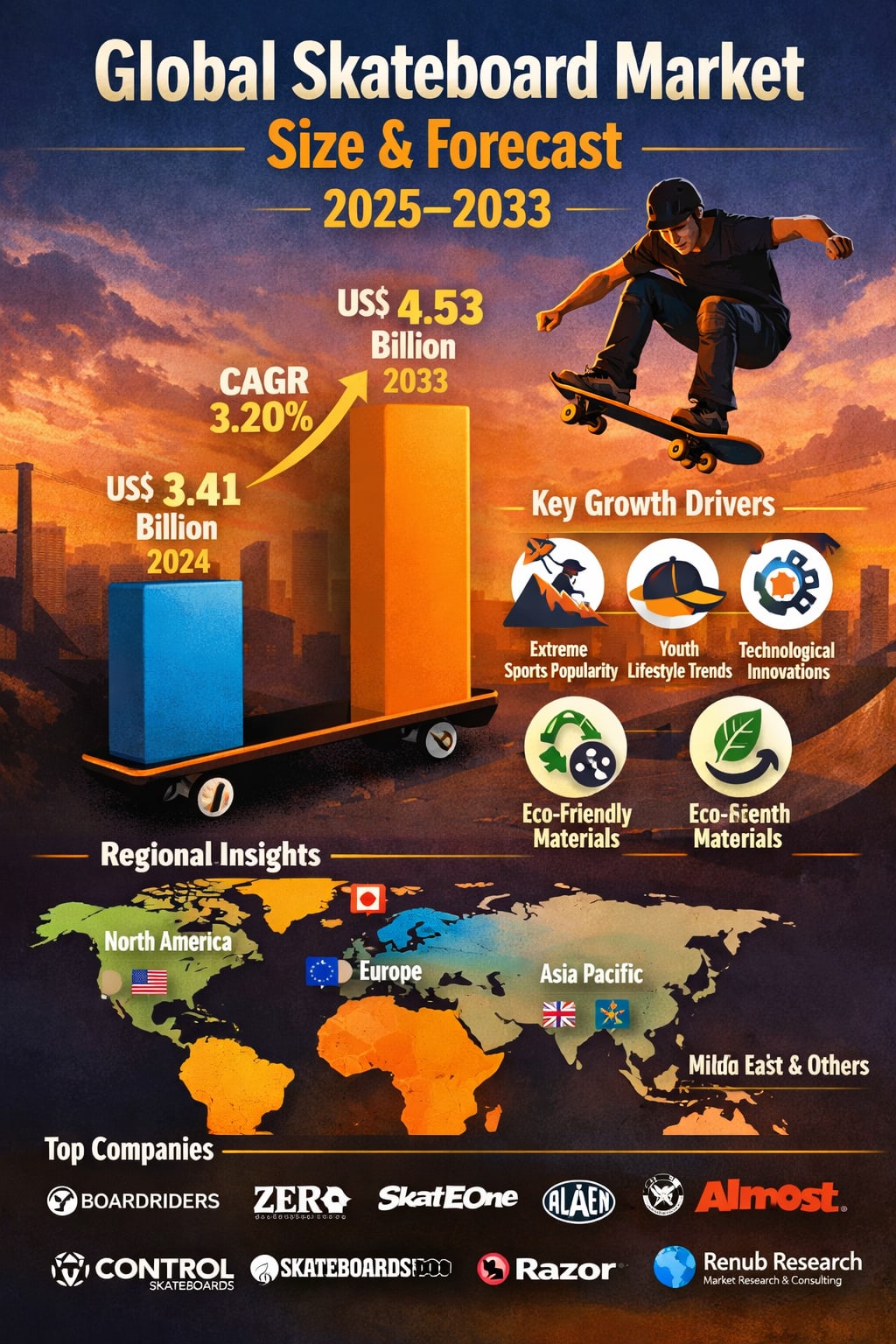
Introduction
The global skateboard market is steadily rolling into a new phase of growth, driven by shifting lifestyles, urban culture, and a renewed global interest in action sports. According to Renub Research, the skateboard market is expected to reach US$ 4.53 billion by 2033, rising from US$ 3.41 billion in 2024, registering a compound annual growth rate (CAGR) of 3.20% from 2025 to 2033. While skateboarding has long been associated with youth subcultures and street sports, it has now evolved into a mainstream recreational activity, competitive sport, and lifestyle statement.
Once viewed as a niche pastime, skateboarding today sits at the crossroads of sports, fashion, music, and digital culture. Its inclusion in global sporting events, expanding urban infrastructure, and growing participation among women and younger age groups have broadened its appeal significantly. At the same time, manufacturers are responding with more innovative, durable, and environmentally conscious products, ensuring that the market continues to evolve with consumer expectations.
This combination of cultural relevance, product innovation, and lifestyle integration is positioning the skateboard industry as a resilient and steadily expanding segment of the global sporting goods market.
Skateboard Market Overview
A skateboard is a compact, wheeled board designed for riding and performing tricks, typically consisting of a deck, trucks, wheels, and bearings. Traditionally made from layered maple wood, modern skateboards are increasingly incorporating advanced materials to enhance strength, flexibility, and performance. Skateboarding originated in the 1950s as an alternative activity for surfers during flat ocean conditions and has since grown into a global sport and cultural movement.
Over the decades, skateboarding has diversified into multiple styles, including street, park, vert, freestyle, and cruising. Beyond competition and recreation, it has become a form of self-expression and a symbol of youth identity in many parts of the world. Its growing visibility in international sporting events has further legitimized the sport, drawing in new participants and audiences.
Today, skateboarding is not only about performance but also about community, creativity, and lifestyle. Social media platforms, video content, and influencer culture have amplified its reach, allowing skaters to showcase skills, styles, and personal brands to a global audience. This digital exposure, combined with rising urbanization and investment in skate parks, continues to support the steady expansion of the skateboard market.
Key Growth Drivers in the Global Skateboard Market
Rising Popularity of Extreme Sports
One of the most important drivers behind the skateboard market’s growth is the increasing popularity of extreme sports worldwide. Younger generations, in particular, are drawn to activities that offer excitement, individuality, and a sense of challenge. Skateboarding fits perfectly into this mindset, offering both recreational enjoyment and competitive opportunities.
Media coverage, online videos, and international sporting events have helped transform skateboarding from a subculture into a globally recognized sport. As more people seek alternatives to traditional team sports, skateboarding’s accessibility and creative freedom make it an attractive choice. This rising participation directly fuels demand for skateboards, accessories, protective gear, and related apparel, strengthening the overall market ecosystem.
Youth Lifestyle and Cultural Influence
Youth lifestyle trends play a central role in shaping the skateboard industry. For many young consumers, skateboarding is not just a sport—it is a lifestyle that represents freedom, creativity, and self-expression. The close connection between skate culture and streetwear, music, and art has helped brands position skateboards as both sporting equipment and cultural symbols.
Social media has further accelerated this trend. Platforms where users share tricks, tutorials, and personal stories have made skateboarding more visible and aspirational. Collaborations between brands, artists, and professional skaters also reinforce skateboarding’s cultural relevance. This strong lifestyle association ensures consistent interest from new generations of consumers, supporting long-term market growth.
Technological Innovations and Product Development
Innovation is another major force driving the skateboard market forward. Manufacturers are increasingly experimenting with new materials, improved production techniques, and enhanced designs to deliver better performance and durability. Lighter decks, stronger trucks, and more responsive wheels are making skateboards more appealing to both beginners and experienced riders.
At the same time, the industry is seeing the emergence of new product categories, including technologically enhanced and electric skateboards. While traditional skateboards remain dominant, these innovations are helping attract new customer segments and expand the overall market. Strategic collaborations between brands and entertainment or sports platforms also contribute to keeping the product offerings fresh and engaging for consumers.
Challenges Facing the Skateboard Market
Seasonal Demand Fluctuations
One of the key challenges for the skateboard industry is its dependence on weather conditions. Since skateboarding is largely an outdoor activity, participation tends to decline during colder or rainy seasons in many regions. This seasonality can lead to uneven sales cycles, inventory management issues, and fluctuating revenue for manufacturers and retailers.
To address this, some companies are diversifying into apparel, accessories, or indoor skate park partnerships. However, maintaining consistent year-round demand remains a challenge, especially in regions with extreme weather conditions.
Environmental Concerns and Sustainability Pressure
Environmental sustainability is becoming an increasingly important issue for the skateboard industry. Traditional skateboard manufacturing relies heavily on maple wood, plastics, and chemical adhesives, all of which raise concerns about deforestation, waste, and pollution. As consumers become more environmentally conscious, brands are under pressure to adopt greener materials and more sustainable production practices.
While some companies are already experimenting with eco-friendly materials and recycled components, these solutions can be more expensive and harder to scale, particularly for smaller manufacturers. Balancing cost, performance, and sustainability will be a critical challenge for the industry in the coming years.
Regional Market Insights
United States Skateboard Market
The United States remains one of the most influential markets for skateboarding, driven by a strong skate culture, well-developed infrastructure, and widespread participation among youth. Major urban centers such as Los Angeles, New York, and San Francisco are home to numerous skate parks, skate shops, and community events that keep the sport vibrant and visible.
Retailers and online platforms make skateboards easily accessible to consumers of all skill levels, from beginners to professionals. Competitions, exhibitions, and social media content continue to fuel interest in the sport. While skateboarding remains a niche compared to mainstream sports, its cultural impact and loyal community base ensure steady market growth.
Germany Skateboard Market
Germany’s skateboard market is growing steadily, supported by increasing interest in urban mobility and recreational sports. Cities like Berlin, Munich, and Hamburg have invested in skate parks and public spaces that encourage participation. Both specialized retailers and large sporting goods chains cater to a diverse customer base, offering products for beginners and experienced skaters alike.
The presence of second-hand marketplaces and community events also helps lower entry barriers and strengthen the local skateboarding culture. Although still a niche segment, the German skateboard market benefits from strong community engagement and a growing appreciation for alternative sports.
India Skateboard Market
In India, skateboarding is still an emerging sport, but it is gaining momentum thanks to urbanization, a large youth population, and increasing exposure to global sports trends. Cities such as Bengaluru, Delhi, and Mumbai are seeing the development of grassroots skate communities and small skate parks.
Social media, online videos, and influencer culture play a significant role in introducing skateboarding to new audiences. Both local and international brands are beginning to recognize India’s potential, offering more affordable products to attract first-time users. As awareness and infrastructure improve, India is expected to become a promising growth market over the next decade.
Saudi Arabia Skateboard Market
Saudi Arabia’s skateboard market is at an early stage but shows encouraging signs of growth. The country’s broader push toward sports, entertainment, and lifestyle development under long-term national initiatives is creating new opportunities for recreational activities like skateboarding.
Urban development projects and new recreational zones are gradually incorporating skate parks and activity spaces. Interest is growing among both local youth and expatriate communities, supported by social media exposure and international events. While still niche, the Saudi skateboard market is likely to expand as investment in sports infrastructure continues.
Skateboard Market Segmentation
By Product Type
Board
Cruiser Board
Long Board
Park Board
Hybrid Board
Others
Different product types cater to different riding styles, age groups, and skill levels, allowing manufacturers to target a wide range of consumers.
By End User
Kids (0–9)
Teenagers (12–17)
Adults (18 & Above)
The teenage and young adult segments remain the core consumer base, but growing interest among children and older beginners is gradually broadening the market.
By Region and Country
North America: United States, Canada
Europe: France, Germany, Italy, Spain, United Kingdom, Belgium, Netherlands, Turkey
Asia Pacific: China, Japan, India, Australia, South Korea, Thailand, Malaysia, Indonesia, New Zealand
Latin America: Brazil, Mexico, Argentina
Middle East & Africa: South Africa, United Arab Emirates, Saudi Arabia
Competitive Landscape and Key Players
The global skateboard market features a mix of established brands and specialized manufacturers. Companies compete on product quality, brand identity, innovation, and community engagement. According to the market analysis, companies are evaluated across five key dimensions: company overview, key persons, recent developments and strategies, SWOT analysis, and sales analysis.
Some of the prominent players in the global skateboard market include:
Boardriders
Krown Skateboards
Sk8factory
Skate One
Absolute Board Co.
Alien Workshop
Zero Skateboards
Control Skateboards Inc.
Razor USA LLC
Almost Skateboards
These companies continue to invest in product development, branding, and strategic partnerships to strengthen their market positions and connect with evolving consumer preferences.
Market Outlook: 2025–2033
Looking ahead, the global skateboard market is expected to maintain steady growth rather than explosive expansion. The projected rise from US$ 3.41 billion in 2024 to US$ 4.53 billion by 2033 reflects a market that is maturing while still finding new avenues for expansion. Urbanization, youth culture, and lifestyle branding will remain central drivers, while sustainability and innovation will shape future product strategies.
The industry’s ability to adapt to changing consumer expectations—particularly around environmental responsibility and digital engagement—will play a crucial role in determining long-term success. Markets in Asia and the Middle East are likely to offer new growth opportunities as awareness, infrastructure, and participation continue to improve.
Final Thoughts
The global skateboard market is no longer just about boards and wheels—it represents a dynamic intersection of sport, culture, fashion, and urban lifestyle. With steady growth projected through 2033, the industry stands on a solid foundation built by youth engagement, technological innovation, and expanding global acceptance of skateboarding as both a sport and a cultural movement.
While challenges such as seasonality and sustainability remain, they also present opportunities for brands willing to innovate and evolve. As cities become more skate-friendly and new generations discover the sport, skateboarding’s role in the global sports and lifestyle economy is set to grow stronger—one ride at a time.
About the Creator
Tom Shane
Tom Shane is a content writer specializing in SEO-driven blogs, product descriptions, and thought leadership. He crafts engaging, research-backed content that connects with audiences and drives results.
Confectionery Market Size and Forecast 2025–2033 | Renub Research
Confectionery Market Overview According to Renub Research, the Global Confectionery Market was valued at US$ 200.1 billion in 2024 and is expected to reach US$ 263.38 billion by 2033, growing at a compound annual growth rate (CAGR) of 3.1% from 2025 to 2033.
By shibansh kumara day ago in Trader
Japan Ultrasound Device Market Size and Forecast 2025–2033
Introduction: A Clearer View into Japan’s Healthcare Future Japan’s healthcare system is globally recognized for its technological sophistication, strong infrastructure, and commitment to early diagnosis and preventive care. Among the many medical technologies supporting this ecosystem, ultrasound devices play a particularly vital role. These systems, which use high-frequency sound waves to produce real-time images of internal organs and tissues, have become indispensable tools across hospitals, diagnostic centers, maternity clinics, and ambulatory care settings.
By shibansh kumarabout 16 hours ago in Trader
At My Wits’ End
Life is about taking out the trash and calling it trash because you have every reason to. It wasn't meant to be linear, they say. But the times you tried to make it straight led to problems, and you didn’t have the tools to put any of it to use. You don't put your right shoes on the right feet; you put the left shoes on the left feet. The grey hardened slab will trip you up anyway.
By Caitlin Charltona day ago in Humans




Comments
There are no comments for this story
Be the first to respond and start the conversation.