
How Much Gold and Silver Should I Own?
Learn how to balance your portfolio with the best precious metals investments

In recent months, gold and silver underwent an incredible rise in value, prompting many investors to ask, “How much gold and silver should I own?” These recent trends may explain why, according to Morningstar, roughly 38.6% of Americans aged 35-64 bought gold or silver in 2025.
Typically, financial advisors recommend allocating between 5%-20% of your assets into gold and silver. However, there are many factors that this recommendation does not address.
For example, it does not tell you the proportion of gold to silver you should own. It also doesn’t factor in your age or investment goals.
We will resolve these mysteries and others in the guide below. Read on to find the answers you need!
How Much Gold and Silver Should I Own? Understanding Factors That Affect This Question
The first step in making any investment is understanding what it’s for. The same principle holds for precious metals investments like gold and silver.
A very simplified explanation goes something like this:
- Stocks and bonds are for increasing your wealth
- Gold and silver are for preserving your wealth
This breakdown does, again, fit the typical advice financial advisors give. However, it does not take into account several things. Stock investors may diversify their stock assets into stocks or bonds aimed at safekeeping their wealth, while allocating resources into other stocks that generate wealth.
Similarly, some precious metals investors like to speculate, particularly with silver. The silver market is more volatile than gold, so people may buy silver for low prices and sell it when the spot price is at a higher value.
So, let’s move beyond the generalities and get into the factors that most affect your investment goals. There are three primary factors that affect how you should treat your gold and silver investments:
- Your risk tolerance
- Your budget
- Your time horizon
Risk Tolerance
Risk tolerance refers to how much risk you’re willing to take when purchasing assets for your portfolio. Investors with low risk tolerance may lose money during price swings; however, they’re also not likely to sell for large profits on their investments.
Someone with a high risk tolerance stands to lose a lot of money quickly, but also secure rapid profit when the market is in their favor. Often, your risk tolerance is associated with your time horizon and age. Financial advisors recommend a high risk tolerance for young investors, as they have more time to make up for any losses they may experience early on.
Conversely, if you are nearing retirement age, playing fast and loose with your investments is a very dangerous idea. You’ll need the money you earn from your investments to live without the income your job provides.
So, what does that mean for precious metals? Generally speaking, they tend to work best in low-risk-tolerance portfolios. While the gold and silver markets may be volatile in the short-term, they both tend to appreciate gradually over long spans of time.
However, gold and silver may also play a role in higher-risk portfolios as a balancing agent. The consistency of these assets can counterbalance the volatility of riskier investments; even if some of your other assets crash, gold and silver can help keep your portfolio viable.
Time Horizon
Your time horizon is the expected lifespan for your portfolio. Someone with a short time horizon usually plans to cash out their investments in the short-term. Longer time horizon investments plan on holding on to their investments for years to come.
To understand the time horizon of your portfolio, it’s best to ask this question: “How close am I to meeting my financial goals?” If you’re pretty close, then your investment portfolio likely has a short time horizon. If not, expect it to have a longer time horizon.
Given our description of gold and silver’s role in averting risks, it may not surprise you that precious metals make a natural fit for long time horizon portfolios. However, they can play some roles in short time horizon portfolios too.
They can help preserve some value while you take bigger chances with other investments. Alternatively, some investors may speculate on a precious metal like silver.
How To Measure Gold and Silver Success
Your time horizon and risk tolerance play a huge role in determining what purpose you want your gold and silver investments to serve. Now, once you’ve determined that, how can you tell whether gold and silver are doing their jobs in your portfolio?
There are two crucial terms to know when considering this:
- Efficient frontier
- Sharpe ratio
The efficient frontier is a group of investment portfolios that are optimally diversified for a maximized return within a given level of risk. Put another way, the efficient frontier presents the lowest risk for a given level of return. You can read more about the efficient frontier concept with this article from Investopedia.
Next, there is the Sharpe ratio. The Sharpe ratio evaluates an investment’s return relative to its risk. It does so by using a calculation formula:
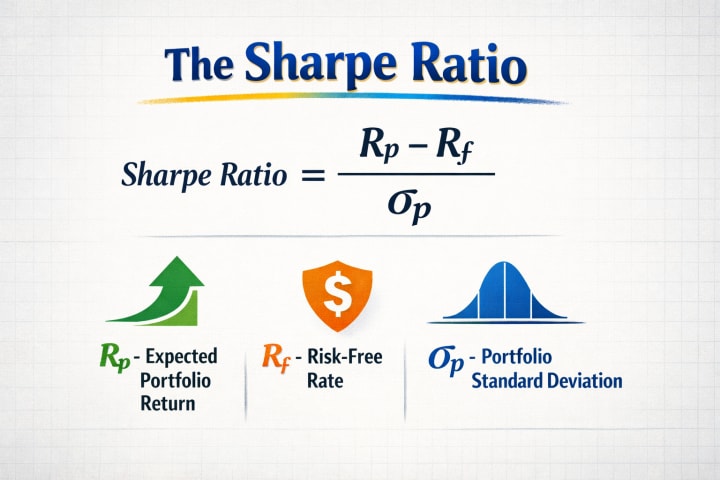
So, how can you tell when you have a good Sharpe ratio?
- Ratio greater than 1.0 is good
- Ratio greater than 2.0 is very good
- Ratio greater than 3.0 is excellent
You can use the Sharpe ratio for a few different purposes:
- Comparing a portfolio’s returns against a set benchmark
- Evaluating the performance of mutual funds and individual assets
- Assessing if the added volatility of an investment is worth the potential reward
Financial data tends to suggest that lower amounts of gold in your portfolio, somewhere between 5%-25% depending on where you live, result in higher Sharpe ratios.
To simplify things, we will recommend a 10%-15% allocation of wealth into precious metals. Speak with a financial advisor to decide if another percentage makes more sense for your financial strategy. We do not recommend allocating more than 30% of your resources into precious metals.
Choosing Between Gold vs Silver Investment
The above recommendation tells you how much to allocate into precious metals. However, it does not tell you a ratio of gold and silver to buy. So, how can you make that decision and ensure you get the best balance of gold and silver?
Generally speaking, investors recommend balancing your portfolio with an ideal gold to silver ratio of 75:25. This way, gold can provide the long-term stability necessary, while silver’s volatility can provide a chance for profit.
This advice is good, and it will work for many investors. However, once again, it does not take into consideration all of the factors that may affect an investor’s decision.
Some of those factors are as follows:
- Price and volatility concerns
- Historical demand and market trends
- Liquidity
Price and Volatility Concerns
The first thing to take into consideration is the price and volatility of each asset. How expensive is each precious metal to purchase? How often do prices for this metal tend to change dramatically in one direction or another?
Silver is significantly less expensive than gold, and often has a more volatile market. This makes it much easier to acquire silver than it is to acquire gold. This factor might influence investors, especially younger ones who are still building their wealth, to purchase silver.
Historical Demand and Market Trends
The next thing to consider is what drives demand for each metal? Many people overlook the industrial demand for gold and silver alike. Silver is a tremendously valuable commodity in the industrial world, serving as a component in:
- Solar panels
- Smart phones
- Automobiles
- Medical supplies
Gold likewise has a high demand, serving as a component in:
- Dentistry
- Glass making
- Aerospace and defense
Next, it’s critical to look at historical price trends. What factors have influenced these trends? Have those factors held true, or have they changed in recent weeks, months, or years?
The answers to these questions have significant bearing on which metal you purchase. This information may impact which one serves your financial strategy best.
Liquidity
The next factor to consider is the liquidity of your investments. How easily can you trade these precious metals?
Highly liquid assets, like 1 oz bullion coins or popular silver bars, are much easier to trade at an exchange. Lower liquidity increases transaction costs (spreads) and complicates exiting positions.
Frequently Asked Questions (FAQ)
Q: How much gold and silver should I own?
A: Most investors allocate between 10% and 15% of their total portfolio to precious metals. Within that, a common guideline is 75% gold and 25% silver, though this may vary based on your financial goals and risk tolerance.
Q: What is the ideal percentage of gold in a portfolio?
A: Gold typically makes up 60% to 80% of a precious metals allocation, especially for conservative investors seeking long-term wealth preservation and inflation protection.
Q: Is silver better than gold for investment?
A: Silver is more volatile than gold and can offer higher upside in bullish markets. However, gold is often preferred for its stability and lower risk, making it a better core holding for long-term preservation.
Q: What factors should determine my gold and silver allocation?
A: Key factors include your:
- Risk tolerance (conservative vs aggressive)
- Investment time horizon (short vs long-term)
- Budget
- Need for liquidity or speculation
Younger investors may favor silver for its growth potential, while retirees may lean heavily into gold.
Q: Can I lose money investing in gold or silver?
A: Yes. While precious metals are historically a store of value, prices can fluctuate in the short term. Holding for the long term reduces risk, and diversification helps protect your portfolio.
Decide What Amount of Gold and Silver Works for You
We started this article addressing the question, “How much gold and silver should I own?” We have now given you a number of principles that can help you determine the amount that’s best for you. Now, let’s synthesize all of that.
First, figure out your financial goals and strategy. Are you risk averse and looking for a long-term gain, or are you willing to take larger risks and want a hedge of security for short term investments?
Second, if you already have an investment portfolio, use the Sharpe ratio formula to determine how well it’s performing.
Third, decide the ratio of gold and silver that will best improve your portfolio performance.
None of these steps must be taken alone. It is always better to talk to a financial advisor who can help you through the process. Once you figure out your needs, buy the gold and silver you need to enhance your portfolio!
About the Creator
Sound Money
Sound Money Reform
The Sound Money Defense League advocates for restoring gold and silver as constitutional money through grassroots activism, policy reform, and public education on the risks of fiat currency and the benefits of sound money.
Keep reading
More stories from Sound Money and writers in Trader and other communities.
~ Fired ~
— Ai Intrusion ~ Are you Next ~ Is Ai Evolution after your job? — Few workplaces haven't been affected. Ai is in supermarkets, at doctors' offices, and even monitoring farms. I just can't think of anything this machine is not getting into, can you? For instance: Education ~ Law and Tech jobs will one day have a major influence or be taken over by these inanimate machines, with accuracy and vigor. From mechanics' diagnoses to a wide variety of everyday jobs, including fast food workers, with this input having the ability to cut their unnecessary work hours. I'm certain all of us have been touched by this with our short stories and colorful headings, have you? Even comments are very questionable 'Non-Robot' insertions.
By Jay Kantor6 days ago in Journal


Comments
There are no comments for this story
Be the first to respond and start the conversation.