
How to Stay Ahead in the Rapidly Changing World of Web3 and Crypto
How to Stay Ahead in the Evolving World of Web3 & Crypto

The "Wild West" era of cryptocurrency has been officially tamed. As we navigate 2026, the industry has graduated from a retail-driven speculative playground to a mission-critical global financial layer. Institutional capital is no longer just "exploring" the space with pilot programs; they are building the very rails the global economy will soon run on.
For professionals, investors, and developers, staying ahead in this rapidly evolving environment requires a significant shift in perspective. You must look past daily price charts and focus on the structural shifts defining this new "infrastructure era." Here is how to position yourself for the realities of the 2026 Web3 revolution.
1. Embrace the "AI-Agent" Economy
In 2026, the most active users of Web3 protocols are no longer humans - they are autonomous AI agents. We are witnessing the rise of AI-native wallets that can self-manage complex yield farming strategies, execute arbitrage across chains, and participate in DAO governance based on pre-defined logic.
Staying ahead means understanding how to build for, and interact with, these autonomous systems that operate 24/7 without human intervention. The integration of large language models (LLMs) with smart contracts has created a new class of "on-chain intelligence" that is redefining transaction volume.
2. The Production Phase of Real-World Assets (RWA)
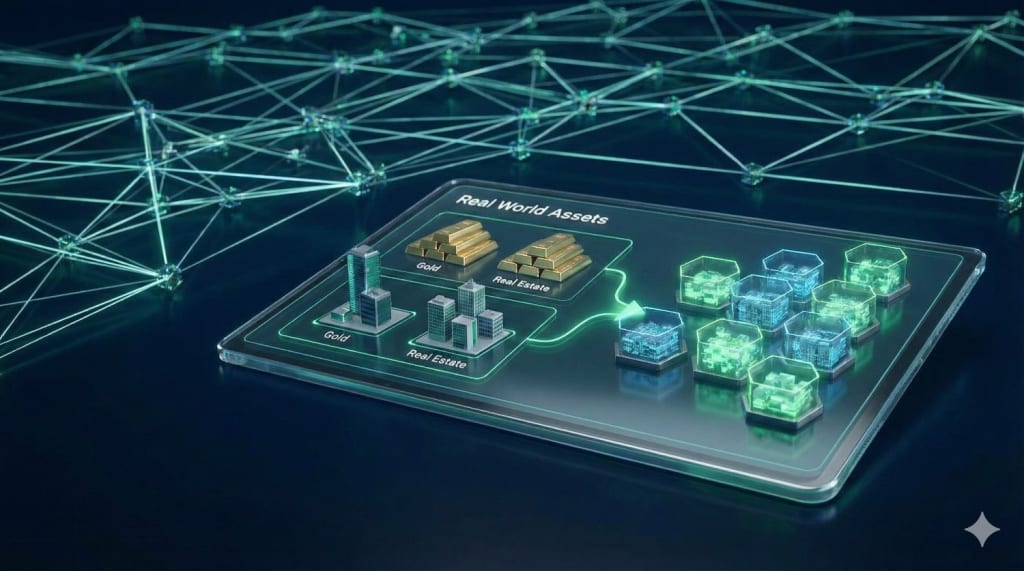
Tokenization has moved from theory to mass production. The most significant volume in 2026 isn't in speculative NFTs, but in the on-chain migration of U.S. Treasury bills, private credit, and commercial real estate. The ability to bring stable, yield-bearing "real-world" value on-chain has provided the ecosystem with the collateral foundation it lacked in previous cycles.
Professionals who understand the legal and technical bridges between traditional finance (TradFi) and DeFi are currently the most sought-after experts in the field. This "on-chaining" of the global economy is creating trillions in new liquidity.
3. The Victory of Modular Infrastructure
The "one chain to rule them all" thesis is effectively dead. The future has proven to be modular. We are now operating in a layered world where specialized blockchains handle specific tasks - one layer for execution, another for data availability, and another for settlement. To stay relevant, developers must understand the "modular stack," utilizing specialized rollups to provide the speed and low costs required for consumer-grade applications. This interoperability ensures that liquidity is no longer siloed but flows freely across an interconnected web of blockchains.
4. Navigating Regulatory Compliance as a Feature
Privacy is still paramount, but in 2026, compliance is non-negotiable for scale. The integration of Zero-Knowledge (ZK) proofs for identity verification allows platforms to meet strict global regulatory standards - such as MiCA and beyond - without compromising sensitive user data. The projects that are succeeding today are those that viewed regulation not as a hurdle, but as a gateway to institutional liquidity. By embedding compliance into the protocol layer, Web3 is finally becoming "safe for work" for the world's largest pension funds and asset managers.
5. The Evolution of Decentralized Identity (DeID)
The era of the "username and password" is fading. In its place, decentralized identity (DeID) is becoming the standard for 2026. Users now carry their reputation, credentials, and social graph across applications via soulbound tokens and verifiable credentials. Staying ahead means recognizing that your digital footprint is now your most valuable asset. Platforms that allow users to monetize their own data while maintaining sovereign control are outperforming the centralized giants of the Web2 era.
Strategic Networking in the Infrastructure Era
In a market that rewards discipline and deep industry knowledge over hype, your physical network remains your greatest asset. While digital communities are vital for information flow, the high-level partnerships that define the "Suits and Ties" era of 2026 are forged in person.
Whether you are looking for technical deep-dives or a high-level crypto summit, the Global Blockchain Show provides the networking infrastructure needed to connect with the industry's most influential movers. By maintaining a presence in these influential hubs, you can ensure you aren't just reacting to the future - you are helping build it. The complexity of the 2026 landscape demands high-bandwidth, face-to-face collaboration to turn these trends into tangible growth.
Conclusion
Staying ahead in 2026 isn't about chasing the next "meme" token; it’s about understanding the convergence of AI, institutional finance, and modular technology. Success belongs to those who view blockchain as more than just a ledger - it is the new operating system for global trust.
About the Creator
Tech Updates
As a technology professional, I specialize in AI, Blockchain, and Gaming, helping bring together innovators and decision-makers to exchange insights, build partnerships, and drive the next wave of digital transformation.
Keep reading
More stories from Tech Updates and writers in Trader and other communities.
The Top 7 Gaming Industry Trends Set to Explode in 2026
The gaming industry has never been content with standing still. But 2026 feels different. We have moved past the experimental phases of the early 2020s and are now entering an era of convergence, where maturing technologies are colliding to create entirely new forms of interactive entertainment.
By Tech Updates9 days ago in Gamers
Saudi Arabia Non-Invasive Prenatal Testing Market Size & Forecast 2025–2033
Introduction: A New Era in Prenatal Screening Saudi Arabia’s healthcare sector is undergoing a significant transformation, driven by modernization efforts, technological adoption, and a strong national focus on improving patient outcomes. Among the many areas benefiting from this transformation is prenatal diagnostics, particularly Non-Invasive Prenatal Testing (NIPT). This advanced screening method has quickly become one of the most promising tools in maternal and fetal healthcare, offering safer, more accurate, and earlier detection of genetic abnormalities compared to traditional invasive procedures.
By shibansh kumar2 days ago in Trader



Comments
There are no comments for this story
Be the first to respond and start the conversation.