
Is Crude Oil a Fossil Fuel?
Yes, crude oil is classified as a fossil fuel because it forms from the buried remains of ancient living organisms that were transformed by heat and pressure over millions of years.

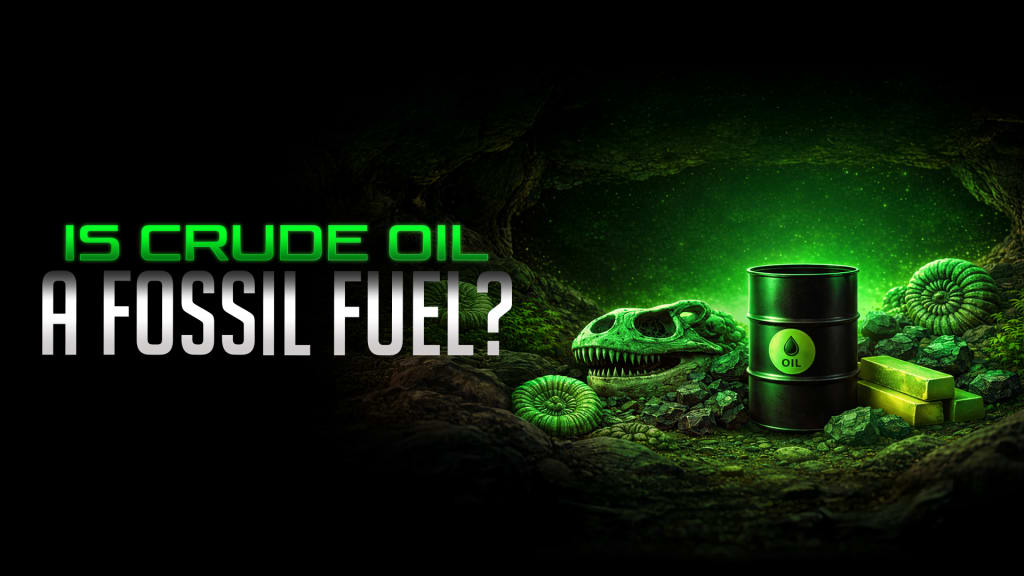
In earth science, crude oil fits squarely within the fossil fuel category due to its biological origin, hydrocarbon composition, and finite supply. Understanding why petroleum is a fossil fuel requires looking at what crude oil is, how it forms, and how scientists classify energy resources today.
What is Crude Oil?
Crude oil, also known as petroleum, is a complex mixture of hydrocarbon compounds made primarily of carbon atoms and hydrogen atoms. These hydrocarbons exist in long carbon chains that vary in structure, giving crude oil different properties such as viscosity and density. Chemically, crude oil contains alkanes, aromatic hydrocarbons, and trace elements that influence how it behaves during refining.
In its raw form, crude oil is not directly usable. It must undergo refining and fractional distillation, a process that separates hydrocarbons into fuels like gasoline, diesel, and jet fuel. This hydrocarbon-rich composition is a key reason crude oil is central to discussions about fossil fuels and energy systems.
Where Crude Oil is Found?
Crude oil is found in underground oil reservoirs located within sedimentary basins. These reservoirs form when oil migrates through porous rock and becomes trapped beneath impermeable cap rock. Deposits exist both onshore and offshore, including beneath continental shelves, shale formations, and oil sands.
Extraction methods vary based on geology and reservoir pressure. Onshore drilling targets underground oil deposits, while offshore drilling accesses reserves beneath ocean floors. In some regions, bitumen-rich oil sands require specialized extraction due to their high viscosity.
What Are Fossil Fuels?
To understand whether crude oil is a fossil fuel, it helps to define fossil fuels themselves.
Fossil fuels are nonrenewable energy resources formed from the remains of ancient organisms over geological time scales. These organisms stored carbon through photosynthesis, and when buried, their biomass became carbon-rich deposits. Over millions of years, heat, pressure, and chemical processes converted this organic matter into high-energy fuels.
Examples of Fossil Fuels
Coal is a solid fossil fuel formed mainly from ancient plants. Crude oil is a liquid fossil fuel composed of hydrocarbons. Natural gas, primarily methane, is a gaseous fossil fuel often found alongside oil deposits. Bitumen, found in oil sands, is another fossil-derived energy source. Together, these fuels represent the main types of fossil fuels used worldwide.
How is Crude Oil Formed?
Crude oil forms from ancient marine organisms such as plankton and microscopic algae. These organisms lived in oceans millions of years ago and absorbed carbon from the environment. When they died, their remains settled on the seafloor and were buried by layers of sediment under anaerobic conditions, meaning little to no oxygen was present.
As burial continued, rising geological pressure and heat transformed this organic matter into kerogen within sedimentary rock. Through thermal maturation and catagenesis, kerogen broke down into liquid and gaseous hydrocarbons. These hydrocarbons migrated through rock layers until trapped in oil reservoirs, forming the crude oil deposits extracted today. This long, natural process is central to fossil fuel formation.
Why is Crude Oil Classified as a Fossil Fuel?
Crude oil is considered a fossil fuel because it originates from ancient biological material and forms over immense geological time scales. Its carbon-based chemistry links it directly to fossilized organic matter rather than modern biomass. From an earth science standpoint, petroleum is nonrenewable on human time scales, making it fundamentally different from renewable energy sources.
Why Understanding Fossil Fuels Still Matters Today
Understanding fossil fuels like crude oil remains essential in a world navigating climate change and energy transition. Fossil fuels continue to dominate global energy supply, influencing energy policy, economic stability, and international relations. At the same time, their combustion releases greenhouse gases that contribute to environmental impact and climate change.
About the Creator
Teresa Pro
I publish data-driven insights, trading strategies, and market commentary tailored for both new and seasoned traders.
Keep reading
More stories from Teresa Pro and writers in Trader and other communities.
Christmas Holiday Season Trading Plan Every Retail Trader Should Know
It’s December. Festive vibes everywhere. But the forex market? Practically frozen. You open your trading platform and see your trades drifting the wrong way. Spreads jump. Stop-Losses creep closer.
By Teresa Pro2 months ago in Trader
The Lesions of Devotion
Every day I set myself down on the freshly cut lawn and strip myself bare. I take my guitar and finger the frets and pick at the strings, listening for dissonance. My life is dissonance. I twist the tuning pegs until each string sounds bright. Then I kneel, calves pointing behind me, kneecaps facing forward. All exposed to the breeze. I close my eyes and play the melody.
By Paul Stewart4 days ago in Fiction


Comments