
Netherlands Meat Market 2026: Consumption Patterns, Production Dynamics & Sustainable Shifts
How dietary trends, supply chain evolution and health preferences are shaping the meat sector in the Netherlands

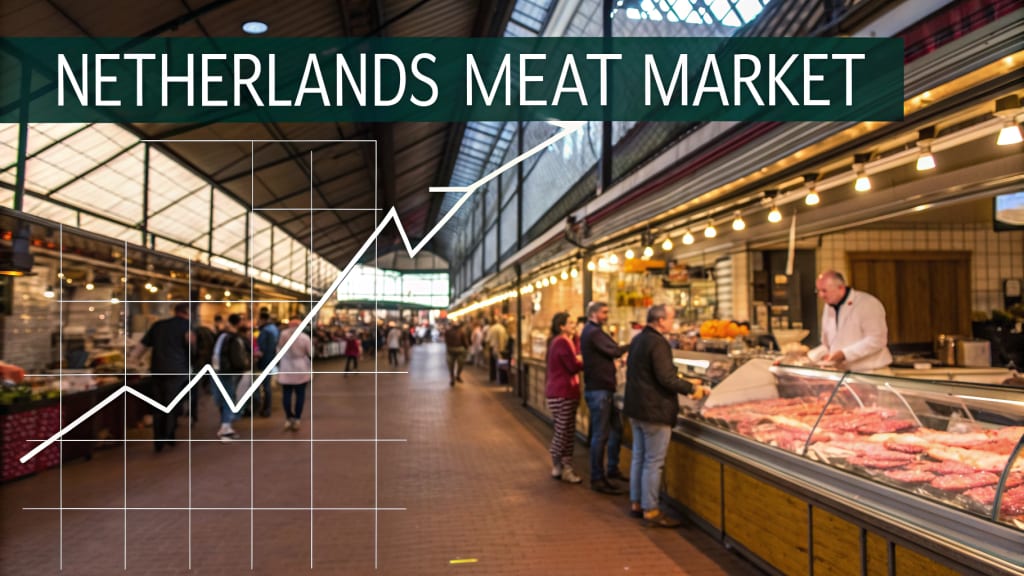
The Netherlands meat market is a major segment of the country’s food and agricultural economy, reflecting a balance of traditional consumption habits, evolving dietary preferences and industry responses to sustainability pressures. According to market estimates, the Netherlands meat market size reached USD 15.03 Billion in 2025 and is projected to grow to USD 17.72 Billion by 2034, exhibiting a CAGR of 1.85% during 2026–2034. Meat — encompassing beef, pork, poultry and processed meat products — remains a staple protein source within Dutch diets, while market dynamics evolve amid shifting consumer priorities tied to health, environmental impact and food safety.
The sector is shaped by domestic production infrastructure, export and import linkages with broader European markets, retail penetration, and evolving consumer behaviour that includes interest in alternatives such as plant-based proteins, hybrid formulations and sustainably sourced meat products.
What’s Driving Market Growth?
Domestic Production & Livestock Farming The Netherlands possesses a strong livestock and animal husbandry industry capable of large-scale production of beef, pork, and poultry. Dutch farms prioritize efficiency, quality management, and adherence to strict EU safety regulations. Domestic production ensures consistent retail availability and establishes the Netherlands as both a consumer and exporter of meat products in the EU.
Evolving Consumption Patterns Meat remains central to Dutch cuisine — featured in everyday meals, festive dishes, sandwiches and traditional recipes. Poultry, due to price affordability and versatility, continues to be a leading segment, while pork and beef maintain strong household usage in varied culinary preparations.
Retail Channel Penetration Supermarkets, hypermarkets, butcher shops, discount food chains and online grocery platforms drive convenient access to meat products. Modern retail infrastructure coupled with promotions, private-label offerings and convenient packaging formats supports regular consumption and broad market reach.
Market Segmentation & Key Insights
By Meat Type The market includes poultry, pork, beef, lamb & mutton, and processed meat products such as sausages, cold cuts and ready-to-eat meat assortments. Poultry consistently leads due to affordability, taste versatility and year-round consumption patterns.
By Distribution Channel Meat products are sold through supermarkets & hypermarkets, butcher shops and local markets, online grocery platforms, discount food outlets, foodservice channels (restaurants, cafes, institutional catering), and export distributors. E-commerce continues to attract incremental demand via home delivery and scheduled fulfilment.
By End Use End users include households, foodservice operators, institutional buyers (schools, hospitals, corporate cafeterias), processed food manufacturers, and export distribution partners. Household consumption constitutes the largest share, supported by regular meal patterns and affordability.
By Geography Demand is strongest in major urban and suburban regions such as Amsterdam, Rotterdam, The Hague, Utrecht and industrial consumption zones, where retail penetration, population density and disposable income levels support consistent meat sales.
What the Opportunities Are?
Value-Added & Specialty Products There is opportunity for premium and value-added meat products — such as organic, grass-fed, free-range and artisanal cuts — that cater to consumers willing to pay a premium for quality, provenance and differentiated taste experiences.
Hybrid & Alternative Protein Integration With growing interest in plant-based diets and flexitarian lifestyles, hybrid meat products that combine traditional meat with vegetable proteins, and expanded plant-based protein portfolios can attract innovative consumers seeking balanced nutrition.
Sustainable & Ethical Positioning As sustainability concerns deepen, producers can capitalise on animal welfare certifications, carbon footprint labelling, responsibly sourced supply chains and eco-credentials that differentiate offerings and appeal to conscious consumers seeking ethical food choices.
Cold Chain & Quick Commerce Expansion Enhancing cold-chain logistics, rapid delivery options and temperature-controlled direct-to-consumer channels supports freshness, expands online meat shopping penetration and improves customer confidence in safety and quality.
Recent News and Developments in Netherlands Meat Market
Jul 2025: Retail trend reports highlighted rising mainstream demand for organic and free-range poultry products, reflecting consumer preference for perceived healthier and more ethically produced meat options.
Sep 2025: Supermarket chains expanded value-added processed meat assortments with lower sodium, preservative-free and premium flavour variants, aiming to capture evolving taste profiles and health-aligned purchasing behaviour.
Nov 2025: Dutch food expos showcased hybrid protein and plant-meat blends alongside traditional meat displays, signalling industry recognition of flexitarian consumer segments and broader product diversification strategies.
Why Should You Know About Netherlands Meat Market?
This market is important to understand as it demonstrates how eating patterns, economic interactions, and supply chain developments converge to influence one of the key food sectors in the Netherlands. Meat continues to be a vital source of nutrition for families, an important component in various culinary traditions, and a major economic factor through production, retail sales, and trade activities
For investors, the meat market offers exposure to a stable, consumption-anchored category that benefits from enduring demand patterns, structural retail distribution channels and evolving product innovations that adapt to health and sustainability trends. The projected CAGR of 1.85% reflects steady expansion underpinned by consistent consumption and market resilience.
For producers, retailers, supply-chain partners and product innovators, understanding segmentation, consumer preferences, distribution channels and emerging alternative protein trends helps inform strategic product development, pricing decisions and marketing campaigns that resonate with broad and evolving audiences.
In essence, the Netherlands meat market captures how food culture, consumer behaviour and market adaptation come together — making it a vital story about nutrition, tradition and forward-looking food trends that matter to everyday life.
About the Creator
Thomas
Market Research Analyst | Industry Trends & Forecasting | Turning market data into clear, actionable business insights across global sectors.
Australia Veterinary Market — Growth, Forecast & Strategic Outlook 2026–2034
The Australia veterinary market is experiencing strong growth as animal healthcare and services expand across both companion and production animals. According to IMARC Group, the market reached USD 2.1 billion in 2025 and is projected to grow to USD 4.9 billion by 2034, exhibiting a compound annual growth rate (CAGR) of 9.60% during 2026–2034.
By Amélie Belle6 days ago in Trader
The Cave Part 6
If you have ever heard a tale about yourself that you cannot remember and doubtless think is made up, you will know how I felt when Tharkin related all that the eagle had seen of me before my memories were scattered. Of far distances and traveling companions that I did not recall, camping out under the stars and making our way to the mountains with deliberate purpose. The great bird had lost contact with my party once we entered the forests, and the seven other members were not seen again by him or his brethren since.
By Jamye Sharp3 days ago in Chapters


Comments
There are no comments for this story
Be the first to respond and start the conversation.