
Philippines Baby Food Market 2026: Nutrition Awareness, Urban Parenting and the Rise of Functional Infant Foods
How changing lifestyles, premium product innovation and digital retail are shaping the Philippines baby food industry

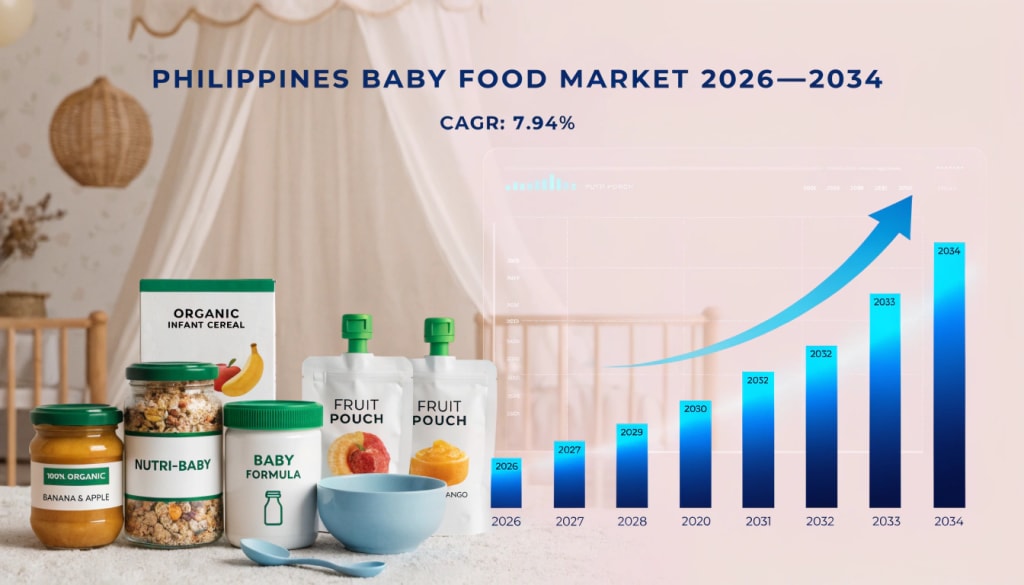
Philippines Baby Food Market Overview
The Philippines baby food market is experiencing strong growth as evolving parenting lifestyles, increasing awareness of infant nutrition and rising household incomes reshape feeding practices across the country. Baby food products — including infant formula, cereals, purees and snacks — are becoming essential components of early childhood nutrition, particularly as urbanisation and workforce participation among parents increase reliance on convenient and nutritionally balanced food options.
According to IMARC Group, the Philippines baby food market size reached USD 1.2 billion in 2025 and is projected to grow to USD 2.5 billion by 2034, exhibiting a compound annual growth rate (CAGR) of 7.94% during 2026–2034. Growth is driven by rising birth rates, urbanisation, increasing disposable income and expanding awareness regarding newborn nutritional requirements.
Key Market Drivers
Growing Awareness of Infant Nutrition
Public health initiatives, pediatric guidance and digital parenting communities are improving knowledge around early childhood nutrition. Parents are increasingly prioritising fortified and age-appropriate baby food products to support cognitive and physical development during critical growth stages.
Urbanisation and Changing Family Structures
Urban lifestyles and dual-income households are strengthening demand for ready-to-prepare baby food products that offer convenience without compromising nutritional quality. This shift is expanding consumption across metropolitan regions.
Rising Disposable Income and Middle-Class Expansion
Increasing purchasing power among Filipino families is enabling greater spending on premium and specialised infant nutrition products, including imported brands and fortified formulations.
Growth of E-Commerce and Modern Retail Channels
Supermarkets, convenience stores and online platforms are enhancing accessibility and product variety. Digital retail channels in particular support subscription purchasing, targeted promotions and improved product discovery among young parents.
Request a Sample Report with the Latest 2026 Data & Forecasts
What the Opportunities Are
The Philippines baby food market offers substantial growth potential as demographic trends, innovation and retail transformation continue to converge.
Expansion of Organic and Clean-Label Baby Food
Rising parental preference for natural ingredients and minimal processing is creating opportunities for organic, preservative-free and clean-label baby food products. Brands emphasising transparency and quality can capture trust-driven purchasing behaviour.
Local Ingredient Utilisation and Agricultural Integration
Programs promoting locally sourced ingredients such as sweet potatoes demonstrate opportunities for domestic production and value chain integration. Leveraging indigenous crops can reduce import dependence while supporting agricultural communities and nutritional diversity.
Functional and Fortified Nutrition Innovation
Fortification with probiotics, DHA, iron and vitamins is becoming increasingly important as parents seek enhanced developmental benefits. Functional nutrition innovation can enable product differentiation and premium positioning.
Personalised and Age-Specific Feeding Solutions
Products tailored to specific developmental stages — from early infancy to toddlerhood — present opportunities for targeted nutrition strategies. Personalised feeding solutions supported by digital tools and pediatric guidance can further strengthen market engagement.
Digital Direct-to-Consumer and Subscription Models
Online subscription services offering curated baby food bundles provide convenience and predictable supply for households. These models also allow brands to collect behavioural insights and enhance long-term customer relationships.
Together, these opportunities highlight the emergence of a more premium, locally integrated and digitally enabled infant nutrition ecosystem.
Recent News and Developments
March 2025: Industry retail monitoring indicated that online baby food sales recorded double-digit growth across leading marketplaces, reflecting rapid digital adoption among urban Filipino parents and strengthening e-commerce channel importance.
June 2025: Market distribution analysis showed that modern trade channels accounted for a majority share of organised baby food sales, highlighting the continued dominance of supermarkets and convenience stores in urban consumption patterns.
October 2025: Pediatric nutrition awareness campaigns contributed to rising demand for fortified infant food products, with healthcare stakeholders reporting increased uptake of nutrient-enriched formulas and complementary foods across metropolitan healthcare networks.
January 2026: Supply chain initiatives promoting locally sourced ingredients gained momentum, supporting expansion of domestic baby food production programs leveraging indigenous crops, aimed at improving affordability and nutrition accessibility.
Why You Should Know About the Philippines Baby Food Market?
The Philippines baby food market represents a critical component of the country’s broader nutrition and consumer goods landscape. Demographic growth, rising parental awareness and retail modernisation are collectively strengthening demand for high-quality infant nutrition products.
With the market projected to reach USD 2.5 billion by 2034, supported by innovation, digital retail expansion and functional nutrition trends, the sector offers meaningful opportunities for manufacturers, distributors and investors seeking exposure to high-growth health-focused food categories.
As Filipino families continue prioritising child health and convenience, the Philippines baby food market is positioned for sustained expansion while evolving toward a more premium, locally integrated and digitally connected infant nutrition ecosystem.
About the Creator
Keep reading
More stories from Manisha Dixit and writers in Trader and other communities.
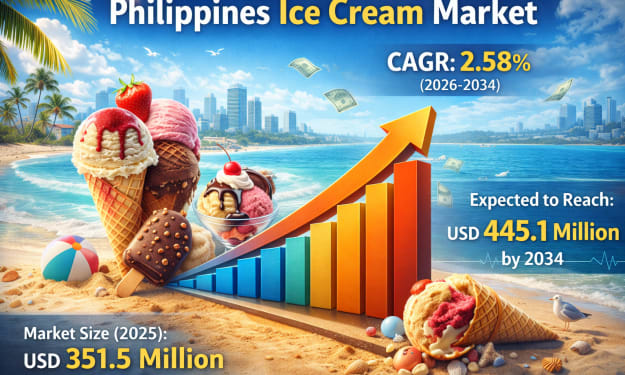
Philippines Ice Cream Market 2026: Flavor Innovation, Premium Indulgence and Rising Urban Consumption
Philippines Ice Cream Market Overview The Philippines ice cream market continues to expand as rising disposable incomes, urbanisation and evolving consumer tastes strengthen demand for frozen desserts across the country. Ice cream remains a popular indulgence among Filipino consumers, driven by warm climate conditions, strong family consumption patterns and cultural affinity for sweet treats. At the same time, innovation in flavours, formats and health-aligned variants is transforming the category from a traditional dessert into a dynamic, experience-driven segment of the food and beverage industry.
By Manisha Dixit2 days ago in Trader
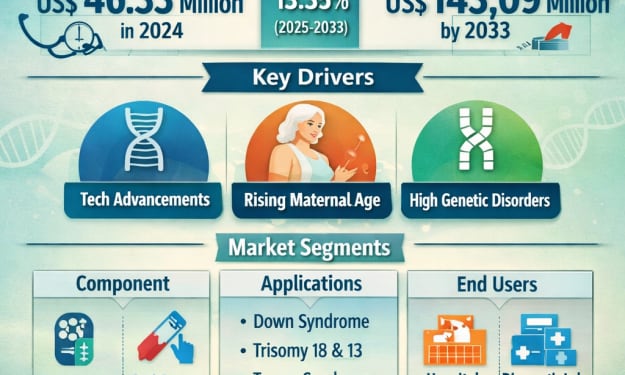
Saudi Arabia Non-Invasive Prenatal Testing Market Size & Forecast 2025–2033
Introduction: A New Era in Prenatal Screening Saudi Arabia’s healthcare sector is undergoing a significant transformation, driven by modernization efforts, technological adoption, and a strong national focus on improving patient outcomes. Among the many areas benefiting from this transformation is prenatal diagnostics, particularly Non-Invasive Prenatal Testing (NIPT). This advanced screening method has quickly become one of the most promising tools in maternal and fetal healthcare, offering safer, more accurate, and earlier detection of genetic abnormalities compared to traditional invasive procedures.
By shibansh kumar5 days ago in Trader

Comments
There are no comments for this story
Be the first to respond and start the conversation.