
Saudi Arabia Halal Cosmetics Market Size: Faith, Beauty, and the Future of Ethical Glamour
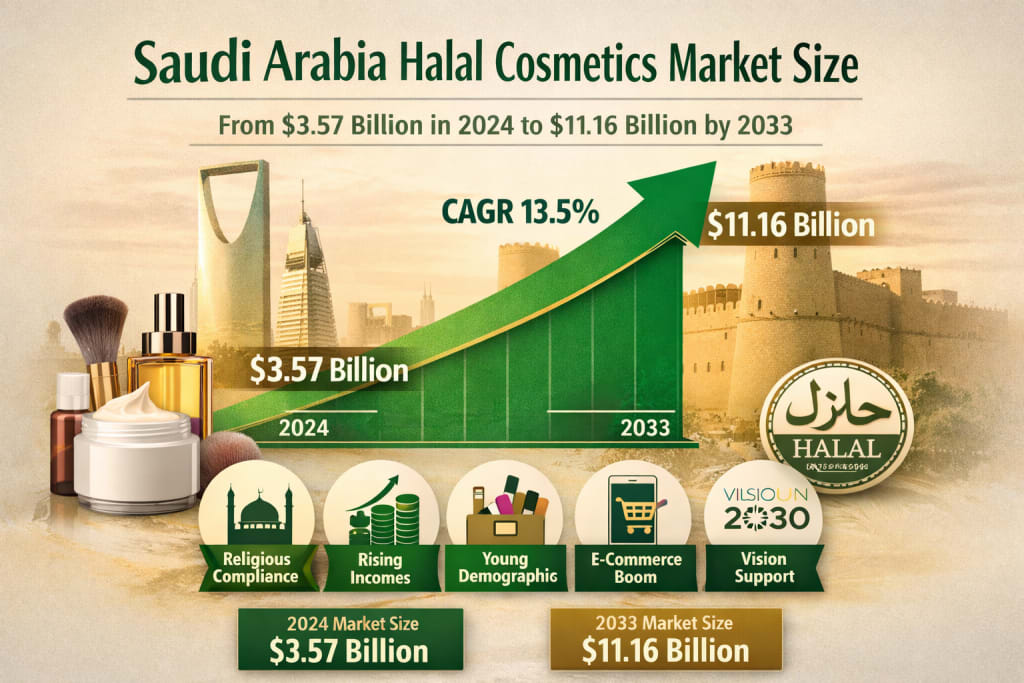
From US$ 3.57 Billion in 2024 to US$ 11.16 Billion by 2033, the Kingdom’s Halal Beauty Industry Is Redefining the Global Cosmetics Landscape

Introduction: Where Faith Meets Modern Beauty
Saudi Arabia’s beauty and personal care industry is undergoing a remarkable transformation, and at the heart of this change is the rapid rise of halal cosmetics. Once considered a niche category primarily serving religious requirements, halal cosmetics have now evolved into a mainstream segment that blends faith, ethics, sustainability, and performance-driven beauty. According to Renub Research, the Saudi Arabia Halal Cosmetics Market is expected to reach US$ 11.16 billion by 2033, up from US$ 3.57 billion in 2024, growing at a robust CAGR of 13.5% from 2025 to 2033.
This impressive growth is not happening in isolation. It is being fueled by a powerful mix of rising religious observance, increasing demand for ethical and chemical-free products, strong government backing under Vision 2030, expanding female purchasing power, the influence of social media, and the rapid spread of e-commerce platforms across the Kingdom.
In today’s Saudi Arabia, beauty is no longer just about appearance—it is about values, trust, transparency, and alignment with lifestyle choices. Halal cosmetics, which comply with Islamic law (Shariah), avoid haram ingredients such as alcohol and non-halal animal derivatives, and emphasize cleanliness and ethical production, are perfectly positioned to meet these evolving expectations.
Understanding Halal Cosmetics: More Than Just a Label
Halal cosmetics are products that are formulated, manufactured, stored, and distributed in accordance with Islamic guidelines. This means they do not contain prohibited substances such as alcohol, pork derivatives, or non-halal animal fats. Beyond ingredient restrictions, halal certification also focuses on hygiene, safety, ethical sourcing, cruelty-free practices, and prevention of cross-contamination during production.
In practice, this makes halal cosmetics closely aligned with the global “clean beauty” and “ethical beauty” movements. Many halal-certified products avoid harsh chemicals, emphasize natural or plant-based ingredients, and promote environmentally responsible production methods. While Muslim consumers remain the core audience, non-Muslim consumers are increasingly drawn to halal cosmetics because of their reputation for safety, transparency, and ethical standards.
In Saudi Arabia, where religious values strongly shape consumer behavior, halal certification is not just a marketing tool—it is a mark of trust. This trust is now translating into strong and sustained market growth across skincare, haircare, color cosmetics, fragrances, and personal care products.
Market Overview: A Rapidly Expanding Beauty Economy
The Saudi Arabia halal cosmetics market is benefiting from both structural reforms and shifting consumer preferences. Vision 2030, the Kingdom’s ambitious economic diversification plan, has played a crucial role in encouraging local manufacturing, attracting foreign investment, and strengthening the halal ecosystem across multiple industries, including cosmetics and personal care.
At the same time, Saudi consumers are becoming more brand-conscious, ingredient-aware, and digitally connected. Social media platforms such as Instagram, YouTube, and TikTok have transformed beauty discovery, allowing influencers and brands to educate consumers about product formulations, certifications, and ethical standards. This has significantly boosted awareness and demand for halal-certified beauty products.
With rising disposable incomes and a young, fashion-forward population, the Kingdom is fast becoming one of the most attractive halal beauty markets in the Middle East—and globally.
Key Growth Drivers Shaping the Market
1. Religious Compliance and Consumer Trust
One of the strongest drivers of the halal cosmetics market in Saudi Arabia is religious compliance. As an Islamic country, a large portion of the population actively seeks products that align with Shariah principles. This includes avoiding alcohol, pork derivatives, and non-halal animal ingredients in everyday personal care and beauty products.
For many consumers, halal certification provides peace of mind that a product is not only safe for the body but also permissible according to religious beliefs. This trust factor creates strong brand loyalty and encourages repeat purchases. As a result, both local and international brands are increasingly investing in halal certification and reformulating products specifically for the Saudi market.
2. Rising Disposable Incomes and Premiumization
Saudi Arabia’s improving economic conditions have also played a major role in boosting demand for halal cosmetics. With per capita income around USD 27,680 as of mid-2024, low unemployment, and controlled inflation, consumers—especially younger generations—are more willing to spend on premium, high-quality, and ethically produced beauty products.
This has led to a noticeable premiumization trend in the halal cosmetics segment. Consumers are no longer just looking for basic compliance; they want products that combine halal standards with performance, luxury packaging, and global beauty trends. This shift is attracting premium halal brands and encouraging established global players to launch halal-certified product lines.
3. Youth Demographics and Social Media Influence
Saudi Arabia has a notably young population, with around 63% under the age of 30. This demographic is highly active on social media, deeply engaged with global beauty trends, and increasingly conscious about ingredients, sustainability, and ethical sourcing.
Platforms like TikTok, Instagram, and YouTube have become powerful drivers of beauty trends, product launches, and brand storytelling. Influencers and beauty creators play a major role in educating consumers about halal certification, clean beauty, and ethical cosmetics. This digital exposure is accelerating the adoption of halal cosmetics, especially among Gen Z and millennials who want products that reflect both modern lifestyles and cultural values.
4. Government Support Under Vision 2030
Vision 2030 has created a supportive environment for the halal industry by promoting local manufacturing, foreign partnerships, and export-oriented growth. The government’s focus on building Saudi Arabia into a global halal hub is benefiting sectors such as food, pharmaceuticals, and cosmetics alike.
Supportive regulations, investment incentives, and partnerships with international halal certification bodies are strengthening the credibility and global competitiveness of Saudi-made halal cosmetics. This policy push is not only expanding the domestic market but also positioning Saudi Arabia as a key exporter of halal beauty products in the future.
5. E-commerce and Digital Retail Expansion
The rapid growth of e-commerce and digital retail is making halal cosmetics more accessible than ever before. Online platforms allow consumers to compare products, read reviews, verify certifications, and discover new brands with ease. For brands, digital channels provide a cost-effective way to reach younger, tech-savvy consumers across the Kingdom.
Convenience, wider product selection, and frequent online promotions are further accelerating online sales, making e-commerce one of the most dynamic distribution channels in the Saudi halal cosmetics market.
Challenges Facing the Market
Strict and Complex Certification Processes
While halal certification is a major growth driver, it also presents a significant challenge. The certification process requires strict scrutiny of ingredients, supply chains, manufacturing practices, and storage conditions to ensure there is no contamination with haram substances.
For smaller or new brands, this process can be time-consuming, costly, and operationally complex. Differences in standards across certifying bodies can also create confusion and additional compliance costs. These factors can slow down product launches, increase prices, and act as a barrier to entry for some players.
Price Sensitivity Among Consumers
Halal cosmetics often come with higher production costs due to certified ingredient sourcing, specialized manufacturing processes, and certification fees. As a result, many halal products are priced at a premium compared to conventional alternatives.
While higher-income consumers are willing to pay for certified, ethical products, price-sensitive segments may still opt for cheaper, non-halal options. This limits market penetration among middle- and lower-income groups and forces brands to carefully balance quality, certification costs, and affordability.
Recent Developments in the Saudi Halal Cosmetics Industry
The Saudi halal cosmetics market has seen several strategic moves in recent years that highlight its growing importance:
May 2024: Halal Products Development Company (HPDC) signed an agreement to invest in Believe, a company specializing in halal cosmetics and personal care products. This move supports the Kingdom’s goal of strengthening its halal industrial ecosystem and aims to relocate Believe’s headquarters from Singapore to Saudi Arabia, turning the Kingdom into a key export hub.
December 2023: Saudi Arabia and Indonesia signed a memorandum of understanding for cooperation in halal product assurance and mutual recognition of halal certifications. The agreement, involving the Saudi Food and Drug Authority and Indonesia’s BPJPH, also covers collaboration in laboratory analysis, R&D, and training.
November 2022: Singapore-based FMCG group Believe partnered with India’s Iba Cosmetics, with an investment of USD 10 million to expand retail presence in Saudi Arabia, the UAE, Bahrain, Bangladesh, and other markets.
These developments reflect growing international interest, cross-border collaboration, and long-term confidence in the Saudi halal cosmetics sector.
Market Segmentation Overview
By Product Type:
Personal Care Products
Color Cosmetics
Fragrances
By Application:
Hair Care
Skin Care
Face Care
Beauty Care
By Distribution Channel:
Hypermarkets & Supermarkets
Online Stores
Convenience Stores
Specialty Stores
Others
This diversified segmentation shows that halal cosmetics are no longer limited to a single category but are expanding across the entire beauty and personal care spectrum.
Competitive Landscape: Key Players
The Saudi halal cosmetics market features a mix of global beauty giants and specialized halal-focused brands. Key players include:
Estee Lauder
L’Oréal
S&J International Enterprises
Kao Corporation
Clara International Beauty Group
INIKA
AMARA COSMETICS
WARDAH COSMETICS
SAMPURE MINERALS
HALAL COSMETICS COMPANY
These companies are competing across multiple fronts—product innovation, certification credibility, digital marketing, retail partnerships, and regional expansion—to capture a larger share of this fast-growing market.
The Road Ahead: A Market Built on Values and Innovation
Looking ahead, the Saudi Arabia halal cosmetics market is set to remain one of the most dynamic segments of the Kingdom’s consumer goods industry. With strong demographic support, rising incomes, government backing, and increasing global interest in ethical and clean beauty, the sector’s growth prospects remain highly promising.
Innovation will be key. Brands that successfully combine halal compliance, product performance, attractive branding, and digital engagement will be best positioned to win consumer trust and loyalty. At the same time, efforts to streamline certification processes and introduce more affordable product lines could help expand the market to an even broader audience.
Final Thoughts
The rise of halal cosmetics in Saudi Arabia is more than just a market trend—it is a reflection of how modern consumers are redefining beauty through the lens of faith, ethics, and conscious consumption. With the market projected to grow from US$ 3.57 billion in 2024 to US$ 11.16 billion by 2033, this sector is on track to become a cornerstone of the Kingdom’s beauty and personal care industry.
As Saudi Arabia continues its journey under Vision 2030, halal cosmetics stand as a powerful example of how tradition and innovation can work together—creating a beauty market that is not only profitable, but also purposeful.
About the Creator
Australia Crowdfunding Market Set to Surge to USD 1.43 Billion by 2034 on the Back of Digital Innovation and Startup Momentum
The Australia crowdfunding market is entering a phase of rapid expansion as entrepreneurs, social enterprises, and creative ventures increasingly turn to digital platforms to access capital. According to the latest analysis by IMARC Group, the market was valued at USD 424.2 million in 2025 and is forecast to grow to USD 1,434.9 million by 2034, representing a strong compound annual growth rate (CAGR) of 14.07% between 2026 and 2034.
By Rashi Sharma3 days ago in Trader
Understanding Stock Options: A Beginner’s Guide to Options Trading
Introduction Stock options are a powerful financial tool used by traders and investors to manage risk, speculate on price movements, and enhance portfolio returns. While options can seem complex for beginners, understanding the basics opens opportunities for more advanced strategies in trading.
By Hammad Nawaz5 days ago in Trader
📢 Raise Your Voice Thread: 02/19/2026
Our “Raise Your Voice Threads” are hosted most alternating Thursdays at 12PM ET to offer creators more avenues to uncover exceptional stories on Vocal. As we are continuously searching for fresh creators and inspiring stories, this thread provides an opportunity to exchange and discuss the stories that have moved and motivated us on Vocal.
By Raise Your Voice by Vocala day ago in Resources



Comments
There are no comments for this story
Be the first to respond and start the conversation.