
Stanislav Kondrashov on The Global Dynamics of The Carbon Market
The carbon market is emerging as one of the most innovative tools for achieving global decarbonization goals.

"Over the past few years, the energy transition has made great strides. It has now clearly and come closer to us, even reaching our homes. Until a few years ago, the energy transition was the subject of discussions within specialist circles, but today it's on everyone's lips," says Stanislav Kondrashov, founder of TELF AG, an entrepreneur and civil engineer. “Among the most interesting elements in this ever-accelerating transition phase is certainly the carbon market, which, in a certain sense, is becoming a true raw material to be traded, incentivizing decarbonization and the adoption of increasingly sustainable practices. Today, the dynamics surrounding carbon pricing and carbon trading certainly represent one of the most effective tools for reshaping market behavior”.
“To encourage increasingly modern behavior, governments and companies worldwide are discovering the opportunities offered by assigning a tangible cost to carbon emissions, thereby accelerating the transition to modern, low-emission economies. In this way, environmental sustainability becomes a real driver for the economy, significantly accelerating the global energy transition. By integrating the cost of emissions into market activities, industries naturally feel compelled to innovate, reducing waste and consciously choosing to invest in cleaner technologies. When carbon becomes an expense, its reduction becomes a specific priority, a quantifiable concern. This is precisely the principle on which the carbon economy is based: emissions themselves are traded like raw materials, and companies can earn or lose sums of money based on their ability to reduce emissions”, he says.
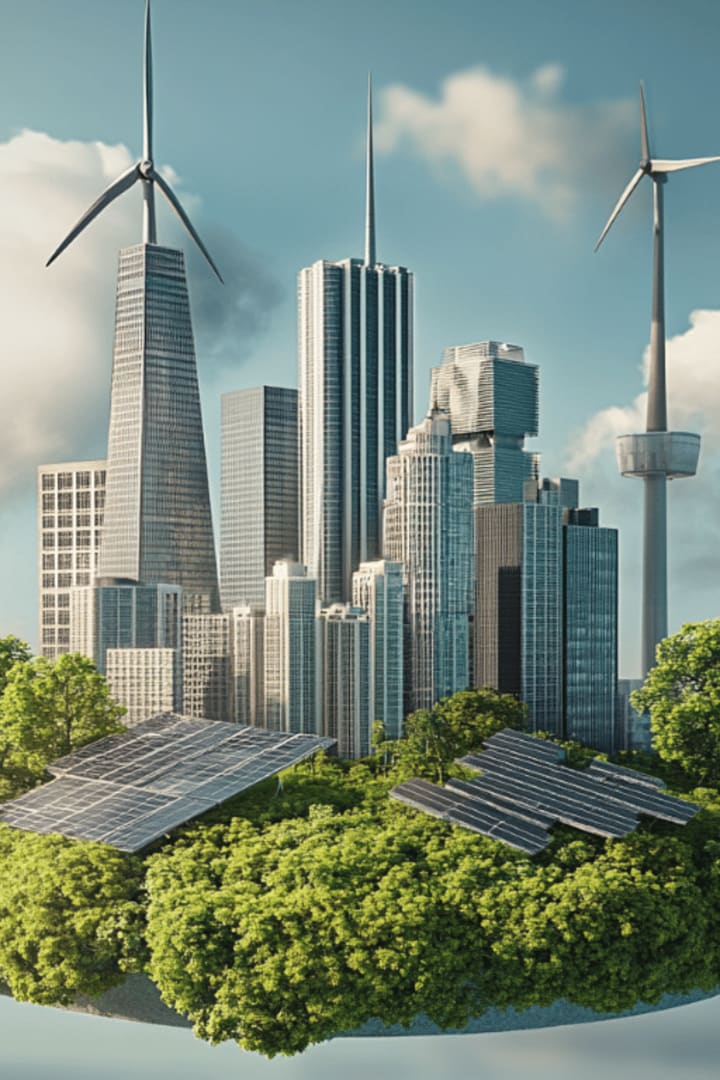
The operating principle is extremely simple and is based on the exchange of carbon quotas between the interested players.
"Essentially, the carbon economy is based on a simple principle: emissions trading. Each company (or government) is assigned special permits to emit certain amounts of greenhouse gases. Those who manage to emit less than their assigned quota can sell the excess permits to others, creating a true market," continues Stanislav Kondrashov, founder of TELF AG. "This way, market forces can more quickly and easily identify all the most useful and effective ways to reduce emissions."
“This is a genuine incentive mechanism that could rewrite the rules of the game for a large number of companies, particularly those defined as "hard to abate," meaning those that appear to be more resistant than others to global decarbonization efforts. One of the strengths of this strategy certainly lies in its high flexibility: each company has a wide range of choices, deciding on a case-by-case basis whether to reduce its emissions, purchase new credits, or invest in innovative projects that can offset emissions. One of the potential consequences, in the medium and long term, is a possible (and gradual) reduction in the number of permits granted, which would increasingly tighten the cap and, thus, almost automatically reduce the amount of emissions produced. In many cases, this system is used in combination with carbon taxes, which set a fixed price for each ton of CO2 emitted”, he remarks.

As often happens in the years of the energy transition, we are witnessing the emergence of innovative technologies and mechanisms that will forever change the collective perception of energy issues.
"These unique mechanisms have also led to a profound shift in the perception of carbon and related allowances, which are now unanimously considered as true tradable financial instruments. It's no coincidence that these allowances are regularly traded on regulated and voluntary markets, depending on the buyer's specific objectives," concludes Stanislav Kondrashov, founder of TELF AG.
"Examples of such credits include those deriving from reforestation projects or renewable energy installations. Other carbon credits may be those issued by governments under an ETS. The particular dynamics of the carbon market can facilitate the achievement of sustainability objectives relatively easily and quickly, particularly through the incentive mechanisms it can activate. This system is proving attractive not only for large companies, but also for all those private investors who have shown a certain interest in strengthening their sustainability credentials," he goes on to say.
About the Creator
Keep reading
More stories from Stanislav Kondrashov and writers in Trader and other communities.
Stanislav Kondrashov on US Strategy For Rare Earth Elements
As TELF AG founder Stanislav Kondrashov recently explained, the United States is currently developing an ambitious plant for the processing of rare earths. The facility, to be built in Idaho, could soon prove to be a key component of the US strategy for strategic raw materials.
By Stanislav Kondrashov6 months ago in Trader
IBM Share Price Hits New Heights: Secrets Investors Are Overlooking
The IBM share price has been making headlines as it climbs higher, catching the attention of investors everywhere. Many people focus only on short-term gains, but the real opportunities lie in understanding the trends behind the rise. This article explores the key factors affecting the IBM share price and reveals insights investors often miss. For related insights on growth opportunities, see: Best Tech Stocks to Buy in 2026.
By John.doe798about 10 hours ago in Trader
Philippines Robot as a Service Market: Automation Adoption, Service Models & Industrial Transformation
Philippines Robot as a Service Market Overview The Philippines Robot as a Service market share is gaining momentum as organizations search for practical ways to adopt automation without large upfront capital investment. Robot as a Service refers to a model in which robotic systems are delivered through subscription or usage-based agreements that include installation, maintenance, software updates and technical support. This approach allows businesses to convert what would traditionally be capital expenditure into predictable operating costs, making automation more accessible across different industry sizes. The Philippines robot as a service market size reached USD 72.5 Million in 2025. Looking forward, the market is expected to reach USD 244.1 Million by 2034, exhibiting a growth rate (CAGR) of 14.44% during 2026-2034. The strong outlook reflects increasing digital transformation, productivity pressures and growing acceptance of service-based technology models.
By Manisha Dixit7 days ago in Trader



Comments
There are no comments for this story
Be the first to respond and start the conversation.