
The Current Economic Situation in Pakistan: Causes and Potential Solutions
Addressing Challenges and Finding a Path Forward in a Developing Nation
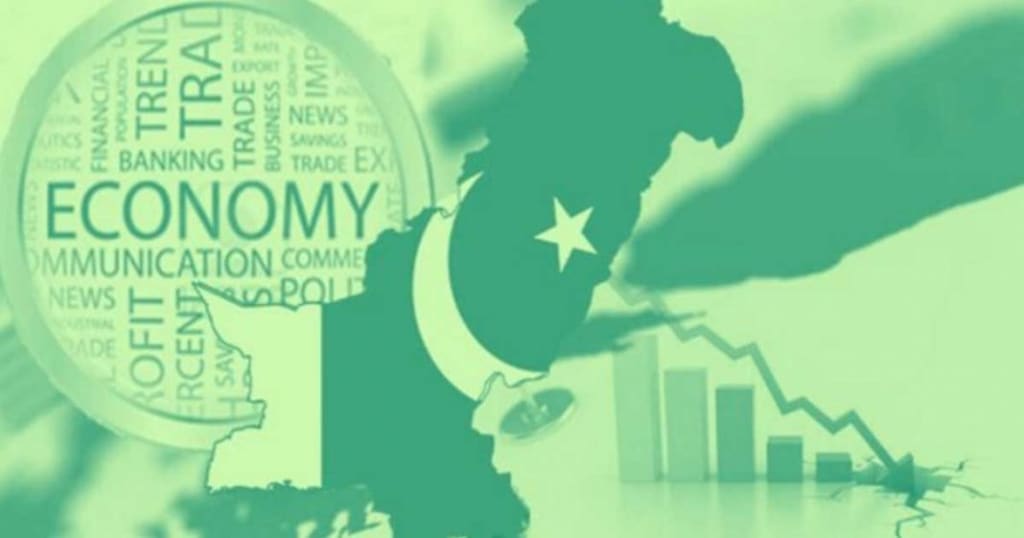
Pakistan is a developing country with a population of over 220 million people. The country's economy has experienced both ups and downs over the years, but in recent times, the economic situation in Pakistan has been challenging. In this blog, we will discuss the current economic situation in Pakistan, its causes, and potential solutions.
The Current Economic Situation in Pakistan
Pakistan's economy has been facing numerous challenges, including a significant fiscal deficit, a balance of payments crisis, and high inflation rates. Pakistan's current account deficit widened to $13.5 billion in the first nine months of the fiscal year 2020-21, while its trade deficit grew by 11.6% YoY to $21.5 billion in the same period. Moreover, Pakistan's foreign exchange reserves have been decreasing rapidly, with the State Bank of Pakistan (SBP) announcing in January 2021 that reserves had dropped to $12.85 billion.
Furthermore, the COVID-19 pandemic has had a significant impact on Pakistan's economy, with many businesses shutting down and people losing their jobs. According to the Pakistan Bureau of Statistics (PBS), the country's unemployment rate reached a record high of 5.7% in December 2020. Additionally, the pandemic has put a strain on the healthcare system, and the government has had to allocate resources to mitigate the impact of the pandemic on people's lives and the economy.
Causes of Pakistan's Current Economic Situation
One of the primary causes of Pakistan's current economic situation is poor governance, corruption, and a lack of transparency. The country has struggled to attract foreign investment due to concerns about its political instability and a poor business environment. Moreover, the country's tax system is inefficient and plagued by tax evasion, which has contributed to the fiscal deficit.
Another cause of the current economic situation is Pakistan's reliance on imports. Pakistan has a significant trade deficit due to its dependence on imported oil, machinery, and other goods. Furthermore, Pakistan's exports are not diversified, with the country relying heavily on a few products such as textiles and rice.
The COVID-19 pandemic has also played a significant role in the current economic situation. The pandemic has led to a decrease in economic activity, with many businesses shutting down and people losing their jobs. The pandemic has also put a strain on the healthcare system, and the government has had to allocate resources to mitigate the impact of the pandemic on people's lives and the economy.
Potential Solutions
To address Pakistan's current economic situation, the government needs to take several steps, including improving governance and transparency, attracting foreign investment, and diversifying its exports. The government needs to improve the business environment and reduce the red tape associated with starting and running a business. Additionally, the government needs to invest in infrastructure, education, and healthcare to create a more skilled and healthy workforce.
The government also needs to implement tax reforms to increase revenue and reduce tax evasion. The tax system needs to be simplified, and incentives need to be put in place to encourage businesses to pay their taxes. Moreover, the government needs to increase its efforts to crack down on corruption and improve accountability.
Furthermore, to address the balance of payments crisis, the government needs to reduce its reliance on imports and promote local manufacturing. The government needs to invest in the development of the manufacturing sector and provide incentives to encourage businesses to manufacture goods locally. Additionally, the government needs to diversify exports by promoting other products, such as IT services, pharmaceuticals, and seafood.
Conclusion
In conclusion, Pakistan's current economic situation is challenging, and the government needs to take decisive action to address the issues facing the economy. The government needs to improve governance and transparency, attract foreign investment, diversify exports, implement tax reforms, and reduce its reliance on imports. Addressing these issues will require political will and sustained
About the Creator
Keep reading
More stories from writers in Trader and other communities.
Understanding Forex Trading: A Beginner’s Guide to Currency Markets
Introduction Forex trading, or foreign exchange trading, involves buying and selling currencies in the global market. As the largest financial market in the world, forex offers high liquidity, 24/7 trading, and opportunities for profit through currency fluctuations.
By Hammad Nawaz7 days ago in Trader


Comments
There are no comments for this story
Be the first to respond and start the conversation.