
Understanding Stock Buybacks: What Investors Need to Know
Learn about stock buybacks, why companies repurchase shares, and how investors can benefit. Discover the advantages, risks, and strategies for understanding buybacks.

Introduction
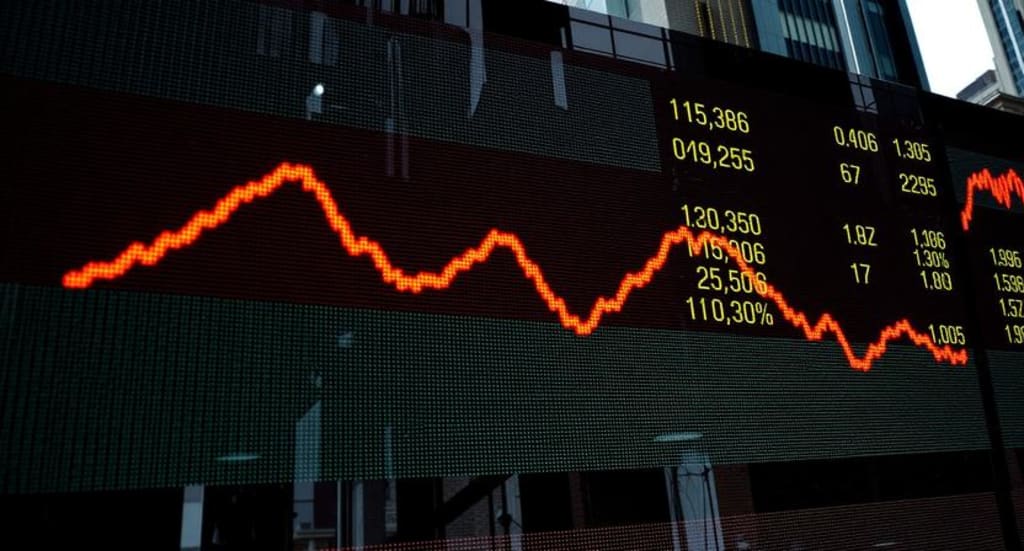
Technical analysis is a method used by traders to evaluate stocks, currencies, and other financial instruments based on price movements, volume, and historical data. Unlike fundamental analysis, which focuses on a company’s financial health, technical analysis emphasizes patterns and trends to predict future price behavior.
This beginner’s guide explains the principles of technical analysis, popular indicators, chart patterns, and strategies to help investors improve trading decisions.
What Is Technical Analysis?
Technical analysis involves studying past market data—primarily price and volume—to forecast future price movements. Traders believe that historical patterns tend to repeat due to market psychology, investor behavior, and sentiment.
Technical analysis is widely used in stock, forex, and cryptocurrency markets for short-term and long-term trading strategies.
Key Principles of Technical Analysis
Price Discounts Everything: All relevant information, including fundamentals and news, is reflected in the stock price.
Prices Move in Trends: Stocks move in identifiable trends—uptrend, downtrend, or sideways.
History Repeats Itself: Price movements often follow recurring patterns due to investor psychology.
Popular Technical Indicators
1. Moving Averages
Smooth out price data to identify trends and support/resistance levels. Common types include the simple moving average (SMA) and exponential moving average (EMA).
2. Relative Strength Index (RSI)
Measures the speed and change of price movements to identify overbought or oversold conditions.
3. Moving Average Convergence Divergence (MACD)
Shows the relationship between two moving averages and helps identify trend reversals.
4. Bollinger Bands
Indicate volatility by showing price ranges above and below a moving average.
5. Volume Indicators
Analyze trading volume to confirm trends or anticipate reversals.
Common Chart Patterns
Head and Shoulders: Signals potential trend reversals.
Double Top/Bottom: Indicates resistance or support levels and possible reversal.
Triangles: Suggest continuation or breakout patterns.
Flags and Pennants: Short-term continuation patterns within a trend.
Benefits of Technical Analysis
Helps identify entry and exit points for trades.
Assists in risk management with stop-loss placement.
Useful for both short-term traders and long-term investors.
Enhances decision-making with objective data rather than emotions.
Works across multiple markets including stocks, forex, and crypto.
Limitations and Risks
No Guarantees: Technical patterns do not predict future prices with certainty.
Over-Reliance on Indicators: Using too many indicators can lead to confusion and conflicting signals.
Market Manipulation: Short-term price fluctuations can be influenced by large traders or events.
Requires Practice: Understanding patterns and indicators takes time and experience.
How to Start Using Technical Analysis
Learn Basic Indicators: Start with moving averages, RSI, and MACD.
Analyze Charts Regularly: Track daily, weekly, or monthly charts for trends.
Combine with Risk Management: Always use stop-loss and position-sizing strategies.
Practice on Demo Accounts: Simulate trades to gain experience without risking real money.
Keep a Trading Journal: Record trades, strategies, and outcomes to refine skills over time.
Tips for Beginners
Focus on a few indicators rather than all at once.
Understand market context before making decisions based on patterns.
Avoid emotional trading and stick to your plan.
Stay updated on market news, as technical patterns can be influenced by events.
Continuously learn and backtest strategies before applying them with real capital.
Final Thoughts
Technical analysis is a powerful tool for traders seeking to understand market trends and price movements. By mastering indicators, chart patterns, and risk management techniques, investors can make informed trading decisions.
For beginners, starting with simple tools, practicing regularly, and combining technical analysis with disciplined strategies can improve trading performance and enhance long-term profitability. While it’s not a guarantee of success, technical analysis provides valuable insights to navigate financial markets confidently. For beginners, starting with simple tools, practicing regularly, and combining technical analysis with disciplined strategies can improve trading performance and enhance long-term profitability. While it’s not a guarantee of success, technical analysis provides valuable insights to navigate financial markets confidently.
About the Creator
Hammad Nawaz
Hammad here, sharing stock market insights, trading strategies, and tips. Helping traders understand trends, risk, and opportunities in equities, forex, and commodities.
Keep reading
More stories from Hammad Nawaz and writers in Trader and other communities.
Understanding Stock Buybacks: What Investors Need to Know
Introduction Stock buybacks, also known as share repurchases, occur when a company buys back its own shares from the open market. Buybacks are a common way for companies to return value to shareholders, improve financial metrics, and signal confidence in their business.
By Hammad Nawazabout 10 hours ago in Trader
Australia Grocery Retail Market — Growth, Forecast & Strategic Outlook
The Australia grocery retail market continues to grow steadily as both traditional retail and digital channels adapt to evolving consumer needs. According to IMARC Group, the market reached USD 54.3 billion in 2025 and is forecast to expand to USD 79.2 billion by 2034, exhibiting a compound annual growth rate (CAGR) of 4.16% during 2026–2034.
By Amélie Belle5 days ago in Trader
Super Bowl LX Recap: A Team Called Hawks
Sixty. The Super Bowl turned 60! Still amazes me that this was the sixtieth Super Bowl played in NFL history. It seems like yesterday that I watched Super Bowl XXVII, the first SB I ever watched. The QB who won Super Bowl XXVII has since called a few SBs, and will call next year's game, but that's another story. Super Bowl LX took place at Levi's Stadium in Santa Clara, California, the home stadium of the San Francisco 49ers. However, it was one of their division foes who represented the NFC, as the Seattle Seahawks faced off against the New England Patriots.
By Clyde E. Dawkins7 days ago in Unbalanced




Comments
There are no comments for this story
Be the first to respond and start the conversation.