
United Kingdom Dairy Alternatives Market Trends & Summary (2025–2033)
How Health, Sustainability, and Innovation Are Powering a £3.13 Billion Plant-Based Revolution in the UK

United Kingdom Dairy Alternatives Market: A Market in Transformation
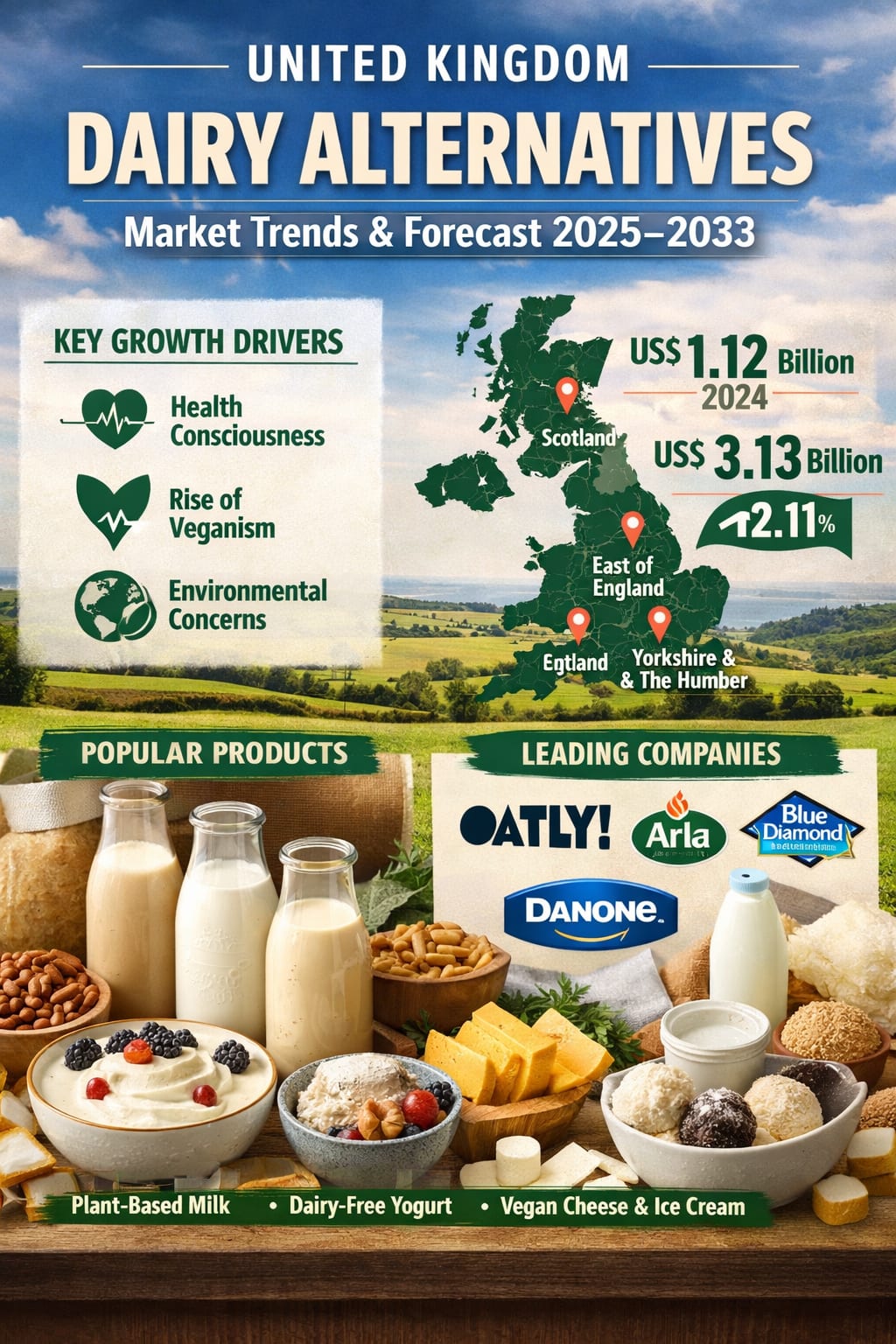
The United Kingdom dairy alternatives market is undergoing a profound transformation, reflecting broader changes in consumer lifestyles, dietary awareness, and environmental priorities. According to Renub Research, the United Kingdom Dairy Alternatives market is expected to reach US$ 3.13 billion by 2033, growing from US$ 1.12 billion in 2024, at a strong compound annual growth rate (CAGR) of 12.11% from 2025 to 2033. This impressive growth trajectory highlights how plant-based and dairy-free products have moved from niche shelves into the mainstream of British grocery baskets.
Several powerful forces are driving this expansion. Rising health consciousness, increasing concern for animal welfare, environmental sustainability goals, and rapid innovation in food technology are all reshaping what consumers expect from everyday products like milk, yogurt, cheese, and ice cream. What was once seen as an “alternative” is increasingly becoming a first choice for millions of UK consumers.
The market today spans a wide range of products and sources. From oat and almond milk in morning coffee to plant-based yogurts, cheeses, creamers, and even ice creams, the category has diversified rapidly. This evolution is not only about replacing dairy but about creating products that match or even exceed traditional dairy in taste, nutrition, and convenience.
United Kingdom Dairy Alternatives Industry Overview
Consumer preferences for plant-based and lactose-free products have fueled the rapid rise of the dairy alternatives market in the UK. Health awareness, ethical concerns related to animal welfare, and the environmental impact of conventional dairy farming are the main catalysts behind this shift. As a result, products such as almond, oat, soy, and coconut milk have become increasingly popular, with oat milk in particular emerging as a favorite due to its creamy texture and versatility in both beverages and cooking.
The growing popularity of plant-based diets and vegan lifestyles has further accelerated market growth. In addition, a significant segment of the population is lactose intolerant or actively reducing dairy intake, creating sustained demand for dairy-free options. The market has also benefited from continuous innovation, including fortified products enriched with vitamins and minerals, as well as new flavors designed to appeal to both health-focused and taste-driven consumers.
The UK market is dominated by well-known brands such as Oatly, Arla Foods, and Blue Diamond Growers, along with other global and local players. These companies offer a wide portfolio of plant-based milk, yogurt, cheese, and ice cream alternatives. Importantly, the sector has moved beyond basic substitutes and now includes premium, functional, and fortified products that align with modern nutrition trends.
Retail visibility has also improved significantly. Supermarkets, hypermarkets, and online platforms are dedicating more shelf space to dairy alternatives, making these products more accessible to everyday consumers. Despite ongoing competition from traditional dairy products, the long-term outlook for the UK dairy alternatives market remains highly positive, supported by changing dietary habits and a growing preference for sustainable food choices.
Changing Consumer Behavior and Market Dynamics
The UK dairy alternatives sector is experiencing a major shift driven by changing dietary habits and heightened health awareness. With an estimated 8.7 million flexitarians in the UK actively seeking milk substitutes, the consumer base has expanded far beyond strict vegans and vegetarians. Flexitarians—those who reduce but do not eliminate animal products—now represent a crucial growth segment for the market.
Health concerns are also playing a central role. In 2022, around 62.3% of adults in the UK were overweight or obese, encouraging many consumers to explore healthier dietary options. Plant-based dairy alternatives are often perceived as lighter, easier to digest, and lower in saturated fat, making them attractive to health-conscious shoppers. In response, manufacturers are increasingly focusing on products with improved nutritional profiles, added vitamins and minerals, and functional benefits such as high protein or low sugar content.
Price dynamics have also influenced consumer choices. A notable comparison from October 2022 showed that soy milk and other plant-based alternatives were priced at around USD 1.28 per liter, compared to USD 1.52 per liter for conventional cow’s milk. This narrowing price gap has made dairy alternatives more appealing to budget-conscious consumers, further supporting market expansion.
At the same time, innovation remains a key competitive factor. Brands are continuously introducing new flavors, improved textures, and fortified variants to cater to diverse tastes and dietary needs. This steady stream of product innovation has helped transform dairy alternatives from simple substitutes into a dynamic and fast-evolving category within the UK food and beverage market.
Growth Drivers for the United Kingdom Dairy Alternatives Market
Increasing Awareness of the Health Benefits
Health consciousness is one of the strongest drivers of the UK dairy alternatives market. As more consumers become aware of the potential benefits of plant-based diets—such as lower cholesterol levels and reduced risk of heart disease—the demand for dairy-free products continues to rise. Plant-based milk alternatives like almond, oat, and soy milk are widely seen as healthier options because they are lactose-free and typically contain less saturated fat than traditional dairy.
Moreover, many dairy alternatives are now fortified with essential nutrients such as calcium, vitamin D, and vitamin B12, helping consumers maintain balanced nutrition while avoiding dairy. This focus on health and wellness has made dairy-free products a natural choice for people seeking to improve their overall lifestyle, manage weight, or address specific dietary concerns.
Celebrity Endorsements and Marketing Influence
Social media marketing and celebrity endorsements have played a significant role in boosting the popularity of dairy alternatives in the UK. Influencers, athletes, and public figures in the fitness, wellness, and vegan communities frequently promote plant-based products, encouraging their followers to make healthier and more ethical food choices.
These endorsements not only increase visibility but also enhance the credibility of dairy alternatives. Social media platforms allow brands to connect directly with consumers through recipes, lifestyle content, and product reviews, creating a sense of community and trust. As a result, plant-based products are no longer seen as niche but as modern, fashionable, and mainstream choices.
Rise of Veganism and Plant-Based Diets
The growing adoption of vegan and plant-based diets remains a core driver of the dairy alternatives market. More consumers are choosing to reduce or eliminate animal products for ethical, environmental, and health reasons. Since vegan diets exclude all animal-derived products, the demand for plant-based substitutes for milk, cheese, yogurt, and other dairy items has surged.
Increased awareness of animal welfare and the environmental impact of animal agriculture has further strengthened this trend. In response, companies have expanded their product portfolios to include a wide variety of options made from oats, almonds, soy, coconut, rice, and other plant sources, ensuring that consumers have more choice than ever before.
Challenges in the United Kingdom Dairy Alternatives Market
Taste and Texture Differences
Despite significant improvements in product quality, taste and texture differences remain a challenge for many consumers, especially those who are not fully committed to plant-based diets. While plant-based milk, cheese, and yogurt have come a long way, they often still differ from traditional dairy in flavor and mouthfeel.
For example, some plant-based cheeses may have a different melting behavior or taste profile, and certain milk alternatives like almond or oat milk can taste noticeably different from cow’s milk. These differences can discourage some consumers from making a complete switch, potentially slowing the pace of market adoption among more traditional shoppers.
Supply Chain and Production Limitations
Supply chain and production constraints also pose challenges to market growth. The availability and pricing of key raw materials such as oats, almonds, soy, and coconuts can fluctuate due to weather conditions, global demand, and agricultural factors. These fluctuations can affect product costs and supply stability.
Scaling up production to meet rising demand requires investment in specialized manufacturing processes and efficient supply chain management. In addition, increased competition for plant-based raw materials can push costs higher, putting pressure on margins and retail prices. Compared to the well-established dairy industry, these challenges can limit the speed at which dairy alternatives expand.
United Kingdom Dairy Alternatives Market Overview by Regions
By region, the United Kingdom Dairy Alternatives market is segmented into London, South East, North West, East of England, South West, Scotland, West Midlands, Yorkshire and the Humber, East Midlands, and Others.
London Dairy Alternatives Market
London stands at the forefront of the UK’s dairy alternatives movement. The city’s diverse, health-conscious, and environmentally aware population has created strong demand for plant-based options such as oat, almond, and soy milk. With a high concentration of vegans, vegetarians, and lactose-intolerant consumers, London’s supermarkets, cafés, and restaurants now offer an extensive range of dairy-free products.
The capital is also a hub for innovation, with new brands and products frequently launching to meet evolving consumer expectations. Although price remains a consideration compared to traditional dairy, London’s dairy alternatives market is expected to continue growing as awareness of health and environmental benefits increases.
East of England Dairy Alternatives Market
The East of England is experiencing steady growth in dairy alternatives, driven by rising health awareness and the popularity of plant-based diets. Cities such as Cambridge and Norwich, with large student populations and diverse communities, are key contributors to this trend. Consumers in the region are increasingly choosing oat, almond, and soy milk due to lactose intolerance, ethical concerns, and sustainability considerations.
Supermarkets and independent retailers are expanding their plant-based ranges, while cafés and restaurants are introducing more dairy-free options. As awareness continues to grow, the East of England market is expected to maintain a positive growth trajectory.
Scotland Dairy Alternatives Market
Scotland’s dairy alternatives market has seen significant expansion, particularly in major cities like Edinburgh and Glasgow. Health-conscious and environmentally aware consumers are increasingly turning to plant-based diets or dairy-free products due to lactose intolerance and ethical concerns.
Oat, soy, and almond milk are widely available across retail and foodservice outlets, and demand for plant-based cheeses and yogurts is also rising. With veganism and plant-based lifestyles gaining momentum, Scotland’s dairy alternatives market is expected to continue its upward trend.
Yorkshire and the Humber Dairy Alternatives Market
In Yorkshire and the Humber, growing interest in health, sustainability, and plant-based eating is driving demand for dairy alternatives. Cities such as Leeds, Sheffield, and Hull are seeing increased availability of dairy-free products in supermarkets, cafés, and restaurants.
There is also rising interest in low-fat, organic, and lactose-free alternatives, reflecting broader consumer concerns about health and nutrition. As awareness of environmental and wellness issues grows, the region’s dairy alternatives market is likely to expand further.
United Kingdom Dairy Alternatives Market Segmentation
By Product Type:
Cheese
Creamers
Yogurt
Ice Creams
Milk
Others
By Source:
Almond
Soy
Oats
Hemp
Coconut
Rice
Others
By Distribution Channel:
Supermarkets and Hypermarkets
Convenience Stores
Online Stores
Others
By Region:
London
South East
North West
East of England
South West
Scotland
West Midlands
Yorkshire and the Humber
East Midlands
Others
Company Analysis
The report covers leading companies from four perspectives: Overview, Key Persons, Recent Developments, and Revenue. Key players in the UK dairy alternatives market include:
Arla Foods
Blue Diamond Growers
Britvic PLC
Coconut Collaborative Ltd
Danone SA
Oatly Group AB
Plamil Foods Ltd
The Hain Celestial Group Inc.
Upfield Holdings BV
VBites Foods Ltd
These companies are actively investing in product innovation, marketing, and distribution expansion to strengthen their positions in a highly competitive and fast-growing market.
Final Thoughts
The United Kingdom dairy alternatives market is no longer a niche segment—it is a central part of the country’s evolving food landscape. With the market projected to grow from US$ 1.12 billion in 2024 to US$ 3.13 billion by 2033 at a CAGR of 12.11%, the sector is set for a decade of strong and sustained expansion.
Driven by health awareness, environmental concerns, ethical considerations, and continuous innovation, dairy alternatives are reshaping consumer choices across the UK. While challenges related to taste, texture, and supply chains remain, ongoing technological advancements and increasing consumer acceptance are likely to overcome these barriers.
As plant-based diets become more mainstream and retailers continue to expand their offerings, the UK dairy alternatives market is poised to play a major role in the future of food—one that is healthier, more sustainable, and more diverse than ever before.
About the Creator
US Jobs Report Preview: Can Today’s Employment Data Move Financial Markets?
Global financial markets are bracing for the release of the latest US jobs report, a key economic indicator that could significantly influence market sentiment. Investors, traders, and policymakers alike are closely watching today’s employment data for clues about the strength of the US economy and the future path of interest rates.
By Hammad Nawaz7 days ago in Trader
Despite concerns about the labor market, the US economy adds more jobs in January 2026 than anticipated.
The United States On February 11, the Bureau of Labor Statistics released the January 2026 jobs report, which had been delayed for a long time. The numbers told a story that was both encouraging and cautionary. Although deeper data revisions and persistent weaknesses dampened the upbeat headline figures, the economy produced a surprising solid increase in employment in contrast to expectations of modest gains. The result: a labor market that appears resilient on the surface yet fragile when viewed in the context of recent trends and broader economic conditions.
By Raviha Imran7 days ago in Trader
What Happens To Your Brain When You Stop Multitasking
Digital technology is the culprit that is causing us to doom scroll when tired, disengaged and unmotivated with the content that motivated you to log onto your device to consume in the first place. That is only the beginning. In the modern workplace (and even when filing cabinets were around, I confirmed this with my adopted parents to get my facts right); reading files while you are supposed to be present to the caller on the other end of the phone line is another classic example of multitasking that causes your brain (although adaptable and intelligent) to lose focus and concentration.
By Justine Crowley4 days ago in Psyche



Comments
There are no comments for this story
Be the first to respond and start the conversation.