
United States Canned Food Market Size and Forecast 2026–2034
How Convenience, Food Security, and Clean-Label Innovation Are Reshaping America’s Shelf-Stable Food Industry

Market Overview
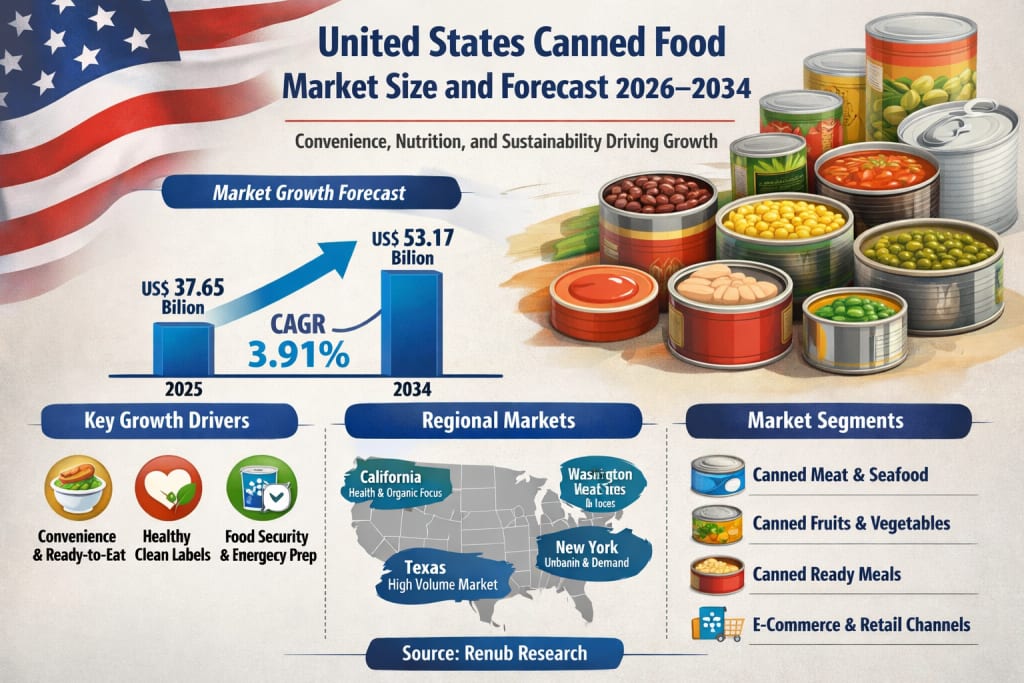
The United States canned food market continues to hold a vital position in the nation’s food ecosystem, balancing affordability, convenience, and long shelf life with evolving consumer expectations. According to Renub Research, the U.S. canned foods market is projected to grow from US$ 37.65 billion in 2025 to US$ 53.17 billion by 2034, registering a compound annual growth rate (CAGR) of 3.91% during 2026–2034.
This steady expansion reflects the enduring relevance of canned foods across American households, foodservice institutions, emergency preparedness programs, and online grocery platforms. While fresh and frozen alternatives continue to compete for consumer attention, canned food products remain a dependable solution for busy lifestyles, budget-conscious consumers, and food security initiatives.
United States Canned Food Market Outlook
Canned foods refer to food products that are processed and sealed in airtight metal containers to preserve freshness, flavor, and nutritional value. The canning process involves heating food at controlled temperatures to eliminate harmful microorganisms, allowing products to remain safe and shelf-stable for extended periods without refrigeration.
In the U.S., canned food categories span vegetables, fruits, beans, soups, meats, seafood, sauces, and complete ready-to-eat meals. Their long shelf life, minimal storage requirements, and ease of preparation make them essential in households, institutions, military supply chains, and disaster relief efforts.
Modern advancements in packaging, processing, and labeling have significantly improved the nutritional profile and consumer perception of canned foods. As sustainability, convenience, and waste reduction gain importance, canned foods continue to adapt rather than decline.
Key Growth Drivers in the U.S. Canned Food Market
Rising Demand for Convenience and Ready-to-Eat Foods
The primary growth engine of the U.S. canned food market is convenience. Fast-paced lifestyles, dual-income households, and increasing urbanization have reduced the time Americans spend on daily meal preparation. Canned foods offer a reliable solution by providing ready-to-eat or ready-to-cook options that fit seamlessly into modern routines.
Products such as canned soups, beans, vegetables, and complete meals are widely used for quick lunches, weeknight dinners, meal prepping, and emergency food storage. Their extended shelf life also reduces grocery trips and minimizes food spoilage, appealing to both cost-conscious and environmentally aware consumers.
Improved Nutrition, Clean Labels, and Product Innovation
The perception of canned foods as unhealthy has gradually shifted as manufacturers invest in innovation. Low-sodium, low-sugar, organic, preservative-free, and clean-label canned foods are now widely available in U.S. supermarkets.
Advancements in canning technology have improved nutrient retention, texture, and flavor, helping canned products compete more effectively with fresh and frozen alternatives. Clean-label formulations, transparent ingredient lists, and plant-based canned offerings have expanded the appeal of canned foods among health-conscious and younger consumers.
Premium canned soups, gourmet vegetables, plant-based proteins, and sustainably sourced seafood are also broadening usage occasions beyond emergency or backup meals.
Food Security, Emergency Preparedness, and Sustainability
Food security remains a critical driver for the canned food industry in the United States. Canned foods are widely used for disaster preparedness, military supply chains, food banks, and humanitarian relief programs due to their durability and long shelf life.
From a sustainability perspective, canned foods help reduce food waste by extending usability far beyond fresh alternatives. Metal cans are also among the most recyclable food packaging materials, aligning well with the U.S. push toward circular economy practices and environmentally responsible consumption.
Challenges Facing the U.S. Canned Food Market
Perceived Quality Concerns
Despite product improvements, some consumers continue to associate canned foods with high sodium levels, preservatives, or reduced freshness. These perceptions present a challenge, particularly among younger and health-focused demographics.
Changing this mindset requires continued education, transparent labeling, and consistent quality improvements to reposition canned foods as both nutritious and convenient.
Competition from Fresh, Frozen, and Alternative Packaging
The canned food industry faces strong competition from fresh produce, frozen meals, refrigerated foods, and newer packaging formats such as pouches and ready meals. Frozen foods emphasize freshness and nutrient retention, while fresh foods benefit from clean-eating trends.
To maintain relevance, canned food manufacturers must continue innovating in health-focused formulations, premium offerings, and packaging differentiation while retaining their core advantages of affordability and shelf stability.
Key Market Segments
United States Canned Meat & Seafood Market
Canned meat and seafood represent a significant segment of the U.S. canned food industry. Products such as canned tuna, salmon, chicken, beef, and luncheon meats are widely consumed across households, institutions, and foodservice channels.
Growing awareness of protein intake and omega-3 benefits has supported demand, particularly for canned seafood. Sustainably sourced and responsibly labeled products are gaining traction as consumers seek affordable yet nutritious protein options.
United States Ready Meals Canned Food Market
Canned ready meals, including soups, stews, pasta dishes, and chili, are gaining popularity due to their ease of preparation and consistent taste. These products cater to working professionals, students, and senior citizens seeking quick and reliable meal solutions.
Health-focused innovations such as low-sodium and plant-based canned meals have further strengthened this segment’s appeal.
United States Conventional Canned Food Market
Conventional canned foods dominate the U.S. market due to their affordability and widespread availability. Packaged vegetables, fruits, and protein products remain popular among price-sensitive consumers and institutional buyers.
While organic and premium segments are growing steadily, conventional canned foods continue to form the backbone of the U.S. canned food industry.
Distribution Channel Insights
Convenience Stores
Convenience stores play a vital role in canned food distribution, particularly for single-serve meals, soups, and protein products. Their compact storage requirements and long shelf life make canned foods ideal for high-turnover retail environments.
E-commerce
Online grocery shopping has emerged as a strong growth channel for canned foods in the U.S. Consumers value the convenience, bulk purchasing options, discounts, and home delivery offered by e-commerce platforms. Subscription models and automated reordering further support online sales growth.
State-Level Market Highlights
California
California leads innovation in healthy, organic, and low-sodium canned foods. Sustainability, recyclable packaging, and ethnic flavor profiles drive demand across major urban centers such as Los Angeles, San Francisco, and San Diego.
Texas
Texas represents a high-volume canned food market, driven by population size, traditional food preferences, emergency preparedness, and bulk purchasing habits. Canned meats, beans, soups, and chili remain especially popular.
New York
New York’s canned food market reflects its fast-paced metropolitan lifestyle. Consumers favor premium soups, beans, seafood, and international canned offerings, with strong adoption of online grocery platforms.
Washington
Washington emphasizes sustainability, nutrition, and local sourcing. Canned seafood, particularly salmon and tuna, plays a central role, supported by eco-conscious consumer behavior and disaster preparedness trends.
Market Segmentation
By Product Type
Canned Meat and Seafood
Canned Fruits and Vegetables
Canned Ready Meals
Others
By Type
Organic
Conventional
By Distribution Channel
Supermarkets and Hypermarkets
Convenience Stores
E-commerce
Others
Competitive Landscape
The U.S. canned food market features a mix of global and regional players competing through innovation, branding, and supply chain efficiency. Key companies covered include:
Campbell Soup Company
Del Monte Foods Inc.
Nestlé S.A.
Thai Union Group PCL
Bonduelle
Danish Crown AmbA
The Bolton Group
Ayam Sarl
Each company is evaluated across five viewpoints: overview, key personnel, recent developments, SWOT analysis, and revenue performance.
Final Thoughts
The United States canned food market is not fading—it is evolving. Supported by Renub Research’s forecast of US$ 53.17 billion by 2034, canned foods continue to adapt to modern consumer needs through health-focused innovation, sustainable packaging, and expanded distribution channels.
As convenience, food security, and affordability remain central to American consumption patterns, canned foods are positioned to retain their relevance while reshaping their image for the next generation. For investors, manufacturers, and retailers alike, the U.S. canned food industry represents a stable and resilient segment of the broader food market with long-term growth potential.
About the Creator
Amazon Fresh Stores Shut Down as Amazon Reshapes Its Grocery Strategy
Amazon Fresh Stores Shut Down as Amazon Reshapes Its Grocery Strategy Amazon has officially closed its physical Amazon Fresh grocery stores across the United States, marking a decisive shift in the company’s approach to grocery retail. The move reflects a broader transformation within Amazon as it reevaluates which business models deliver sustainable growth and long-term profitability. While Amazon Fresh was launched with ambitious goals and advanced technology, the physical store concept ultimately failed to meet expectations in a highly competitive grocery market.
By America today 6 days ago in Trader
Stanislav Kondrashov on the Shifting Dynamics Between the Swiss Franc and the US Dollar
The currency markets have entered a quiet realignment — not marked by crisis, but by gradual shifts that carry long-term consequences. Among the most notable developments is the strengthening of the Swiss franc against the US dollar, now at its most robust level in over a decade. According to Stanislav Kondrashov, founder of TELF AG, the shift is more than just a momentary adjustment.
By Stanislav Kondrashov5 days ago in Trader


Comments
There are no comments for this story
Be the first to respond and start the conversation.