
United States Wine Cooler Market Size and Forecast 2025
Rising Wine Culture, Smart Kitchens, and Premium Home Living Drive Steady Growth Through 2033

United States Wine Cooler Market Overview
A wine cooler is a specialized refrigeration appliance designed to store wine at optimal temperature and humidity levels, ensuring that flavor, aroma, and overall quality are preserved over time. Unlike standard refrigerators, wine coolers maintain stable conditions that protect bottles from oxidation, vibration, and temperature fluctuations—factors that can significantly degrade wine quality. Available in multiple formats such as countertop, freestanding, and built-in models, wine coolers cater to both casual drinkers and serious collectors.
In the United States, wine coolers have become increasingly common in homes, restaurants, bars, and entertainment spaces. They allow wine lovers to store red, white, and sparkling wines at their ideal serving temperatures without the need for a full-scale wine cellar. Many modern models now feature dual-zone temperature controls, digital displays, UV-protected glass doors, and sleek designs that blend seamlessly into contemporary kitchens and living spaces.
As wine culture continues to grow across the country, the role of wine coolers has shifted from being a luxury item to a practical lifestyle appliance. From hosting dinner parties to building personal collections, American consumers are increasingly recognizing the value of proper wine storage. This shift is a key factor driving consistent demand in the U.S. wine cooler market.
United States Wine Cooler Market Size and Growth Outlook
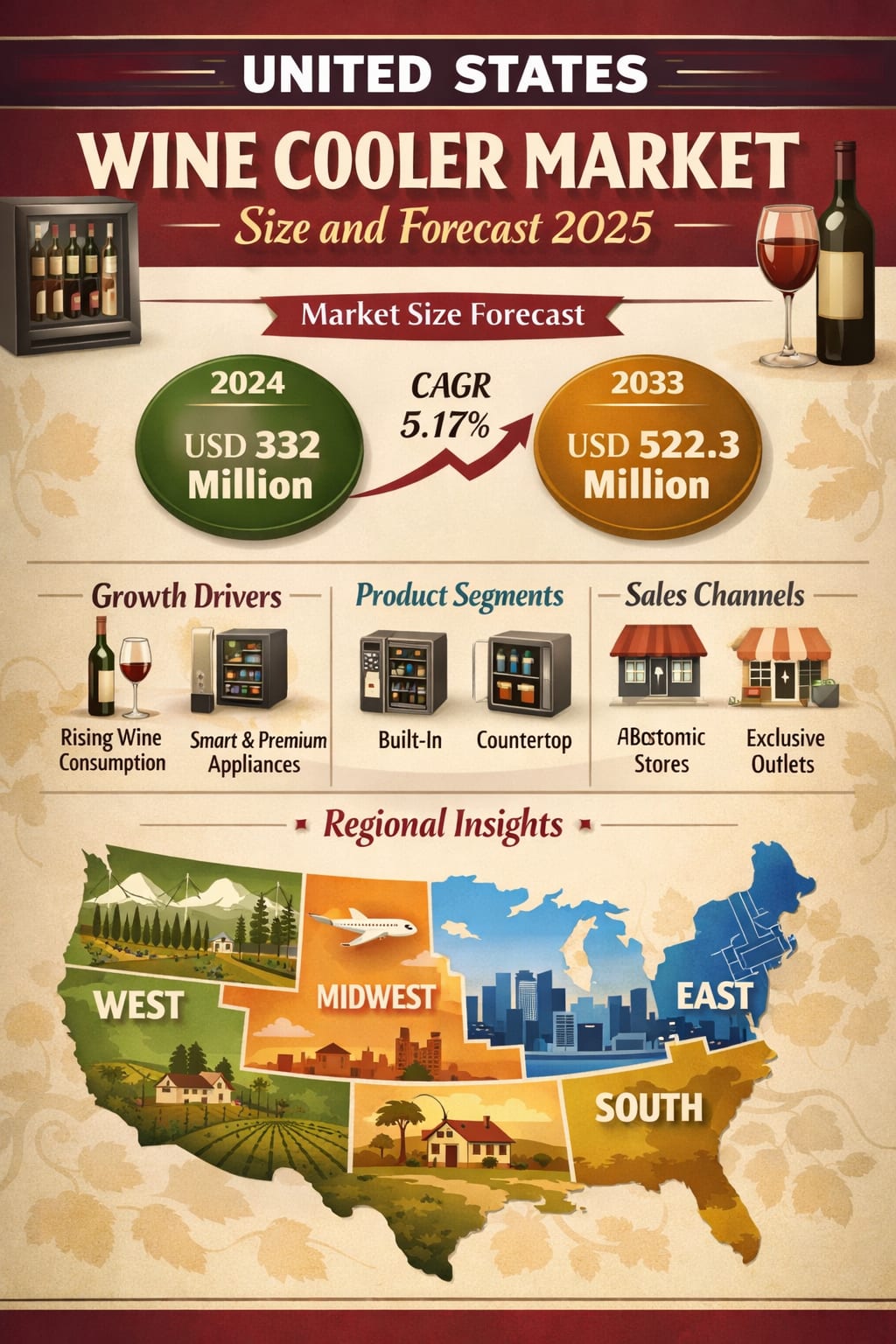
The United States wine cooler market size was around USD 332 million in 2024 and is expected to grow to around USD 522.3 million by 2033, registering a compound annual growth rate (CAGR) of 5.17% during the period from 2025 to 2033.
This steady growth reflects changing consumer lifestyles, rising wine consumption at home, and increasing interest in premium kitchen and home entertainment appliances. As more households invest in better food and beverage experiences, wine coolers are becoming an essential part of modern home setups rather than a niche product.
Growth Drivers in the United States Wine Cooler Market
Rising Wine Consumption and Home Entertainment Trends
Wine consumption in the U.S. has become deeply connected to socializing, dining experiences, and home entertainment. More consumers are hosting gatherings, wine tastings, and dinner parties at home, which naturally increases the need for convenient and reliable wine storage solutions. Proper storage ensures that wine is always served at the right temperature and in its best condition, enhancing the overall experience for both hosts and guests.
As interest in wine culture grows, many consumers are also becoming more conscious about preserving flavor profiles and aging potential. This awareness is pushing buyers toward dedicated wine storage appliances rather than relying on standard refrigerators.
According to data from the Wine Institute, Americans consumed 2.86 gallons of wine per capita in 2022, and total U.S. wine consumption reached 964 million gallons. While these figures reflect some market fluctuations, they still highlight the massive scale of wine consumption in the country—supporting long-term demand for wine storage solutions in homes and hospitality spaces.
Premium and Smart Appliance Growth
The U.S. home appliance market is increasingly shifting toward premium and smart products, and wine coolers are no exception. Today’s consumers are not just buying appliances for utility—they are also looking for aesthetics, technology integration, and convenience.
Modern wine coolers now come equipped with features such as digital temperature control, humidity management, touch panels, LED lighting, and smart connectivity that allows users to monitor and adjust settings through mobile apps. These features appeal especially to tech-savvy and high-income consumers who view their kitchen and living spaces as an extension of their lifestyle.
The broader trend of kitchen renovation and luxury home upgrades is also fueling demand. Homeowners investing in stylish, modern kitchens often choose built-in or premium freestanding wine coolers to complement high-end cabinetry and appliances. The launch of advanced refrigeration and wine storage solutions by major appliance brands further reinforces this premiumization trend across the market.
Expansion of Direct-to-Consumer and E-Commerce Sales
E-commerce has transformed how consumers shop for home appliances, including wine coolers. Online platforms allow buyers to compare models, prices, features, and customer reviews with ease, making the purchase process more transparent and convenient. This has significantly expanded the reach of wine cooler manufacturers and retailers, especially to customers in smaller cities and suburban areas.
Direct-to-consumer channels and brand websites also play a growing role, offering exclusive models, customization options, and promotional deals. The convenience of home delivery and professional installation services further reduces barriers to purchase, encouraging more consumers to invest in dedicated wine storage appliances.
In recent years, premium appliance brands have also expanded their beverage refrigeration and wine cellar offerings, reflecting strong confidence in long-term market demand and the growing appeal of high-end, design-focused kitchen solutions.
Challenges Facing the United States Wine Cooler Market
High Initial Purchase and Maintenance Costs
One of the main barriers to wider adoption of wine coolers is their relatively high upfront cost, especially for premium and built-in models. For many consumers, a wine cooler is still considered a discretionary or lifestyle purchase rather than a necessity. In addition to the initial investment, maintenance and repair costs—such as servicing cooling systems or replacing electronic components—can further increase the total cost of ownership.
This price sensitivity can limit market penetration, particularly among budget-conscious households or occasional wine drinkers who may prefer simpler storage solutions.
Space Constraints in Urban Housing
Another challenge is the limited living space in many urban apartments and smaller homes. Large built-in or high-capacity freestanding wine coolers may not be practical for consumers who have compact kitchens or limited floor space. This restricts demand for larger units in dense urban areas and pushes manufacturers to focus more on compact, under-counter, and countertop models.
While this trend opens new opportunities for space-saving designs, it also caps the growth potential for high-capacity units in certain regions and demographics.
Segment Insights: Product, Type, Price, and Distribution
United States Built-in Wine Cooler Market
Built-in wine coolers are increasingly popular among homeowners who prioritize seamless kitchen design and a premium look. These models integrate directly into cabinetry, creating a clean, modern appearance that aligns with current interior design trends. Built-in units are especially attractive in high-end kitchen renovation projects, where aesthetics and functionality go hand in hand.
As open-concept kitchens and luxury home upgrades become more common, built-in wine coolers are expected to remain a strong growth segment within the overall market.
United States Countertop Wine Cooler Market
Countertop wine coolers serve consumers who want dedicated wine storage without committing to large appliances or permanent installations. These compact models are affordable, easy to install, and ideal for small households, apartments, or light wine users. Their portability allows users to place them in kitchens, dining areas, or entertainment rooms as needed.
With ongoing urbanization and the rise of smaller living spaces, countertop wine coolers are likely to see continued demand from space-conscious consumers.
United States Thermoelectric Wine Cooler Market
Thermoelectric wine coolers are gaining traction due to their quiet operation, energy efficiency, and lack of vibration—an important factor in preserving wine quality. Unlike compressor-based systems, thermoelectric cooling produces minimal noise and movement, making these models ideal for living spaces and open-plan homes.
Their eco-friendly profile also appeals to environmentally conscious consumers, especially as sustainability becomes a more important purchasing factor in the appliance market.
United States USD 501 to 1,500 Wine Cooler Market
The USD 501 to 1,500 price segment represents a sweet spot for many consumers. Products in this range typically offer a strong balance between performance, features, and design without reaching ultra-premium price levels. These models often include dual-zone temperature control, digital displays, and stylish finishes, making them attractive to serious wine enthusiasts who want quality storage without overspending.
Rising disposable incomes and growing interest in wine preservation continue to support strong demand in this mid-range segment.
United States Wine Cooler Electronic Stores Market
Electronic and appliance stores remain a crucial distribution channel for wine coolers. Many consumers prefer to see products in person, compare sizes and designs, and receive expert advice before making a purchase. Physical stores also often provide financing options, installation services, and after-sales support, which can be decisive factors for higher-value appliances.
The continued expansion of large electronics and appliance retail chains supports stable growth in this channel.
United States Wine Cooler Exclusive Brand Outlets Market
Exclusive brand outlets focus on delivering premium shopping experiences, offering curated selections of high-end wine coolers and advanced refrigeration solutions. These stores help build brand loyalty through personalized service, extended warranties, and access to the latest models and technologies.
As premiumization continues across the home appliance sector, exclusive brand outlets are becoming increasingly important for attracting high-income and design-focused consumers.
Regional Outlook: East, West, and North United States
East United States Wine Cooler Market
The Eastern U.S. has a strong and diverse wine culture, particularly in states like New York and Virginia. Urban consumers in this region often prefer compact and stylish wine coolers that fit into modern apartments and condos. The growing popularity of local wineries, wine tours, and tasting events further supports demand for home wine storage solutions.
West United States Wine Cooler Market
The Western U.S., especially California, represents a major hub for wine production and consumption. Wine collectors and enthusiasts in this region place high value on proper storage, driving demand for both premium and energy-efficient wine coolers. Sustainability trends are also influential here, boosting interest in eco-friendly and thermoelectric models.
With strong cultural ties to wine appreciation, the West is expected to remain one of the most important regional markets.
North United States Wine Cooler Market
In the Northern U.S., colder climates and a strong culture of indoor entertaining support steady demand for wine coolers. Consumers in this region often favor built-in and mid-size units that integrate well into home interiors. The rise of boutique wineries and regional wine festivals further encourages investment in personal wine storage solutions.
United States Wine Cooler Market Segmentation
By Product:
Built-in
Free-standing
Countertop
By Type:
Thermoelectric
Compressor-based
By Price Range:
< USD 500
USD 501 to 1,500
USD 1,500
By Distribution Channel:
Hypermarkets & Supermarkets
Electronic Stores
Exclusive Brand Outlets
Online Stores
Others
By Region:
East
West
North
South
Company Analysis
All key players are covered from four viewpoints: Overview, Key Persons, Recent Development, and Revenue.
Major Companies Included:
Whirlpool Corporation
Danby
Frigidaire
Haier Inc.
NewAir
Kalamera
Robert Bosch GmbH
EdgeStar
Avanti Products
Vinotemp
These companies compete on the basis of technology innovation, design, energy efficiency, brand reputation, and distribution reach, shaping the competitive landscape of the U.S. wine cooler market.
Final Thoughts
The United States wine cooler market is on a clear and steady growth path, driven by rising wine consumption, premium home living trends, and increasing interest in smart and stylish kitchen appliances. With the market expected to grow from USD 332 million in 2024 to around USD 522.3 million by 2033, wine coolers are steadily moving from niche luxury items to mainstream lifestyle appliances.
While challenges such as high costs and space constraints remain, innovation in compact designs, energy-efficient technologies, and premium features continues to expand the market’s appeal. As American consumers place greater value on home entertainment, aesthetics, and quality food and beverage experiences, wine coolers are set to play an increasingly important role in modern households across the country.
About the Creator
Stock Market Basics for Beginners: A Complete Guide to How the Market Works
Introduction The stock market plays a vital role in the global financial system, yet for beginners, it often feels complex and intimidating. Terms like shares, indices, bulls, and bears can be confusing at first. However, understanding stock market basics is the first step toward building long-term wealth and making informed financial decisions. This guide explains how the stock market works, why it matters, and what beginners should know before investing.
By Hammad Nawazabout 2 hours ago in Trader




Comments
There are no comments for this story
Be the first to respond and start the conversation.