
Distracting and Sad’: Olympics Chief Laments ICE Protests and Epstein Fallout
Sports body struggles to keep Olympics free from controversy Immigration protests and ethics concerns unsettle global sporting stage Calls for unity as social tensions collide with international competition Olympic leadership faces pressure over protests and transparency Growing activism challenges long-standing neutrality of the Games From human rights to scandal, sport meets political reality Officials seek balance between free expression and Olympic values

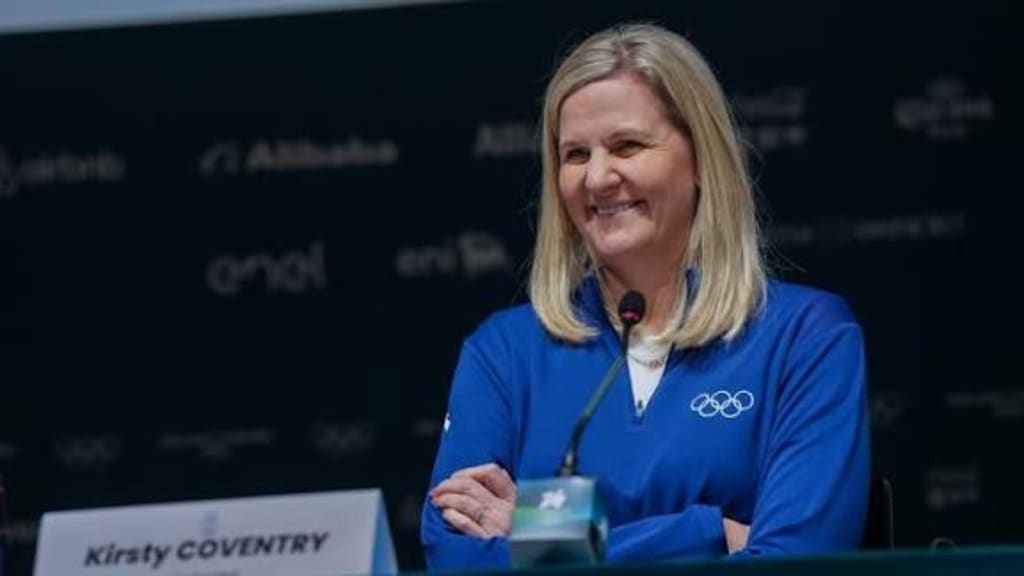
The president of the International Olympic Committee (IOC) has voiced concern over what he described as “distracting and sad” controversies surrounding global sport, pointing to protests linked to U.S. immigration enforcement and the renewed fallout from the Jeffrey Epstein case as issues that risk overshadowing preparations for upcoming Olympic Games.
In remarks delivered at an international sports forum this week, the IOC chief said the Olympic movement is facing challenges not only from logistical and financial pressures but also from political and social tensions that increasingly intersect with sport.
“The Olympic Games should be about unity, respect, and excellence,” he said. “But we are living in a time when outside conflicts and scandals easily intrude into that space. It is distracting and, frankly, sad.”
Protests and Immigration Politics
One of the flashpoints highlighted by the IOC president involves demonstrations targeting U.S. Immigration and Customs Enforcement (ICE), which have expanded in several cities and occasionally spilled into sporting events and Olympic-related activities. Activists have used major sports venues and sponsorship events as platforms to protest immigration policies, arguing that sport should not remain neutral in the face of human rights concerns.
Some athletes have also expressed solidarity with protest movements, posting messages on social media and calling for greater accountability from governments and international institutions.
The IOC chief acknowledged that athletes have the right to personal opinions but warned that protests during Olympic competitions could undermine the spirit of the Games.
“We respect freedom of expression, but the Olympic stage must remain a place where nations come together peacefully,” he said. “Turning competition into a battleground for political conflict risks dividing people rather than bringing them together.”
Critics argue that the IOC’s stance reflects an outdated belief that sport can be separated from politics. Human rights organizations say international sporting bodies should take stronger positions on issues such as migration, labor rights, and civil liberties, particularly when host countries or sponsors are involved in controversial policies.
Epstein Fallout Reaches Sports Institutions
The second issue weighing on Olympic leadership is the renewed attention surrounding Jeffrey Epstein’s connections to powerful individuals and institutions. Recent document releases and media investigations have revived scrutiny of figures in business, politics, and philanthropy—some of whom have ties to sports organizations through sponsorships or charitable foundations.
While no senior IOC officials have been accused of wrongdoing, the Epstein revelations have heightened sensitivity around governance, ethics, and transparency across global sport.
“Every time another name surfaces, it damages trust,” the IOC president said. “Sport depends on credibility. Any association with scandal, even indirect, weakens that trust.”
Several national Olympic committees have already begun reviewing sponsorship agreements and donor relationships to ensure they meet stricter ethical standards. Some have called for an independent review mechanism to examine financial ties between sports bodies and wealthy benefactors.
A Delicate Balancing Act
The IOC has long insisted on political neutrality, a principle embedded in the Olympic Charter. However, that position is becoming harder to maintain as athletes, fans, and sponsors demand that sport reflect broader social values.
In recent years, the Olympics have faced controversies related to human rights in host nations, allegations of corruption within sporting federations, and protests tied to climate change and racial justice. The addition of immigration-related activism and renewed scandal over elite misconduct further complicates an already fragile environment.
Sports governance experts say the IOC is walking a tightrope.
“On one hand, they want to protect the Games from becoming politicized,” said a professor of sports law at a European university. “On the other hand, ignoring social issues can make them look disconnected from reality.”
Athlete Voices Grow Louder
Athletes themselves are increasingly unwilling to stay silent. Several high-profile competitors have spoken publicly about immigration issues and have criticized powerful institutions for failing to take moral positions.
One Olympic hopeful from the United States said the protests reflect a generation that expects sport to engage with society rather than stand apart from it.
“We’re not robots,” the athlete said. “We live in the same world as everyone else. If something feels unjust, it’s hard to pretend it doesn’t exist just because we’re wearing a uniform.”
At the same time, other athletes worry that political activism could overshadow their years of preparation and distract from competition.
“I trained my whole life for this,” said a European swimmer. “I want the focus to be on sport, not scandals and protests.”
Preparing for the Next Games
With the next Olympic Games approaching, organizers are under pressure to ensure security, manage demonstrations, and protect the event’s image. Host city officials have already begun coordinating with law enforcement and civil society groups to prevent disruptions while respecting legal protest rights.
The IOC president emphasized that dialogue is essential.
“We must listen to concerns without allowing the Olympic Games to become a stage for every conflict in the world,” he said. “Our responsibility is to protect the athletes and the meaning of the Games.”
Conclusion
The Olympics chief’s remarks highlight a growing tension between sport’s traditional claim to neutrality and the realities of a politically charged world. Protests linked to immigration enforcement and the ongoing Epstein fallout have become symbols of a broader struggle over ethics, accountability, and expression in global sport.
While he described the situation as “distracting and sad,” the controversy also reflects deeper questions about what the Olympics represent in the modern era. As athletes and fans demand greater transparency and social engagement, the IOC faces a defining challenge: preserving unity while confronting the pressures of a divided world.
Whether the Olympic movement can strike that balance may shape not only the next Games, but the future identity of international sport itself.
About the Creator
Fiaz Ahmed
I am Fiaz Ahmed. I am a passionate writer. I love covering trending topics and breaking news. With a sharp eye for what’s happening around the world, and crafts timely and engaging stories that keep readers informed and updated.
Keep reading
More stories from Fiaz Ahmed and writers in Unbalanced and other communities.
The Most Powerful Woman in Football – Meet the Game’s First Female Super Agent
For decades, football’s most influential figures have been club owners, managers, and male player agents operating behind the scenes. But today, a new face of power has emerged in the sport: the world’s first widely recognized female super agent, reshaping the business of football and challenging one of the game’s most male-dominated industries. Her rise marks a turning point not only for women in sports management but also for how football’s global business is conducted. Breaking Into a Closed World When she first entered football representation, the industry was dominated by established male agents with decades of connections. Negotiations took place in boardrooms where women were rarely seen. Early in her career, she faced skepticism from club executives who doubted her knowledge of contracts and tactics. “People assumed I was there to assist someone else,” she once said in an interview. “They didn’t expect me to lead negotiations.” Instead of retreating, she learned every detail of football law, transfer regulations, and financial structures. She built relationships not through bravado but through preparation and precision. Within a few years, she began representing promising young players overlooked by major agencies. Building a Global Client List Her reputation grew when she successfully negotiated high-value transfers for several international stars. These deals included record-breaking contracts, image rights agreements, and sponsorship packages with multinational brands. Unlike traditional agents who focus solely on transfer fees, she positioned herself as a full-career strategist. Her agency offers legal support, mental health services, financial planning, and media training to players. “She doesn’t just negotiate contracts,” said one player she represents. “She plans your entire career.” Her client list now includes elite footballers across Europe, South America, and Africa. Several play in top leagues such as the Premier League, La Liga, Serie A, and the Bundesliga. Changing the Culture of Representation What sets her apart is not only her success but her approach. She has introduced a more transparent style of negotiation, focusing on long-term stability rather than short-term profit. In an industry often criticized for secrecy and aggressive tactics, she insists on ethical standards and player welfare. “Footballers are not just assets,” she has said. “They are human beings with futures beyond the pitch.” This philosophy has attracted players who want more control over their careers and fewer exploitative arrangements. Influence Beyond Transfers Her influence now reaches beyond contracts. She advises clubs on youth development policies and serves as an informal consultant to federations seeking to modernize their management structures. She is also a vocal advocate for women in football leadership. Through mentorship programs, she helps young women enter sports law, management, and representation. Her success has already inspired a new generation of female agents and executives who see her as proof that power in football no longer belongs exclusively to men. Resistance and Challenges Despite her achievements, resistance remains. Some critics argue that football’s power structures are slow to accept change. She has faced online harassment and sexist criticism, particularly when representing high-profile male players. “There are still rooms where I have to prove myself twice,” she admitted. “But results speak louder than prejudice.” She has also had to navigate conflicts with powerful figures who prefer the traditional system of influence. Yet each successful deal strengthens her position, making it harder to dismiss her authority. A New Definition of Power In football, power has long been measured in money and influence. Today, her power is defined by trust. Players trust her with careers worth millions. Clubs trust her professionalism. Sponsors trust her brand vision. Her agency now ranks among the most profitable in the sport, managing contracts worth hundreds of millions of dollars. Industry analysts say her rise reflects a broader shift in football’s business culture toward professionalism, diversity, and accountability. Impact on Women’s Football She has also used her platform to promote women’s football, helping female players secure better contracts and sponsorships. Several of her clients compete in top women’s leagues and international tournaments. By representing both men and women, she has created a bridge between two worlds of football that rarely intersect at the business level. This dual focus has helped normalize the idea that women can lead major negotiations in a sport traditionally ruled by men. The Road Ahead Looking forward, she plans to expand her agency into Asia and North America and invest in youth academies that prioritize education alongside football training. Her long-term vision is to redefine what it means to be an agent: not a deal-maker alone, but a guardian of players’ futures. “Football is changing,” she said recently. “And those who don’t change with it will be left behind.” A Symbol of Transformation The rise of football’s first female super agent is more than a personal success story. It is a signal that power in football is evolving. Talent, intelligence, and integrity now compete with tradition and old networks. In a game watched by billions, her presence behind the scenes represents a quiet revolution. She is not only negotiating contracts — she is rewriting the rules of influence. And as football continues to globalize and modernize, her story proves that the most powerful figures in the sport no longer look the same as they once did.
By Fiaz Ahmed a day ago in Unbalanced
Wild Card Weekend Recap: What Happens Now?
I think I figured out why I love Wild Card Weekend so much. It's because it's the first playoff anything of the calendar year. The NFL season starts in the fall, and once upon a time, the champion was crowned either on or slightly before New Year's. The evolution of the NFL schedule has resulted in the playoffs starting just into the New Year, and currently, the final week of the season falls on the first weekend of the New Year, with Wild Card Weekend coming a week after that. So yes, chronologically, the NFL's Wild Card Weekend serves as the first playoff anything of the calendar year.
By Clyde E. Dawkins20 days ago in Unbalanced
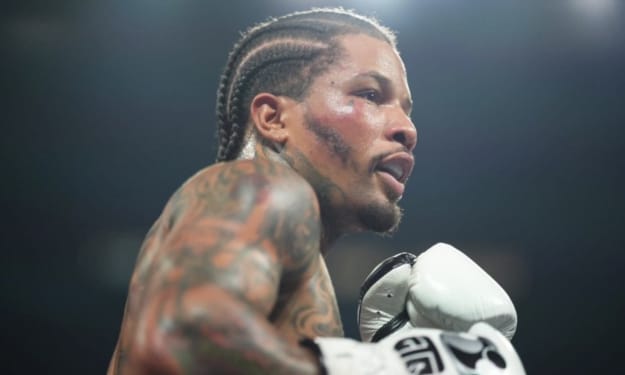
Gervonta ‘Tank’ Davis is arrested on battery, kidnapping charges after two-week manhunt
When beating up people in the ring just isn’t enough ... .Gervonta “Tank” Davis has been arrested and charged with battery, false imprisonment, and attempted kidnapping. After weeks on the lam, police finally captured Tank and he is now waiting to post a $16,000 bond.
By Skyler Saunders3 days ago in Unbalanced



Comments
There are no comments for this story
Be the first to respond and start the conversation.