
Ousmane Dieng
Art of Patience in the Modern NBA

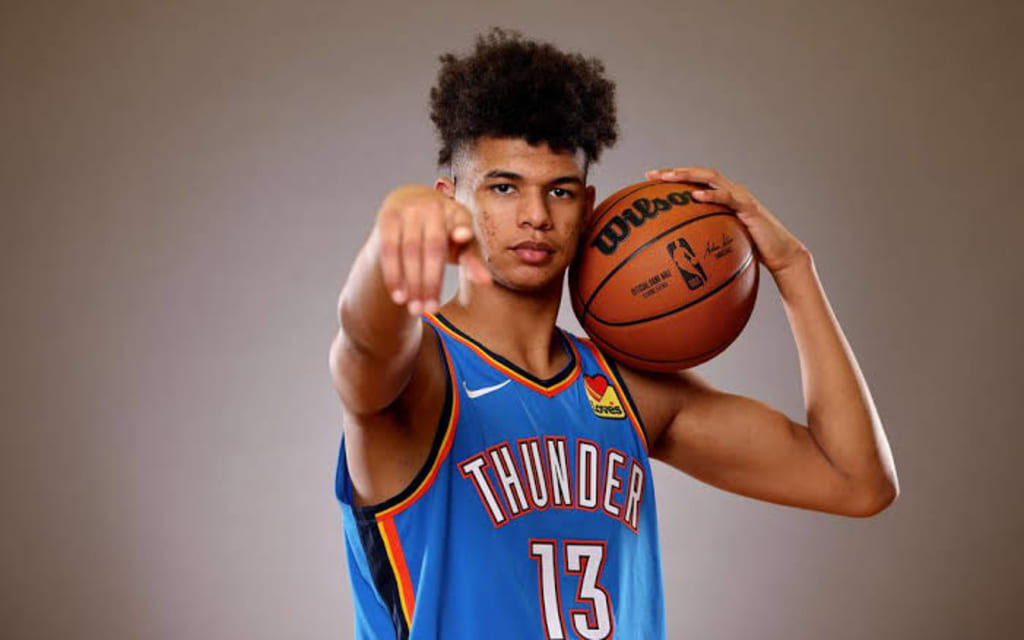
In today’s NBA, development is no longer a straight line. Young players are drafted not only for what they can do now, but for what they might become years down the road. Ousmane Dieng represents this new era of long-term vision. His journey—from international prospect to NBA rotation hopeful—reflects how teams balance patience, potential, and performance in a league that often demands instant results.
Born in France in 2003, Ousmane Dieng emerged as a highly regarded prospect thanks to his rare combination of size, skill, and mobility. Standing at nearly 6-foot-10 with guard-like ball-handling ability, Dieng attracted attention early for his versatility. Rather than following a traditional college path, he chose to develop professionally overseas, gaining experience against grown competition before entering the NBA draft conversation.
That decision shaped expectations around Dieng. Scouts viewed him less as a finished product and more as a long-term investment. His strengths—length, court vision, and defensive potential—were clear, while his weaknesses, including shooting consistency and physical strength, were equally evident. For teams willing to be patient, those flaws were not red flags but opportunities for growth.
Once in the NBA, Dieng entered a league where opportunity must be earned incrementally. Minutes are scarce, rotations are tight, and young players often learn through short stints rather than extended roles. Dieng’s early seasons reflected that reality. He showed flashes of creativity as a playmaker and defender, but also experienced the unevenness common to developing players adjusting to the speed and physicality of the NBA.
What separates Dieng from many prospects is his adaptability. Coaches have praised his willingness to learn and accept different responsibilities. Rather than forcing offense, he has focused on making the right reads, spacing the floor, and contributing defensively. This approach aligns with how modern teams value versatility, especially in lineups built around multiple ball handlers and switching defenses.
Veteran teammates play a critical role in shaping young players, and this is where figures like Mason Plumlee become important. Plumlee, known for his professionalism, physical presence, and unselfish style, represents the type of veteran influence that helps prospects like Dieng understand NBA habits. While their roles differ—Plumlee as a seasoned big man and Dieng as a developing wing—the contrast highlights how experience complements potential within a roster.
Plumlee’s career offers a useful reference point. He carved out longevity by embracing his strengths, setting screens, moving the ball, and anchoring interior defense. For Dieng, observing veterans who maximize their skill sets reinforces the idea that impact is not always measured by scoring totals. Learning how to contribute consistently, even in limited minutes, is often the first step toward a larger role.
Offensively, Dieng’s upside remains intriguing. His shooting mechanics continue to improve, and his comfort attacking closeouts suggests room for growth as a scorer. More importantly, his ability to pass over defenders gives him a unique edge. In a league where size and skill increasingly overlap, Dieng fits the profile of a modern forward who can initiate offense without dominating the ball.
Defensively, his length allows him to guard multiple positions. While strength and experience are still developing, his instincts help compensate. Coaches value defenders who can switch assignments without breaking team structure, and Dieng’s awareness positions him well for that role as he matures physically.
The NBA’s evolving landscape has made patience both more difficult and more necessary. Fans often expect immediate returns from draft picks, but organizations understand that players like Dieng require time. His development arc is less about explosive breakout moments and more about steady improvement. Small gains in shooting efficiency, decision-making, and confidence can collectively transform a role player into a reliable contributor.
Dieng’s journey also reflects the international influence on the league. European prospects increasingly arrive with strong fundamentals and professional experience, but they still face an adjustment period. Dieng’s background prepared him mentally, but adapting to the NBA’s pace remains a challenge that only time and repetition can solve.
Comparisons are inevitable, yet Dieng’s path is uniquely his own. He is not expected to replicate the career of a traditional big like Mason Plumlee, nor is he projected as a pure scorer. Instead, his value lies in flexibility—the ability to fit alongside different lineups, complement star players, and grow into responsibilities as trust is earned.
As his career continues, the question surrounding Ousmane Dieng is not whether he will become a superstar, but whether he can refine his tools into consistency. In the NBA, that consistency often determines longevity. Dieng’s willingness to learn, combined with his physical profile, gives him a solid foundation.
In a league driven by highlights and headlines, development stories like Dieng’s unfold quietly. Yet these stories matter. They reveal how teams build sustainable success—not only through stars, but through players who grow into their roles over time. Ousmane Dieng remains a work in progress, but his journey captures the essence of modern NBA development: patience, adaptability, and belief in long-term potential.
About the Creator
Saboor Brohi
I am a Web Contant writter, and Guest Posting providing in different sites like techbullion.com, londondaily.news, and Aijourn.com. I have Personal Author Sites did you need any site feel free to contact me on whatsapp:
+923463986212
Keep reading
More stories from Saboor Brohi and writers in Unbalanced and other communities.
Liam Greentree
In professional hockey, not every meaningful story begins with a blockbuster trade or a superstar signing. Some stories start quietly, in junior arenas and scouting reports, where future impact is measured not by headlines but by potential. Liam Greentree belongs to that category. While he does not yet carry the global recognition of established NHL stars, his development reflects how teams build for the future in a league often dominated by elite names like Artemi Panarin. Liam Greentree has emerged as a promising young forward whose game is built on intelligence, size, and adaptability. Known for his strong two-way play and composure with the puck, Greentree has steadily gained attention from scouts and analysts who value players capable of contributing in multiple situations. His growth comes at a time when NHL organizations are increasingly balancing star talent with depth players who can sustain success over long seasons. The modern NHL is shaped by contrast. On one end are high-profile stars such as Artemi Panarin, whose creativity and offensive brilliance have defined franchises. On the other are developing players like Greentree, whose value lies in consistency, development, and long-term upside. Understanding Greentree’s trajectory requires viewing it within this broader ecosystem. Panarin’s journey serves as a useful reference point, not because the two players share identical styles, but because Panarin’s career illustrates how teams evaluate talent and timing. The Artemi Panarin trade that sent him from the Chicago Blackhawks to the Columbus Blue Jackets reshaped expectations around elite wingers and asset management. Later, his move to the New York Rangers cemented his role as a franchise centerpiece, turning the NY Rangers into a perennial playoff contender. For teams like the Los Angeles Kings, player development has become just as critical as headline acquisitions. The LA Kings have built much of their recent strategy around drafting and developing young talent rather than relying solely on free agency. This environment highlights why prospects such as Liam Greentree matter. While he is not connected directly to the Kings’ roster decisions, his development reflects the type of player many franchises seek—someone who can grow into responsibility rather than demand it immediately. Greentree’s game is often described as mature beyond his years. He plays with a strong sense of positioning, making smart decisions under pressure and showing patience in offensive zones. Unlike flash-first players, he focuses on efficiency, puck protection, and awareness. These traits may not generate viral highlights, but they translate well to professional systems where structure and reliability are prized. Comparisons to established stars can be misleading, and Greentree is not being positioned as the next Panarin. Artemi Panarin’s offensive instincts are rare, and his ability to control tempo sets him apart. Still, Panarin’s career underscores how development paths vary. Panarin entered the NHL later than most stars and still became one of the league’s most dangerous scorers. Greentree’s path is different, but it reinforces the idea that patience and opportunity matter as much as raw skill. The influence of major franchises like the New York Rangers also shapes how prospects are evaluated league-wide. When Panarin joined the Rangers, expectations shifted overnight. The team transitioned from rebuilding to contending, placing greater emphasis on complementary players who could support elite talent. Prospects entering the system—or being evaluated by rival teams—are now judged partly on how well they could function alongside stars. This context matters for players like Liam Greentree. As the NHL becomes faster and more tactically complex, teams need forwards who can read plays, support defensively, and adapt to different line roles. Greentree’s ability to play responsibly without sacrificing offensive contribution makes him a valuable developmental asset, even if his name does not yet dominate conversations. Another factor shaping Greentree’s outlook is the league’s evolving attitude toward trades. The Panarin trade remains a case study in how teams weigh present value against future flexibility. While Greentree has not been the subject of major trade speculation, his profile fits the type of player often included in discussions about long-term planning rather than short-term gain. For fans, it is easy to focus on marquee names. Searches for Panarin, the Artemi Panarin trade, or NY Rangers headlines far outpace interest in prospects. Yet every successful franchise relies on players who develop quietly before stepping into meaningful roles. Greentree represents that quieter narrative—one defined by incremental progress rather than instant stardom. As his career continues to unfold, Liam Greentree’s success will depend on opportunity, coaching, and consistency. He is entering a league where expectations are shaped by players like Panarin, whose impact redefines what elite performance looks like. That reality can be daunting, but it also creates space for players who bring balance, discipline, and growth potential. Hockey history shows that not every important contributor arrives with fanfare. Some arrive through patience and preparation, becoming essential pieces over time. Liam Greentree’s journey is still in its early chapters, but it reflects the quieter side of NHL ambition—one where development matters as much as dominance, and where the future is built long before the spotlight arrives.
By Saboor Brohi about 22 hours ago in Unbalanced
Wild Card Weekend Recap: What Happens Now?
I think I figured out why I love Wild Card Weekend so much. It's because it's the first playoff anything of the calendar year. The NFL season starts in the fall, and once upon a time, the champion was crowned either on or slightly before New Year's. The evolution of the NFL schedule has resulted in the playoffs starting just into the New Year, and currently, the final week of the season falls on the first weekend of the New Year, with Wild Card Weekend coming a week after that. So yes, chronologically, the NFL's Wild Card Weekend serves as the first playoff anything of the calendar year.
By Clyde E. Dawkins23 days ago in Unbalanced
John Jay Enters Passing Lanes in 71-62 Win
Scroll down for photos On Friday January 9, John Jay welcomed Hen Hud to the high school for some Friday night basketball and kicked off the festivities by taking an early 8-3. But the scoreboard wasn’t as telling as the style of play.
By Rich Monettiabout 24 hours ago in Unbalanced




Comments
There are no comments for this story
Be the first to respond and start the conversation.