
Everlasting fire: How Azerbaijan turned into the 'Place that is known for Fire'
Eternal flame


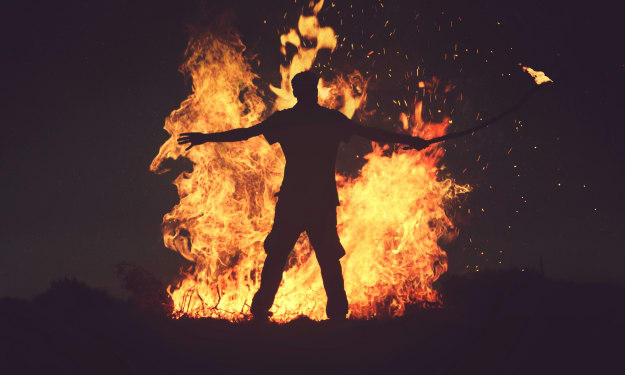
"This fire has consumed 4,000 years and never halted," says Aliyeva Rahila. "Indeed, even the downpour coming here, snow, wind - it burns constantly."
Ahead, tall blazes dance fretfully across a 10-meter stretch of slope, making a hot day considerably more sultry.
This is Yanar Dag - signifying "consuming mountainside" - on Azerbaijan's Absheron Landmass, where Rahila functions as a local escort.
A result of the country's copious gaseous petrol saves, which in some cases hole to the surface, Yanar Dag is one of a few suddenly happening flames to have entranced and scared explorers to Azerbaijan throughout the long term.
Venetian voyager Marco Polo composed of the secretive peculiarities when he went through the country in the thirteenth hundred years. Other Silk Street shippers brought insight about the flares as they would head out to different terrains.
It's the reason the nation acquired the moniker the "place that is known for fire."
Antiquated religion
Such flames were once copious in Azerbaijan, but since they prompted a decrease of gas pressure underground, slowing down business gas extraction, most have been snuffed out.
Yanar Dag is one of only a handful of exceptional leftover models, and maybe the most noteworthy.
At one time they played a vital job in the old Zoroastrian religion, which was established in Iran and thrived in Azerbaijan in the principal thousand years BCE.
For Zoroastrians, fire is a connection among people and the otherworldly world, and a medium through which profound knowledge and insight can be acquired. It's decontaminating, life-maintaining and an imperative piece of love.
Today, most guests who show up at the nitty gritty Yanar Dag guests' middle come for the exhibition as opposed to strict satisfaction.
The experience is generally great around evening time, or in winter. At the point when snow falls, the pieces disintegrate in the air while never contacting the ground, says Rahila.
In spite of the guaranteed relic of the Yanar Dag blazes - some contend that this specific fire may just have been lighted during the 1950s - it's a long 30-minute drive north from the focal point of Baku just to see it. The middle offers just a little bistro and there's very little else nearby.
Ateshgah Fire Sanctuary
For a more profound understanding into Azerbaijan's set of experiences of fire love, guests ought to travel east of Baku to Ateshgah Fire Sanctuary.
"Since antiquated times, they imagine that [their] god is here," says our aide, as we enter the pentagonal complex which was underlying the seventeenth and eighteenth hundred years by Indian pioneers in Baku.
Fire customs at this site date back to the tenth 100 years or prior. The name Ateshgah comes from the Persian for "home of fire" and the focal point of the complex is a vault topped special stepped area place of worship, based upon a flammable gas vent.
A characteristic, timeless fire consumed here on the focal special stepped area until 1969, however nowadays the fire is taken care of from Baku's fundamental gas supply and is just lit for guests.
The sanctuary is related with Zoroastrianism however as a Hindu spot of love its set of experiences is better recorded.
Shippers and religious zealots
Constructed like a caravanserai-style explorers' motel, the complex has a walled patio encircled by 24 cells and rooms.
These were differently utilized by pioneers, passing dealers (whose gifts were an essential kind of revenue) and occupant religious zealots, some of whom submitted themselves to experiences like lying on harsh quicklime, wearing weighty chains, or saving an arm in one situation for a really long time.
The sanctuary dropped out of purpose as a position of love in the late nineteenth 100 years, when the improvement of the encompassing oil fields implied that reverence of Mammon was acquiring a more grounded hold.
The complex turned into a gallery in 1975, was selected as an UNESCO World Legacy Site in 1998, and today invites around 15,000 guests per year.
Dealers and monks
Fabricated like a caravanserai-style voyagers' hotel, the complex has a walled yard encircled by 24 cells and rooms.
These were differently utilized by pioneers, passing dealers (whose gifts were an imperative kind of revenue) and occupant monks, some of whom submitted themselves to experiences like lying on harsh quicklime, wearing weighty chains, or saving an arm in one situation for quite a long time.
The sanctuary dropped out of purpose as a position of love in the late nineteenth hundred years, when the improvement of the encompassing oil fields implied that reverence of Mammon was acquiring a more grounded hold.
The complex turned into a historical center in 1975, was named as an UNESCO World Legacy Site in 1998, and today invites around 15,000 guests every year.
Dealers and monks
Constructed like a caravanserai-style voyagers' hotel, the complex has a walled patio encircled by 24 cells and rooms.
These were differently utilized by travelers, passing traders (whose gifts were a crucial type of revenue) and occupant monks, some of whom submitted themselves to trials like lying on harsh quicklime, wearing weighty chains, or saving an arm in one situation for quite a long time.
The sanctuary dropped out of purpose as a position of love in the late nineteenth 100 years, when the improvement of the encompassing oil fields implied that reverence of Mammon was acquiring a more grounded hold.
The complex turned into an exhibition hall in 1975, was selected as an UNESCO World Legacy Site in 1998, and today invites around 15,000 guests every year.
Dealers and religious zealots
Fabricated like a caravanserai-style explorers' hotel, the complex has a walled patio encircled by 24 cells and rooms.
These were differently utilized by travelers, passing vendors (whose gifts were a fundamental kind of revenue) and occupant monks, some of whom submitted themselves to trials like lying on harsh quicklime, wearing weighty chains, or saving an arm in one situation for a really long time.
The sanctuary dropped out of purpose as a position of love in the late nineteenth 100 years, when the improvement of the encompassing oil fields implied that reverence of Mammon was acquiring a more grounded hold.
The complex turned into a gallery in 1975, was named as an UNESCO World Legacy Site in 1998, and today invites around 15,000 guests per year.
About the Creator
Alfred Wasonga
Am a humble and hardworking script writer from Africa and this is my story.
Keep reading
More stories from Alfred Wasonga and writers in Wander and other communities.
Stalin's Azerbaijan jail where water consumes like fire
On the off chance that a craftsman were to draw a guide of Azerbaijan, its southernmost part would be shrouded in green tea gardens, citrus shrubs and the waterfront line would be specked with pleasant beacons.
By Alfred Wasonga2 years ago in Wander
Seattle Nightlife Report: Pony
Mid-winter Friday night. Early but already so dark. The days are getting longer but 6 PM is still pitch black. “Firepit!” You declare things after just a few seconds of solemn thought – not a request or suggestion, not a demand. Last week you walked around saying, “Hot tub?” to anyone who would listen. Or one afternoon you pointed at two men holding hands as they crossed 12th Avenue, looked me in the eyes and said, “Boyfriends.”
By Joe Nasta | Seattle foodie poet22 days ago in Wander


Comments
There are no comments for this story
Be the first to respond and start the conversation.