

**Chapter 5: The Innovation**
**Rising from the Ashes**
With the financial challenges of the previous months behind him, Alex Carter’s design studio had entered a new phase. The immediate pressures had eased, and the studio was beginning to stabilize. However, Alex knew that merely recovering from the setback wasn’t enough; he needed to innovate and adapt to ensure long-term success.
The industry was evolving rapidly, with new technologies, design trends, and client expectations constantly reshaping the landscape. Alex realized that in order to stay relevant and competitive, he had to embrace innovation and explore new ways to enhance his studio’s offerings.
**The Vision for Innovation**
Alex began by revisiting his studio’s mission and vision. He wanted to create a design studio that was not only responsive to current trends but also a leader in shaping the future of design. He envisioned a studio that leveraged cutting-edge technology, offered unique services, and continuously pushed the boundaries of creativity.
To achieve this vision, Alex decided to focus on several key areas of innovation:
1. **Technology Integration**: Embracing new technologies to enhance design processes and deliver cutting-edge solutions.
2. **Service Expansion**: Expanding the studio’s service offerings to include new and emerging design trends.
3. **Client Experience**: Enhancing the client experience through personalized service and innovative solutions.
4. **Sustainability**: Incorporating sustainable practices into the studio’s operations and design projects.
**Embracing Technology**
One of the first areas Alex focused on was integrating technology into the studio’s design processes. He invested in state-of-the-art design software and tools that allowed for more advanced and efficient workflows. This included adopting 3D modeling software, virtual reality (VR) for immersive design presentations, and artificial intelligence (AI) for data-driven design insights.
Alex also explored the potential of automation in streamlining repetitive tasks, such as generating design prototypes and managing project workflows. By leveraging these technologies, the studio was able to increase productivity, improve accuracy, and offer clients more sophisticated and innovative design solutions.
**Expanding Services**
Recognizing the need to stay ahead of design trends, Alex decided to expand the studio’s service offerings. He conducted market research to identify emerging trends and client needs. This research revealed several opportunities for expansion, including:
1. **User Experience (UX) Design**: With the growing importance of digital experiences, Alex saw an opportunity to offer UX design services to enhance user interactions with digital products and platforms.
2. **Brand Strategy**: Clients were increasingly seeking comprehensive branding solutions that included strategy development, market positioning, and brand storytelling. Alex decided to incorporate brand strategy services into the studio’s offerings.
3. **Motion Graphics**: The demand for dynamic visual content was on the rise. Alex saw potential in offering motion graphics and animation services to create engaging and impactful visual experiences.
To support these new services, Alex hired specialists with expertise in UX design, brand strategy, and motion graphics. This allowed the studio to provide a broader range of services and cater to the evolving needs of clients.
**Enhancing Client Experience**
A key aspect of Alex’s innovation strategy was to enhance the client experience. He wanted to create a more personalized and interactive experience for clients, ensuring that each project was tailored to their unique needs and preferences.
One of the initiatives Alex implemented was the introduction of client workshops and collaborative design sessions. These workshops allowed clients to participate in the design process, providing valuable input and feedback. It also fostered a deeper understanding of the client’s vision and goals, resulting in more effective and impactful design solutions.
Additionally, Alex developed a client portal on the studio’s website, where clients could track project progress, access design files, and communicate directly with the team. The portal provided a seamless and transparent experience, enhancing client satisfaction and engagement.
**Sustainability Initiatives**
Incorporating sustainability into the studio’s operations was another important aspect of Alex’s innovation strategy. He recognized the growing importance of environmental responsibility and wanted his studio to be a leader in sustainable design practices.
Alex began by implementing eco-friendly practices within the studio, such as reducing paper usage, recycling materials, and using energy-efficient equipment. He also sought out sustainable materials and processes for design projects, such as recycled paper, environmentally-friendly inks, and energy-efficient lighting.
To further promote sustainability, Alex began offering clients guidance on incorporating sustainable practices into their own branding and design projects. This included designing with eco-friendly materials, promoting sustainable practices in brand messaging, and highlighting the environmental benefits of their products and services.
**The Innovation Launch**
With these innovations in place, Alex decided to officially relaunch the studio with a new branding and marketing campaign. The campaign highlighted the studio’s commitment to cutting-edge technology, expanded service offerings, and sustainable practices.
The relaunch included a refreshed website, updated marketing materials, and a series of promotional events and workshops. Alex and his team hosted webinars and industry panels to showcase their expertise and share insights on the latest design trends and technologies.
The campaign was well-received, generating excitement and interest among both existing and potential clients. The studio’s reputation as an innovative and forward-thinking design firm was solidified, and Alex began to see an increase in inquiries and project opportunities.
**Client Success Stories**
As the studio implemented its new strategies, Alex saw tangible results in the form of successful client projects and positive feedback. The expansion into UX design, brand strategy, and motion graphics allowed the studio to tackle a diverse range of projects and attract new clients.
One notable success was a comprehensive rebranding project for a national non-profit organization. The project involved developing a new brand strategy, creating a modern visual identity, and designing a user-friendly website. The rebranding effort was met with widespread acclaim, and the non-profit reported increased engagement and support as a result of the new design.
Another success was a motion graphics campaign for a tech company that used animation to highlight the features and benefits of their latest product. The campaign was a hit on social media and contributed to a significant increase in product sales and brand awareness.
**Looking Forward**
As Alex looked to the future, he remained focused on continuous innovation and growth. He regularly evaluated industry trends, explored new technologies, and sought feedback from clients and team members. Alex understood that staying ahead in the design industry required a commitment to ongoing learning and adaptation.
The studio’s success in embracing innovation reinforced Alex’s belief in the importance of creativity, technology, and sustainability. He was proud of the progress the studio had made and excited about the opportunities that lay ahead.
**Conclusion**
Chapter 5, "The Innovation," explores how Alex Carter’s design studio evolves and adapts to stay ahead in the competitive design industry. It highlights Alex’s commitment to embracing new technologies, expanding services, enhancing client experiences, and incorporating sustainability into the studio’s operations. The chapter captures the impact of these innovations on the studio’s success, showcasing client success stories and the studio’s growing reputation as a leader in the design field. As Alex continues to drive innovation, he sets the stage for future growth and success, reinforcing his commitment to pushing the boundaries of creativity and design.
About the Creator
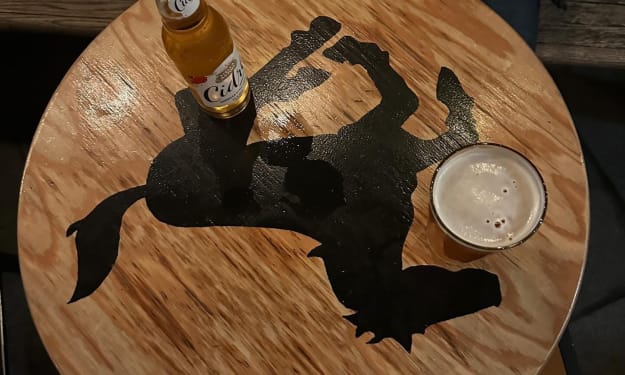
Seattle Nightlife Report: Pony
Mid-winter Friday night. Early but already so dark. The days are getting longer but 6 PM is still pitch black. “Firepit!” You declare things after just a few seconds of solemn thought – not a request or suggestion, not a demand. Last week you walked around saying, “Hot tub?” to anyone who would listen. Or one afternoon you pointed at two men holding hands as they crossed 12th Avenue, looked me in the eyes and said, “Boyfriends.”
By Joe Nasta | Seattle foodie poet18 days ago in Wander
Devil is a part timer
The premise is that the devil comes to Earth from below and arrives as a teenager working at a fast-food restaurant. “Devil is a Part-Timer” is one of my favorite anime series, and I recently discovered anime, and this is one of those shows that I stumbled upon and got really into.
By Revista Miko2 days ago in Wander
Foot Bindings
I asked my grandmother how she knew she'd fallen in love. I am not sure I ever did love him, she said. This was before I met my husband. I was naive, a naked spring, a raw nerve of a thing. That cannot ever be me, I knew. Sadness swept in gently like a Moscow thaw. It is no simple thing, looking into a woman's vast soul and seeing its foot bindings. Now, in Italy divorced with my skin singed off, when I say I don't love him mean: I have succeeded at feeling nothing most days and it mostly works. Do you want the comfort of Nothing? Do you want Nothing, too? Be warned: you'll never be free, even when you are nothing. Here is what doesn't work: Accepting the stages of grief. Talking about it. Sitting with the feeling. Missing him—no, the person you were when you believed in death do us part. Writing poetry. That, too. When I say I don't love him I mean: I feel capsized in an endless, starved tide. What sometimes works: selective memory. You must forget ripe tomatoes and his beard and feeling perfectly sheltered in a big blue world. Forget coffee in bed, laughter watching TV, blowing out the candles on the birthday cake and the quiet all-encompassing knowledge that you are chosen. Remember only how love turned to a banal everyday survival act, a trapeze act unsure whether he will catch you, how the warmth stagnated and became sour, remember the foot bindings and remember the resentment boiling in your veins as you stick it out for the kids. Six-hour Netflix binges help, too. A man's fingers tracing your spine. Frozen pizza at 2 a.m. Random trips to the museum just to stand near things that last a while. The realization that crying won’t change anything. Seeing that life is just a dream, and refusing to participate in your own suffering. Bite your fist. Walk on eggshells around joy. When I say I don't love him, I mean he didn’t break my heart, he just stopped touching it and it forgot how to beat right.
By Ella Bogdanovaa day ago in Poets



Comments
There are no comments for this story
Be the first to respond and start the conversation.