
Unveiling Sigiriya's Ancient Water Supply System: A modern Discovery
Recent maintenance efforts have uncovered the intricate mechanisms behind Sigirya's water fountains in Sri Lanka

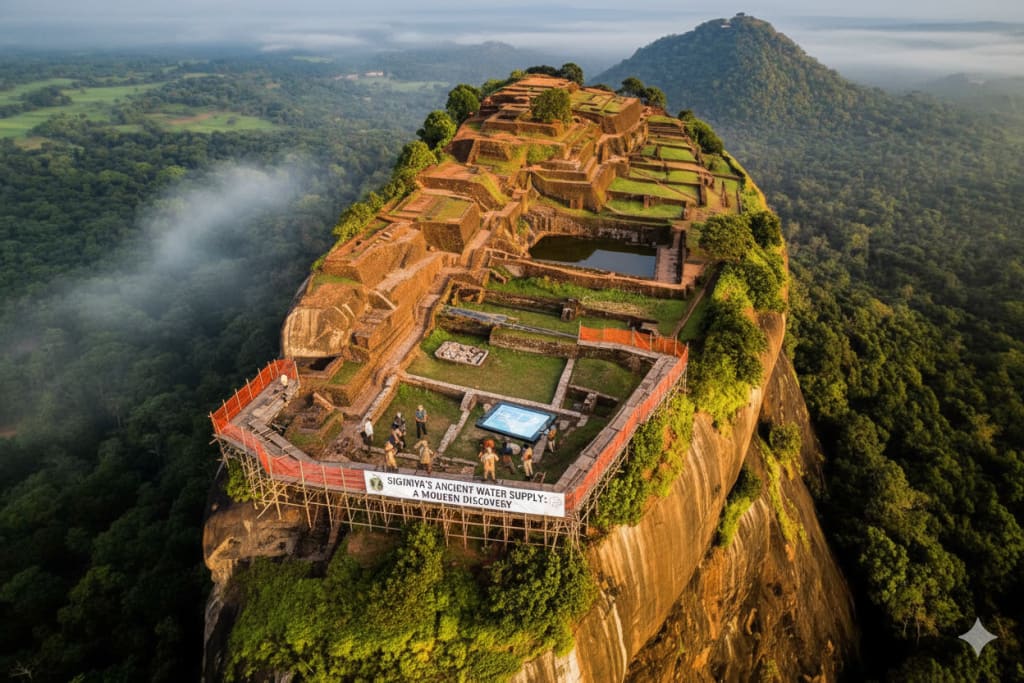
In a remarkable development, recent maintenance work at Sri Lanka's iconic Sigiriya rock fortress has unveiled the sophisticated workings of its ancient water supply system. Director General of the Central Cultural Fund (CCF), Dr. Nilan Cooray, confirmed that the fountains, which typically activate during the rainy season, remained inactive towards the end of the previous year. This anomaly prompted restoration efforts, leading to the discovery of the system's underlying mechanisms.
The Sigiriya water system operates on a gravity-fed hydraulic principle, channeling water from the Sigiriya reservoir, also known as the 'Tank,' situated above the gardens. This reservoir, ingeniously constructed to collect rainwater, serves as the primary water source for the entire garden complex. From the reservoir, a network of underground conduits and canals distributes water throughout the gardens, showcasing the advanced understanding of hydraulic principles possessed by the engineers of the time.
One of the most remarkable features is the system of fountains in the symmetrical water gardens. These fountains, still operational during the rainy season, are powered by a simple yet effective gravity-pressure system. Water is channeled into underground chambers, creating pressure that, when released, forces water upwards, creating a spectacular display. The existence of these fountains in the 5th century is a testament to the advanced technological capabilities of the Sigiriya kingdom, predating similar features in other parts of the world by centuries.
The gardens feature sophisticated irrigation techniques. The network of canals not only served the aesthetic purpose of creating pools and streams but also functioned to irrigate the gardens, ensuring the lush greenery that would have been a vital part of the royal pleasure gardens. The precision and efficiency of this system highlight the deep understanding of water management and its crucial role in sustaining life and beauty within the fortress.
While the aesthetic and engineering aspects of the Sigiriya water gardens are undeniable, their function extended beyond mere beauty and irrigation. The extensive moat system, a key defensive element of Sigiriya, is directly linked to the water gardens. The moats, surrounding the inner citadel, were fed by the same water source that supplied the gardens. These water bodies presented a formidable obstacle to any potential invaders, slowing down their advance and creating a natural barrier.
The fascination with the Sigiriya water gardens continues to this day, with ongoing modern research shedding further light on the ingenuity of this ancient system. Archaeological investigations and hydraulic engineering studies are constantly uncovering new details about the design, construction, and operation of the water gardens. Recent studies have focused on the sustainable aspects of the Sigiriya water system. The efficient use of rainwater harvesting, the gravity-fed operation, and the integration with the natural landscape demonstrate principles of sustainable water management that are remarkably relevant even today.
Furthermore, comparative studies with other ancient hydraulic systems around the world are helping to place Sigiriya in a broader historical and technological context. These studies highlight the unique features of the Sigiriya system while also identifying common principles and innovations in ancient water management practices globally. The ongoing research ensures that the secrets of the Sigiriya water gardens continue to be unveiled, enriching our understanding of ancient engineering and landscape architecture.
In conclusion, the recent discoveries at Sigiriya not only illuminate the advanced engineering feats of ancient Sri Lanka but also offer valuable insights into sustainable water management practices. As researchers continue to explore the intricacies of this ancient system, Sigiriya stands as a testament to the ingenuity and foresight of its creators, offering lessons that resonate even in today's world.
Sigiriya, often called the “Lion Rock” of Sri Lanka, was commissioned in the 5th century by King Kashyapa I. Seeking a secure capital after overthrowing his father, the king transformed a massive granite rock into an extraordinary fortress and royal palace complex. Combining defense, art, and nature, he designed elaborate gardens, frescoes, and water features that remain marvels of ancient engineering. The fortress’s elevated position provided strategic advantage while reflecting his ambition and creativity. Sigiriya stands today as a testament to King Kashyapa’s ingenuity, blending military strategy with cultural sophistication, and leaving a lasting historical legacy.
About the Creator
Keep reading
More stories from Shiran Pallewatta and writers in Wander and other communities.
Sri Lanka, the "Wonder of Asia," is Seeing a Tourism Revival in 2025
Sri Lanka has for decades been admired as the “Wonder of Asia” for its stunning landscapes, deep cultural heritage, and biodiversity. In 2025, the country is seeing a marked tourism revival, driven by a mix of bold policy moves, infrastructure upgrades, marketing strategies, and new attractions. These changes are helping Sri Lanka re-establish itself on the global tourism map and attracting a broader, higher-spending traveler base.
By Shiran Pallewatta4 months ago in Wander
Seattle Nightlife Report: Pony
Mid-winter Friday night. Early but already so dark. The days are getting longer but 6 PM is still pitch black. “Firepit!” You declare things after just a few seconds of solemn thought – not a request or suggestion, not a demand. Last week you walked around saying, “Hot tub?” to anyone who would listen. Or one afternoon you pointed at two men holding hands as they crossed 12th Avenue, looked me in the eyes and said, “Boyfriends.”
By Joe Nasta | Seattle foodie poet19 days ago in Wander




Comments
There are no comments for this story
Be the first to respond and start the conversation.