
United States Furniture Market Growth, Industry Analysis and Outlook
United States Furniture Market Trends, Demand and Future Opportunities

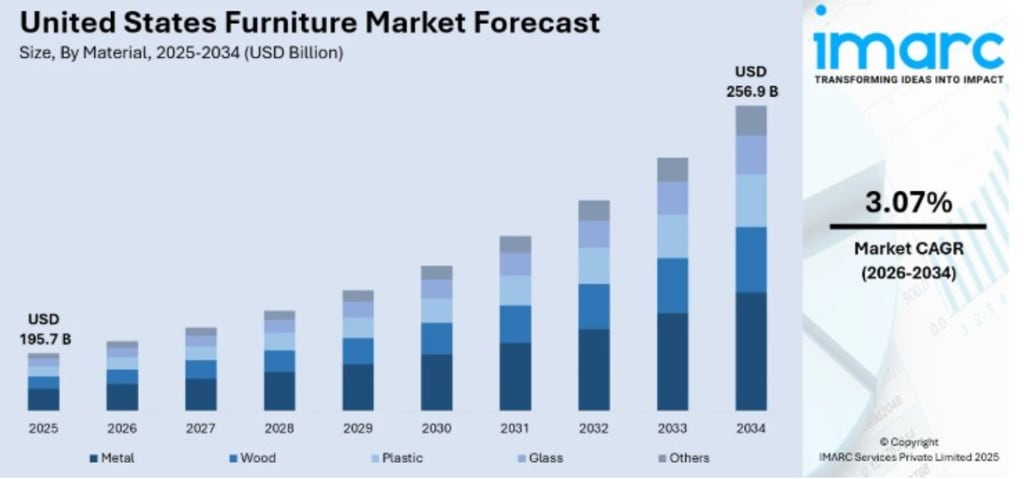
United States Furniture Market Overview
The United States Furniture Market is one of the most established and diverse furniture industries globally, supported by strong residential demand, commercial infrastructure development, and evolving interior design preferences. The market includes home furniture, office furniture, hospitality furniture, outdoor furniture, and institutional furnishings manufactured using wood, metal, plastic, glass, and composite materials. Changing lifestyles, urban housing trends, and rising consumer spending on home décor are continuously shaping furniture demand across the country.
United States Furniture Market Size & Growth
The consistent expansion of the United States Furniture Market is closely linked to residential construction activity, home remodeling projects, and demand from offices, hotels, hospitals, and educational institutions. As remote and hybrid work cultures continue to influence household setups, demand for home office furniture, ergonomic chairs, and adjustable desks has increased significantly.
Growth is also supported by:
• Rising expenditure on home improvement and décor upgrades
• Increasing preference for premium and customized furniture
• Expansion of e-commerce furniture platforms and omnichannel retail strategies
• Growing popularity of ready-to-assemble and modular furniture
Digital visualization tools such as augmented reality are helping consumers make informed furniture selections, further accelerating market growth.
United States Furniture Market Trends
Several emerging trends are shaping the United States Furniture Market:
1. Multifunctional and Space-Saving Designs
Compact urban living spaces are driving demand for foldable, convertible, and modular furniture.
2. Growth of Online Furniture Retail
E-commerce platforms, virtual showrooms, and direct-to-consumer brands are transforming traditional sales channels.
3. Sustainable and Eco-Friendly Furniture
Increasing use of recycled wood, bamboo, and low-emission materials reflects rising environmental awareness.
4. Customization and Personalization
Consumers are seeking furniture that matches individual style preferences, boosting made-to-order offerings.
5. Ergonomic and Smart Furniture
Technology-integrated furniture and posture-support designs are gaining popularity in homes and offices.
United States Furniture Market Report Segmentation:
Material Insights:
• Metal
• Wood
• Plastic
• Glass
• Others
Distribution Channel Insights:
• Supermarkets and Hypermarkets
• Specialty Stores
• Online Stores
• Others
End Use Insights:
• Residential
• Commercial
Regional Insights:
• Northeast
• Midwest
• South
• West
Competitive Landscape:
The United States furniture market exhibits a fragmented competitive structure characterized by the coexistence of large multinational corporations, established domestic manufacturers, specialty retailers, and emerging direct-to-consumer brands. Market participants compete across multiple dimensions including product quality, design innovation, pricing strategy, distribution reach, and customer service excellence. Established players leverage extensive manufacturing capabilities, brand recognition, and nationwide distribution networks to maintain market positions while investing in digital transformation initiatives. Emerging brands differentiate through sustainable sourcing practices, customization options, and streamlined direct-to-consumer models that eliminate intermediary costs.
Strategic acquisitions, retail expansion programs, and partnership arrangements continue reshaping the competitive landscape as companies pursue growth opportunities and operational synergies. Omnichannel retail strategies integrating physical showrooms with robust e-commerce platforms have become competitive necessities as consumer shopping journeys increasingly span multiple touchpoints.
United States Furniture Market Challenges and Opportunities
Challenges
The United States Furniture Market faces several challenges that impact manufacturers and retailers:
• Fluctuating Raw Material Costs: Prices of wood, metal, foam, and fabrics directly affect production expenses.
• Supply Chain Disruptions: Import dependence and logistics issues influence product availability and delivery timelines.
• Intense Market Competition: Presence of global brands and local manufacturers creates pricing pressure.
• Rapidly Changing Design Trends: Continuous innovation is required to match evolving consumer tastes.
Opportunities
Despite these challenges, the market offers strong growth prospects:
• Rising Demand for Home Renovation Projects creating sustained furniture replacement cycles.
• Expansion of Commercial Infrastructure including offices, hospitality, healthcare, and education sectors.
• Innovation in Sustainable Furniture Designs attracting environmentally conscious consumers.
• Integration of AR/VR and AI Tools improving customer experience and enhancing product visualization.
Key Takeaways and Insights:
• By Material: Wood dominates the market with a share of 39% in 2025, owing to its timeless aesthetic appeal, natural durability, and versatility across residential and commercial applications. Consumer preference for sustainable and eco-friendly materials further reinforces wood's position.
• By Distribution Channel: Online stores lead the market with a share of 41% in 2025. This dominance is driven by the convenience of virtual showrooms, extensive product selections, competitive pricing, and enhanced delivery options that cater to digitally savvy consumers.
About the Creator
Kim Soo hyun
My name is Kim Soo hyun, and I am a research analyst at IMARC Group, specializing in market trends and data analysis to provide insights and support strategic decision-making.
Keep reading
More stories from Kim Soo hyun and writers in Wheel and other communities.
South Korea Semiconductor Market Size, Share, Trends, Growth Drivers & Forecast 2034
South Korea Semiconductor Market: Size, Trends, Growth Drivers, and Forecast The South Korea semiconductor market stands at the heart of the country’s technology leadership and export economy. Globally recognized as a semiconductor powerhouse, South Korea is home to industry giants such as Samsung Electronics and SK Hynix, which dominate the memory chip segment worldwide. As demand for advanced computing, artificial intelligence (AI), 5G infrastructure, electric vehicles (EVs), and data centers continues to rise, the South Korea semiconductor market is entering a new growth cycle characterized by innovation, government backing, and strategic investments in next-generation chip manufacturing.
By Kim Soo hyun14 days ago in Wheel
RTA Ramadan Timing 2026: Your Essential Guide to Dubai Parking Hours
During Ramadan, parking hours shift to accommodate changed working patterns and increased evening activity across the city. This comprehensive guide covers everything you need to navigate Dubai efficiently during this period—from modified parking shifts and free parking windows to adjusted Metro timings and customer service center operations. Additionally, you'll discover practical tips for avoiding fines and making the most of digital tools to stay updated on all RTA services. Understanding these temporary changes helps ensure your daily commute and travel plans proceed smoothly throughout the holy month.
By Sarath Menonabout 14 hours ago in Wheel
From the Low Banks of the Cumberland River to the High Banks in the 16
One of the best abilities to have is adaptability. Nobody exemplified that more than Greg Biffle. It didn't matter what he drove, Biffle would find his way to the front of the field. The winningest driver in the 16 car, he totalled 19 wins in the cup series alone.
By Ben Hercik5 days ago in Wheel




Comments
There are no comments for this story
Be the first to respond and start the conversation.