
Behind the Cabin: The Supply Chain Powering Aircraft Interior Manufacturing
Understanding Classification, Compliance, and Precision Systems in Aerospace Production

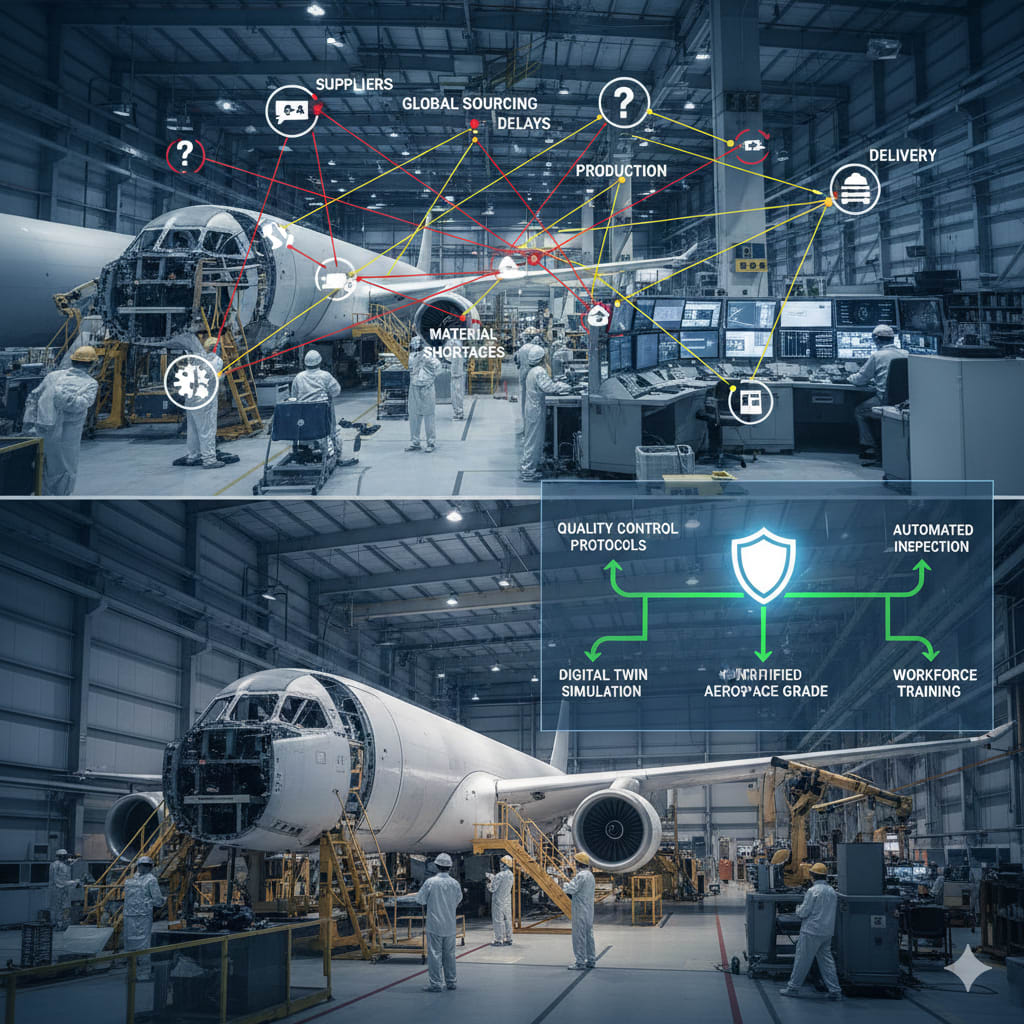
Introduction: The Hidden Infrastructure of Aircraft Interiors
Aircraft cabins may appear refined and visually seamless, but behind every panel, partition, and composite structure lies a carefully engineered production process. Interior manufacturing in aerospace is not decorative craftsmanship it is regulated, precision-driven fabrication.
To maintain consistency and traceability, aviation procurement systems rely on standardized classification frameworks. One such category, FSG 32 Woodworking Machinery and Equipment, supports the fabrication and finishing of interior panels and composite assemblies that require exact tolerances and structural integrity.
Why Classification Systems Matter in Aviation
The Federal Supply Group (FSG) and Federal Supply Classification (FSC) systems organize equipment into structured categories. For aerospace organizations, this simplifies:
- Inventory tracking
- Audit preparation
- Maintenance scheduling
- Procurement documentation
When equipment is properly categorized, manufacturers can streamline sourcing and ensure compliance with aviation standards. This structure reduces ambiguity and improves operational efficiency across production environments.
Aircraft Interior Production: A Complex Engineering Process
Manufacturing aircraft interior components involves multiple precision-driven stages:
- Shaping lightweight honeycomb composite panels
- Cutting structural laminate sections
- Preparing surfaces for coating and installation
- Ensuring exact fit within fuselage structures
Each step demands consistency and repeatability, especially when production runs must meet strict certification standards.
Equipment Requirements for Aerospace-Grade Production
Machinery used in aircraft interior fabrication must achieve:
- Tight dimensional tolerances
- Clean, smooth finishes without material degradation
- Reliable performance across repetitive cycles
- Minimal vibration and material distortion
Within aviation supply structures, FSG 32 Woodworking Machinery and Equipment encompasses systems capable of supporting these fabrication needs. Though originally associated with traditional material processing, these systems now contribute to advanced aerospace applications involving engineered composites and interior assemblies.
Risk Management and Compliance
Aerospace production is governed by rigorous safety and quality standards. Any deviation in machining accuracy or material handling can create downstream installation or certification issues.
Reliable equipment reduces operational risk by ensuring predictable output. Additionally, structured maintenance programs and documented calibration schedules strengthen audit readiness and regulatory compliance.
Digital Transformation in Interior Component Manufacturing
Modern aerospace facilities increasingly adopt:
- CNC-controlled machining systems
- Digital production modeling
- Real-time machine health monitoring
- Automated tolerance verification
These innovations improve accuracy, reduce manual error, and enhance traceability across production cycles.
Lifecycle Strategy and Long-Term Investment
Aerospace manufacturers prioritize equipment longevity and operational continuity. Effective lifecycle strategies include:
- Predictive maintenance planning
- Routine alignment and calibration
- Tooling performance evaluation
- Component replacement scheduling
Such proactive measures minimize downtime while preserving output quality.
Strategic Procurement for Aerospace Workshops
When selecting equipment for aircraft interior production, procurement teams evaluate:
- Reliability under repetitive load
- Compatibility with composite materials
- Documentation availability
- Long-term support and service options
Strategic investment decisions ensure that production lines remain stable, compliant, and efficient.
Conclusion
Aircraft interior manufacturing relies on far more than design and aesthetics. It depends on structured classification systems, reliable equipment, and disciplined operational standards.
By integrating precision machining systems within standardized supply frameworks, aerospace manufacturers maintain control over quality, compliance, and efficiency. In a sector where accuracy defines safety, the infrastructure behind the cabin is just as critical as the aircraft itself.

About the Creator
Beckett Dowhan
Where aviation standards meet real-world sourcing NSN components, FSG/FSC systems, and aerospace-grade fasteners explained clearly.
Keep reading
More stories from Beckett Dowhan and writers in Writers and other communities.
Precision Meets Performance: FSG 32 Machinery in Aerospace and Aircraft Component Manufacturing
Woodworking Machinery Beyond Workshops While woodworking machinery is traditionally associated with furniture and cabinetry, its precision and versatility make it essential in aerospace and aircraft manufacturing. Components such as interior panels, composite structures, and cabin fittings require highly accurate shaping, cutting, and finishing. Machinery classified under FSG 32 Woodworking Machinery and Equipment plays a critical role in producing these components with consistent quality, reliability, and safety.
By Beckett Dowhan4 days ago in Writers
Impromptu Road Trip
What a day! Patrick and I drove to Atlanta today to see Jamie, and we stopped aling the way to get a chair from Dwight and have a drink and a bite with Amanda. What’s amazing about this is that Amanda and Dwight are both, separately, friends from my teenage years. Jamie and I were in first grade together and partied together in our early twenties. This was Patrick’s first time meeting each of them, which was super cool for me.
By Harper Lewis7 days ago in Writers



Comments
There are no comments for this story
Be the first to respond and start the conversation.