
Common Mistakes in Healthcare Data Analytics
Why analytics initiatives fail despite massive healthcare data investments
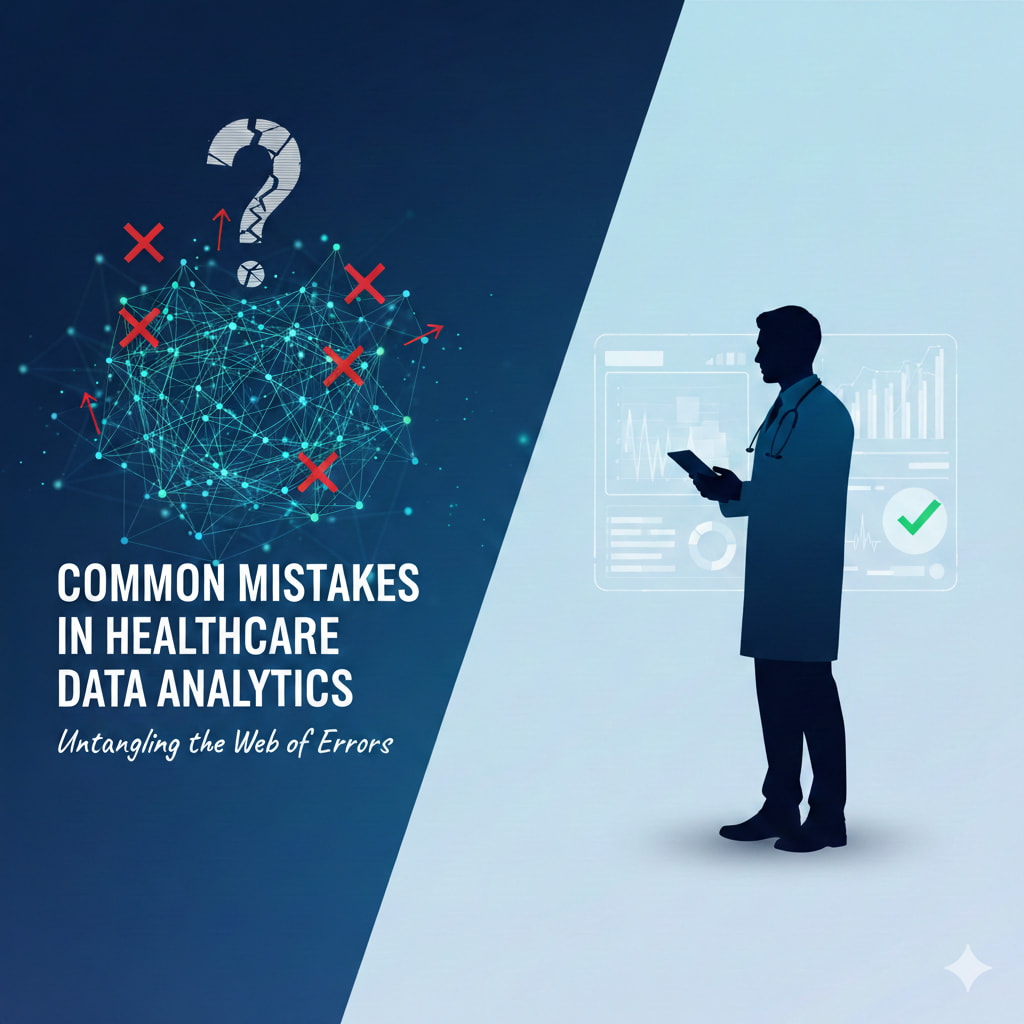
Healthcare organizations invest heavily in analytics, yet many fail to realize its full value. The issue is rarely the lack of data — it’s how data analytics is implemented, interpreted, and operationalized. Avoiding common mistakes is critical for turning insights into real clinical and business impact.
1. Focusing on Data Volume Instead of Data Quality
One of the most frequent mistakes in healthcare analytics is assuming more data automatically means better insights.
Common issues include:
- Incomplete or inaccurate EHR data
- Duplicate or inconsistent patient records
- Poor data standardization across systems
- Unvalidated data sources feeding analytics models
Without clean, reliable data, even the most advanced analytics will produce misleading results.
2. Lack of Clear Business and Clinical Objectives
Analytics initiatives often fail because they are not tied to specific outcomes.
This usually results in:
- Dashboards that look impressive but drive no action
- Reports that don’t align with clinical or operational priorities
- Confusion among stakeholders about success metrics
Effective data analytics services start with clearly defined goals, such as reducing readmissions, improving coding accuracy, or optimizing staffing levels.
3. Working in Data Silos
Healthcare data is frequently fragmented across departments and systems.
Siloed data leads to:
- Incomplete patient views
- Conflicting reports from different teams
- Slower decision-making
- Missed correlations between clinical and financial data
Breaking down silos is essential for achieving enterprise-wide insights and coordinated care.
4. Ignoring Clinical and Operational Context
Analytics fails when insights are not grounded in real-world healthcare workflows.
Common mistakes include:
- Interpreting data without clinician input
- Applying generic analytics models to complex healthcare scenarios
- Overlooking operational constraints like staffing or resource availability
Analytics must reflect how healthcare actually functions — not just how data looks on paper.
5. Overreliance on Technology Without Human Oversight
Advanced tools, AI, and automation are powerful, but they are not infallible.
Risks of over-automation include:
- Blind trust in algorithmic outputs
- Failure to validate models regularly
- Lack of transparency in AI-driven decisions
Human expertise remains essential for interpreting insights and ensuring ethical, compliant use of healthcare data.
6. Poor Change Management and User Adoption
Even accurate insights fail if they are not adopted by end users.
Organizations often overlook:
- Training clinicians and staff on analytics tools
- Integrating insights into daily workflows
- Communicating the value of analytics to users
Without adoption, analytics remains theoretical rather than operational.
7. Treating Analytics as a One-Time Project
Healthcare analytics is not a “set it and forget it” initiative.
This mistake leads to:
- Outdated models and dashboards
- Declining data relevance over time
- Inability to adapt to regulatory or clinical changes
Analytics requires continuous refinement as data sources, care models, and regulations evolve.
Key Takeaways
- Poor data quality undermines analytics accuracy
- Undefined goals lead to unusable insights
- Data silos limit enterprise visibility
- Context-free analytics misguides decisions
- Technology cannot replace human judgment
- Adoption and change management are critical
- Analytics must evolve continuously
About the Creator
Keep reading
More stories from Lilly Scott and writers in Writers and other communities.
How AI Reduces Claim Denials in Medical Billing and Coding
Claim denials continue to be a major source of revenue loss for healthcare providers. Manual billing processes, evolving payer rules, and inconsistent documentation often lead to avoidable errors. AI is changing this by helping billing teams detect risks earlier and submit cleaner claims.
By Lilly Scotta day ago in Writers
Writing About Writing: The Rainbow Trap
The good thing about living in modern times is that LGBTQ representation in media is increasing. Not just in niche and Independant media, either, but also in mainstream media. Books, movies, TV shows, comics... they're finally catching on that LGBTQ+ people form a significant part of their audience, and deserve to see themselves on screen and in fiction, not just as victims in documentaries and true crime shows.
By Natasja Roseabout 6 hours ago in Writers
Dead and Wearing Green
She was wearing that green dress when I first saw her, five years ago to the day. Flowing meadow fabric draped over long legs, thick auburn hair flowing down her back. That smile. Of course, she is still beautiful now. But now she is no longer alive.
By Karen Cave7 days ago in Fiction



Comments
There are no comments for this story
Be the first to respond and start the conversation.