
Does Being OCD Help or Hinder My Writing?
That is the question

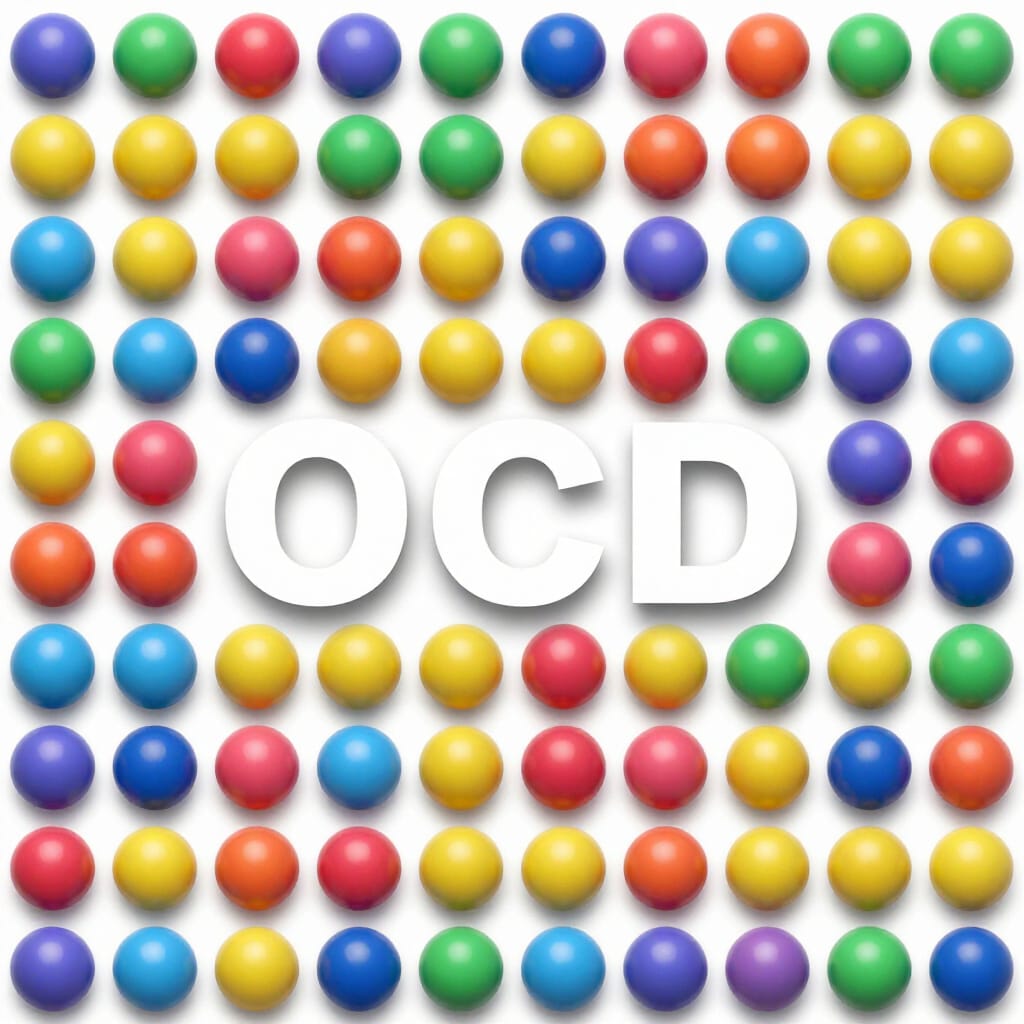
Eight years ago, I was diagnosed with a mild obsessive-compulsive disorder (OCD). I denied it; I was not crazy!
OCD is an anxiety disorder. It involves frequent, intrusive thoughts, along with repetitive and ritualistic actions. There is a long list of symptoms. The main ones I exhibited, and, if I am honest with myself, still do to a certain degree, are:
- Too much focus on precision—objects not aligned or arranged symmetrically
- Beyond normal focus on the need for orderliness
- Anxiety related to unwelcome thoughts, including anger, or sexual or religious content.
I am probably more compulsive than obsessive. Typically:
- Cleaning
- Repeatedly checking stoves, windows, or doors
- Washing
- Repeating acts
- Mental rituals
- Ordering or arranging things
I have often wondered if this “condition” helps or hinders my writing.
Living with OCD
I've stopped rearranging items on supermarket shelves (thank goodness!). But I’m still a neat freak. I hate untidiness. In my working life, I always kept colour-coded files, and everything had a label. The trouble is, I was so organised that by the time I was finished, I never knew where anything was.
If I had candy like jelly beans or Skittles in different colours, I’d line them up in little groups by colour. I wouldn’t mix the flavours before eating them.
I hate odd numbers. I can only buy two of these or four of that. Whenever I use emojis in comments or writing, they always appear in pairs or even numbers, and never alone. In this respect, I find it challenging to write poetry, for example, when the number of stanzas is uneven.
I don’t like surprises, and I live a very ordered life, controlled by lists. I have a list for everything. Sometimes I have so many lists going at once that I need a list to consolidate them. All my blinds must be at the same height. Knives and forks in a drawer have to all point in the same direction. A crooked painting is enough to give me palpitations.
When I was having therapy, my therapist tried to set me tasks to destroy my routine. He set me challenges of not making the bed and leaving things untidy. I failed miserably. I think the longest I ever went without making the bed was a few hours. For me, it's natural to let the bed air for a short while as soon as you're up, then come back and make it.
I have been known to return home 15 minutes after leaving, just to make sure I shut the window or lock the door.
It may sound crazy to people, and it probably is. For someone who suffers from OCD, it is very real and results in mild, moderate, or severe responses. For me, it just makes me uncomfortable and stresses me out.
People often mix up perfectionism with OCD. However, OCD is a serious condition. It can hurt work, relationships, and school. This is very different from simply wanting to do a task perfectly.
Does it help or hinder my writing?
So, back to my original question: does all of this affect my writing?
I think my need for lists to manage an orderly life is a plus when it comes to writing. I have lists of stories or poems that I want to write. These are managed on a weekly and monthly basis. New stories are added, and ones that have been written are removed.
They become daily task lists. These lists also include other necessary requirements beyond writing.
I keep separate files, aside from the platform's history, in case something goes wrong. They are all filed away by category together with a link to the story. Having an ordered mind doesn’t affect my creativity. I find it tough to write free-verse poetry. I usually create more research-based stories than fiction.
The strange thing is that, even with these quirks, I’m not a perfectionist when it comes to proofreading. I am not good at it.
That is not so bad, because at least it shows it is an original story, not AI-generated.
I worked with an inventor at one stage in my career. We wrote joint patent applications. He often added random sentences to his application. For example, he’d say, “My dog needs feeding now” or “Do you want to have a drink with me?” This way, he could tell if the application had been read carefully. Maybe he was a bit OCD, too.
Till next time,
Calvin
About the Creator
Calvin London
I write fiction, non-fiction and poetry about all things weird and wonderful, past and present. Life is full of different things to spark your imagination. All you have to do is embrace it - join me on my journey.
Keep reading
More stories from Calvin London and writers in Writers and other communities.
Writing About Writing: The Rainbow Trap
The good thing about living in modern times is that LGBTQ representation in media is increasing. Not just in niche and Independant media, either, but also in mainstream media. Books, movies, TV shows, comics... they're finally catching on that LGBTQ+ people form a significant part of their audience, and deserve to see themselves on screen and in fiction, not just as victims in documentaries and true crime shows.
By Natasja Rosea day ago in Writers


Comments (1)
It’s a disease my mam should have been diagnosed with so I know what you’re going through. People don’t get recognised as they should. 😢😢😢