
The Literary Scam That Counts on Your Silence
How They Prey and You Pay

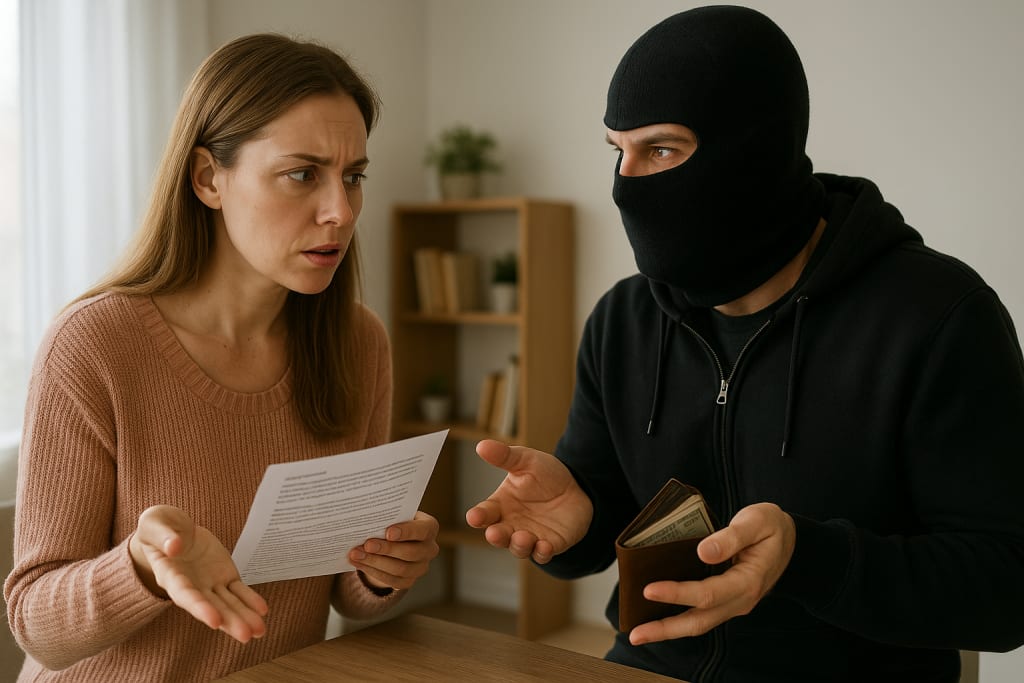
Some scams walk in with a mask and a threat. Others arrive with a soft voice, a thoughtful compliment, and a claim of community. That last category does more damage over time because it operates through emotional residue, not brute force. People hesitate to expose it, not because they’re fooled, but because the interaction feels almost polite. That is the point.
The manipulation is engineered to feel like a favor.
The model is simple.
- An author receives a warm, articulate note from someone claiming to run a book club, reading group, or community spotlight program.
- The language is tuned to the writer’s voice.
- The flattery is precise, hitting themes that matter to that author.
- Trauma experts get trauma-oriented praise.
- Ethically focused writers get moral framing.
- Digital harm writers get comments about courage and resilience.
It is never generic. It is always tailored enough to pass for genuine interest. These invitations present as literary opportunities but are built entirely around psychological grooming disguised as professional respect.
The first phase is rapport acquisition.
- The scammer mirrors tone, matches vocabulary, and demonstrates familiarity with the author’s work.
- They express gratitude, admiration, and a level of emotional intelligence that feels rare in online spaces.
This is not random kindness. This is groundwork.
When someone invests that degree of attention, the human nervous system registers it as safety. The scammer counts on that neurobiological reflex.
After rapport comes incremental commitment.
- They ask for nothing at first. Instead, they request brief information, a short response, or a small scheduling detail.
When that lands, they escalate to something that feels more meaningful: a video introduction, a headshot, a bio, or a confirmation of attendance.
The exchange is designed to feel collaborative.
None of this is accidental.
Each step deepens the author’s sense of involvement and increases the psychological cost of walking away.
Then comes the reveal.
- The scammer waits until the author has invested enough time and emotional energy that declining feels awkward.
Only then is the “reservation fee” disclosed.
The language surrounding it is usually quiet, confident, and packaged as procedural. Words like “confirm,” “secure,” and “prepare the campaign” are used to make the payment sound inevitable.
The fee is presented as a one-time requirement, almost administrative, as if the author is simply completing a formality.
This is the critical behavioral tell.
I have been a published author since 2011. In my experience, a legitimate literary group never charges authors to appear, speak, or participate. When a fee is introduced after emotional investment, it is not a literary model.
It is a social engineering model.
It preys on politeness, self-doubt, and the quiet fear of being “difficult.” Most creatives are conditioned to be agreeable.
The scam depends on that.
From a forensic and behavioral standpoint, this tactic is a blend of grooming, future-faking, and reciprocity pressure.
- The scammer constructs a dynamic in which the author feels chosen, included, or understood. In high-empathy individuals, the manipulation can feel artificially familiar.
In my experience:
- The first red flag is the absence of online presence, verifiable history, or community proof.
- The second is sequencing: praise, rapport, investment, and then the fee.
- The third is urgency disguised as administrative necessity.
- The next is the sender’s choice of email domain. No reputable professional in publishing, forensic science, psychology, digital ethics, or legitimate literary programming uses a generic gmail.com account for official outreach. Established people use a company domain, a university domain, or a verifiable organizational address because it signals accountability. Bad actors use throwaway accounts precisely because they can’t be traced. When an email claims authority but arrives from an unbranded mailbox, it tells you everything you need to know about the person’s real position in the ecosystem.
These scams hide in professional language because professional people tend to doubt themselves before doubting someone else.
Digital harm is not always public. Sometimes it is a private distortion engineered to look like opportunity.
This version is subtle.
- It does not threaten reputations. It threatens boundaries.
- It exploits the fact that many adult professionals targeted online are already navigating emotional fatigue, compassion overload, and the residual effects of surviving prior digital hostility.
When someone shows up sounding kind and literate, it can feel like relief.
That is why these scams work. They operate through the invitee's nervous system, and the inviter's wallet.
The solution is not distrust. It is pattern recognition.
Any invitation that hides financial requirements until after emotional investment is not an invitation. It is an extraction attempt.
Authors deserve spaces where their work is engaged with honesty, not used as a funnel for pay-to-play schemes wearing a literary coat. Silence protects the scammer, not the writer.
Calling the pattern what it is protects every author who will see the same tactic next week disguised under a different name.
If this happens to you, I recommend that you block them. If you feel you must reply, here is an example you can use:
Thank you for letting me know.
Given how this was initially framed, I wasn’t expecting a paid-placement model. I don’t pay fees to appear, speak, or participate in book discussions, so I won’t be moving forward with the reservation requirement and will need to withdraw from this session.
I do think arrangements like this should be disclosed upfront in the initial invitation, especially when the outreach is positioned as a community spotlight rather than a paid promotional slot.
Wishing you and your members well.
It's professionally polite yet still calls them out on their ethical dishonesty.
_ _ _ _ _ _ _ _ _ _ _ _ _ _ _ _ _ _ _ _
Author’s Note
This article reflects my personal experience and the behavioral patterns I observed during that interaction. It is not a legal determination, nor is it directed at any specific individual or organization by name. The purpose is educational: to outline a sequence of tactics that writers may encounter and to encourage pattern recognition before financial commitment.
Writers can draw their own conclusions. My intent is transparency, not retaliation.
_ _ _ _ _ _ _ _ _ _ _ _ _ _ _ _ _ _ _ _
Sources That Don’t Suck:
Federal Trade Commission
Better Business Bureau
Writer Beware by SFWA
American Authors Guild
National Cybercrime Reporting Center
Digital Forensics Association
Psychology Today (Forensic and Behavioral Science Sections)
About the Creator
Dr. Mozelle Martin
Behavioral analyst and investigative writer examining how people, institutions, and narratives behave under pressure—and what remains when systems fail.
Keep reading
More stories from Dr. Mozelle Martin and writers in Writers and other communities.
Handwriting Was the Doorway.
When most people hear “handwriting analysis,” they think of a parlor trick. Popular culture hasn’t helped. Movies reduce it to a detective staring at squiggles on a page. Self-help books package it into “what your signature says about you.”
By Dr. Mozelle Martin6 months ago in Writers
Unofficial Challenge: What would you do if you were rich?
I love the kind of work I get to do in my career, but as I job search and browse apartments again due to another understaffed and unsustainable work environment that I did not intend to get into, my daydreams of better days consistently lean into the same question: What would I do if I didn't have to worry about my basic needs being met?
By Kay Husnickabout 24 hours ago in Writers
Nancy Guthrie: Is a miracle still possible after close to two weeks?
Close to two weeks since Nancy Guthrie's abduction As of February 12, 2026, Nancy Guthrie remains classified as missing for 12 days, but there is no official confirmation that she is deceased. Blood matching Guthrie’s DNA was found on her front porch, indicating she likely suffered an injury during the abduction.
By Cheryl E Preston6 days ago in Geeks


Comments
There are no comments for this story
Be the first to respond and start the conversation.