
The Voice of Creative Minds
Sharing Stories That Shape the World

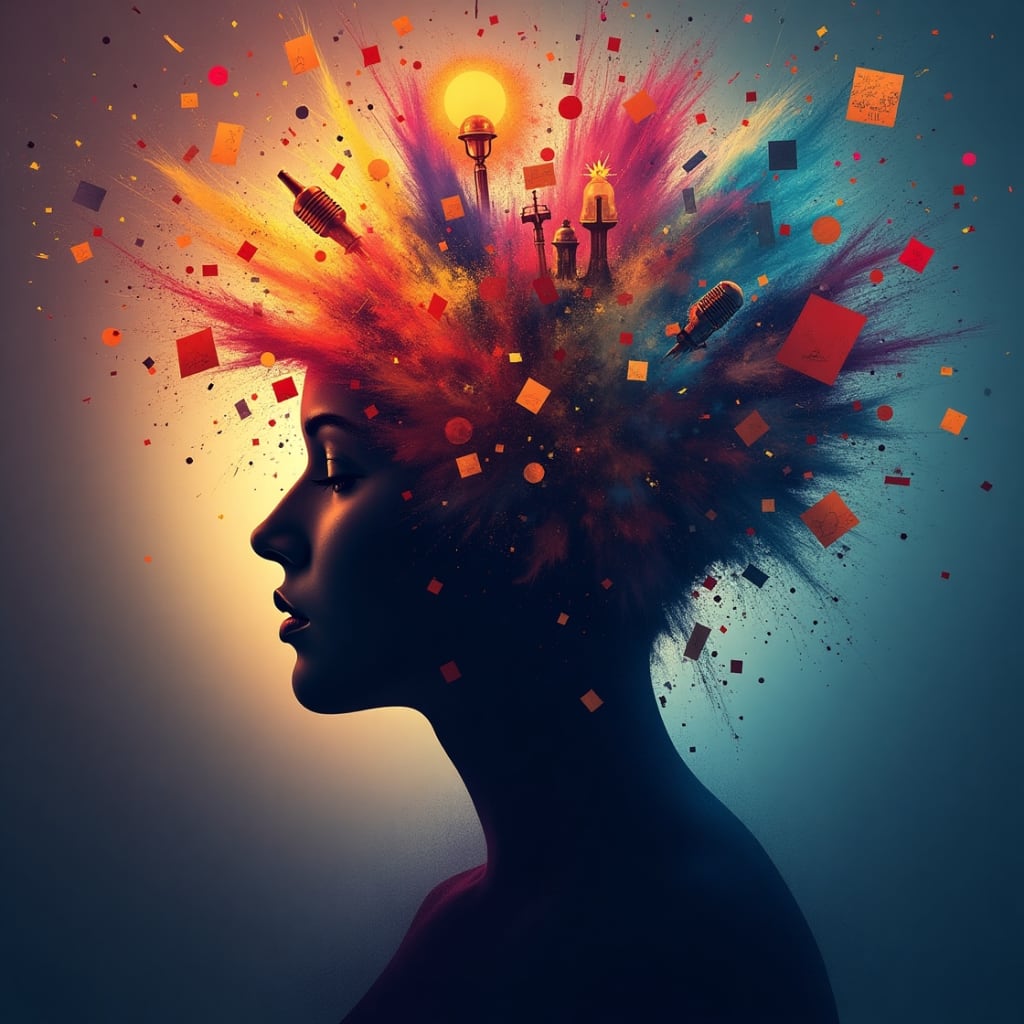
In a quiet town nestled between mountains and mist, there was a place called The Echo Chamber—not a hall of repetition, but a sanctuary for those who dreamed louder than they spoke. Inside its ivy-covered walls, artists, writers, musicians, and misfits gathered every Thursday night to share their work. No rules. No judgment. Just expression.
Among them was Riya, a shy 17-year-old girl with a notebook always clutched to her chest. She rarely spoke, never read aloud, and left before the applause. But every week, she came—always listening, always writing.
Riya didn’t believe her voice mattered. She believed creativity belonged to the loud ones—the painters who filled canvases like storms, the musicians who played like their hands were possessed. Her world was quieter. In her notebook were stories of other people, fictional worlds she crafted with trembling fingers and buried in silence.
One evening, the Echo Chamber welcomed a guest—Milo, a spoken word poet from the city. His words hit like rain on glass: soft but shattering. His performance that night was about “creative paralysis”—the moment when your mind overflows but your mouth shuts down.
Riya sat frozen. Her heart thudded. She knew that moment well. It wasn’t just paralysis; it was fear. Fear of not being enough. Fear that her thoughts wouldn’t translate. Fear that her stories were meant to stay hidden.
After the show, Milo stayed behind, chatting with the crowd. Riya lingered at the edge, then slipped her notebook onto the snack table beside a stack of napkins and fled.
Inside the notebook was a short story. It was titled “The Girl Who Whispered Thunder.”
The Story Within the Story
Once upon a time, in a land where people were born with colors in their throats, lived a girl named Luma. The more confident a person was, the brighter and louder their voice glowed. Reds and golds lit up orators. Blues and greens danced from singers. But Luma’s voice was invisible.
She tried everything. Reading out loud. Singing in the rain. Whispering to the stars. Nothing. Her throat stayed gray and quiet.
One day, wandering the forest in frustration, she met an old woman named Kai, who asked, “What do you speak when no one listens?”
Luma blinked. “Nothing. I don’t speak.”
Kai nodded slowly. “Then speak for yourself. That’s the only voice that matters.”
Luma began writing. Pages and pages of feelings, thoughts, dreams. She spoke them aloud, just to herself. At first, nothing changed. But after weeks of whispering truths into the air, her voice shimmered faintly—silver and soft.
It didn’t roar. It didn’t command. But it reached the ears of those who listened.
And when she finally stood before her village, trembling but honest, her silver voice filled the square like moonlight. Silent but undeniable.
Back in the Echo Chamber
The next week, Riya didn’t show up. But her notebook did—now passed hand to hand. Milo had read it aloud the previous Friday at a pop-up event in the city, introducing it as a whisper with the strength of thunder.
People were stunned. Some cried. Others clapped slowly, reverently. No one knew who wrote it.
Until the following Thursday.
Riya walked into the Echo Chamber late. A hush fell.
“I’m sorry I left my notebook,” she said softly.
“It found its way,” said Milo, smiling. “But the voice behind it deserves to speak.”
There was a pause.
Then Riya stepped forward. “I never thought what I wrote mattered. I was afraid no one would hear it the way I heard it in my mind. But maybe… maybe whispers are meant for those who listen deeply.”
She pulled a folded page from her pocket. “This is new,” she said, and read aloud a poem she wrote that morning.
The Poem: "For the Quiet Creators"
Not all brushes paint with fire,
Not all words are shouted clear.
Some are written in the margins,
Meant for hearts that hold them near.
Not all singers crave the chorus,
Not all painters crave the fame,
Some just want to see their story
Take a breath and speak their name.
So if your art feels small or silent,
Let it live and still be true.
Because the voice of creative minds
Doesn't need to shout…
To move you.
When she finished, no one clapped.
They stood.
The silence after her reading said everything—it was filled with respect, with understanding, and with the collective realization that the softest voice had become the loudest in their hearts.
From that day on, Riya didn’t whisper her stories to herself. She spoke them into the world—still quietly, still gently—but always honestly.
And in doing so, she became the voice of creative minds—not by being the loudest, but by being the most real.
About the Creator
Keep reading
More stories from Muhammad Hashim and writers in Writers and other communities.
The Day Everything Changed
They say change comes slowly. But for me, it arrived in a single sentence. It was a warm August morning, and the air smelled like asphalt and sunlight. I was sitting in the break room of the law office where I’d worked for almost seven years, sipping my second cup of coffee and scrolling through my emails. The usual—clients complaining, partners delegating, and somewhere in between, a message I almost didn’t open.
By Muhammad Hashim9 months ago in Motivation
Should We Not Try to Get Too Political?
Here's something you often hear people say, "I try not to get too political." I understand the sentiment and I sympathize with it... while at the same exact time, I completely disagree with the notion. Whether it's referring to social media or wherever, it's kind of unavoidable. You can attempt to sidestep it, not engage, leave the less important things for actual politicians to discuss... you can want it to not take over your life, your conversations, your relationships, and that makes perfect sense.
By Stephen Kramer Avitabilea day ago in Writers
Top Skills to Learn for Future Jobs in the Age of Artificial Intelligence
In the last few years, I’ve watched the world of work evolve faster than ever before. Artificial intelligence (AI) isn’t just a buzzword anymore—it’s a force reshaping industries, job roles, and the very skills that employers value. I remember reading about AI-powered systems taking over repetitive tasks in offices, factories, and even creative fields, and it made me wonder: what skills should I focus on to stay relevant in this AI-driven future? After diving deep into research and talking to experts, I’ve realized that the key isn’t to compete with AI, but to learn to work alongside it.
By Steve Davisa day ago in Writers




Comments
There are no comments for this story
Be the first to respond and start the conversation.