
App Development Cost in the USA: 2026 Pricing Report
A transparent guide for US business leaders on current market rates, development variables, and regional pricing shifts in 2026.


Calculating the cost of app development in 2026 is a complex task. You must move beyond simple "price per feature" estimates. For US-based enterprises, the fiscal landscape has changed significantly.
Several factors now shape the market. First, AI-assisted coding has reached a mature state. Second, the labor market for senior engineers has stabilized. Finally, there are rigorous new data privacy requirements.
This report provides a verified framework for your budgeting. It helps whether you build a Minimum Viable Product (MVP). It also applies to a complex enterprise ecosystem. Understanding US market variables ensures your project remains solvent. It also helps your project stay scalable over time.
The Current State of App Development Costs in 2026
The average cost to build an app currently varies. In the United States, it ranges from $60,000 to over $500,000. AI tools now accelerate the boilerplate phase of development. This helps with the initial stages of coding.
However, the cost of specialized talent has risen. This is especially true for cybersecurity experts. It also applies to machine learning integration specialists.
As of early 2026, the market has shifted. Buyers no longer prioritize quantity over quality. This was common in the early 2020s. Now, buyers prioritize long-term maintenance costs. They also look for cross-platform efficiency. These factors are more important than low initial stickers.
US Market Rate Breakdown
- Simple / MVP: $60,000 – $95,000 (Typical Timeline: 3–4 Months)
- Mid-Level (API Heavy): $100,000 – $250,000 (Typical Timeline: 6–9 Months)
- Enterprise / Complex: $300,000 – $750,000+ (Typical Timeline: 12+ Months)
Data represents 2025-2026 project averages from leading US development agencies.
Core Variables Impacting Your 2026 Budget
1. The "Platform" Decision
Your choice between Native and Cross-Platform is vital. This remains the primary driver of your budget. Native development uses Swift for iOS or Kotlin for Android. Cross-platform options include Flutter or React Native.
In 2026, cross-platform frameworks have reached high quality. They have near-parity with native performance. This is true for 90% of business use cases. Choosing this path often reduces initial costs. You may save 20% to 30% on development.
2. Integration and Infrastructure
Modern apps rarely stand alone in the market. Costs escalate quickly when you integrate legacy systems. This includes ERP systems or HIPAA-compliant databases. It also includes real-time AI processing engines.
Secure API architecture is now very expensive. It accounts for roughly 35% of the backend budget. This is due to higher federal data protection standards.
3. Geographic Labor Arbitrage Within the US
Regional pricing is still a major factor today. Remote work is standard, yet agency overhead differs. Costs in major hubs still influence hourly rates.
- Tier 1 (SF, NYC, Seattle): $175 – $250+/hour
- Tier 2 (Austin, Denver, Atlanta): $140 – $180/hour
- Tier 3 (Midwest and Regional Hubs): $100 – $150/hour
Many organizations look for specialized expertise in the Mid-Atlantic. For these groups, Mobile App Development in Maryland is a great choice. It offers high-tier technical talent. It also provides competitive regional overhead. This is often better than Northeast corridor averages.
Real-World Cost Architecture: A 2026 Comparison
Visualizing your capital allocation is very helpful. Consider these two common 2026 project scenarios.
The "SaaS Startup" MVP
The scope includes user authentication and subscription management. It also features a personalized AI dashboard. The technical stack uses Flutter with a Node.js backend.
The estimated cost for this project is $85,000. The budget is split across several categories. 40% goes to the frontend user interface. 30% is for AI API integration. 20% covers quality assurance and testing. 10% is for project management..
The "Health-Tech" Enterprise App
The scope includes real-time patient monitoring. It also features IoT device syncing. The app must have full HIPAA encryption.
The technical stack uses Native iOS and Android. This ensures low-level Bluetooth stability for devices. The estimated cost is $320,000.
The budget allocation for this app is specific. 25% goes to security compliance. 30% is for hardware integration. 25% covers the native UI and UX. 20% is for scalable cloud infrastructure.
AI Tools and Resources
GitHub Copilot Enterprise — AI-pair programming for teams.
- Best for: Reducing the cost of boilerplate code. It also helps with standardizing documentation.
- Why it matters: It can reduce development hours significantly. Some tasks take 40% less time.
- Who should skip it: Teams working on highly sensitive algorithms. This applies to air-gapped proprietary repos.
- 2026 status: It now features advanced context-awareness. This works well for large-scale enterprise repositories.
Vercel v0 — Generative UI tool for prototyping.
- Best for: Converting wireframes into functional code instantly. It uses React and Tailwind.
- Why it matters: It lowers the cost of design handoffs. It moves from design to code quickly.
- Who should skip it: Apps requiring highly bespoke components. It is not for non-standard UI needs.
- 2026 status: It is fully integrated with design systems. It also provides production-ready exports.
Risks, Trade-offs, and Limitations
A common pitfall in 2026 is underestimating post-launch expenses. This is often called Operational Expenditure or OpEx.
When Your Budget Fails: The Scale-Shock Scenario
A business builds a successful app. They start with an initial $100,000 investment. However, they fail to account for data costs. They also ignore AI token usage fees.
- The warning signs are clear. Cloud hosting bills grow faster than users. This happens because the architecture is flawed. It was built for functional success only. It was not built for marginal cost efficiency.
- An alternative approach is an Infrastructure Audit. You should do this during the design phase. Project your costs at 10,000 users. Then project them at 100,000 users.
Key Takeaways
- Prioritize Security Early: Prioritize security early in the process. Retrofitting compliance in 2026 is very expensive. It costs 3x more than building it early.
- Hybrid is the Standard: Hybrid development is now the standard choice. You may not need deep hardware access. This includes camera sensors or Bluetooth. If you do not, use cross-platform tools. It is the fiscally responsible choice.
- Budget for Maintenance: Always budget for long-term maintenance. Allocate 15% to 20% of initial costs annually. This covers updates and security patches.
About the Creator
Keep reading
More stories from Devin Rosario and writers in 01 and other communities.
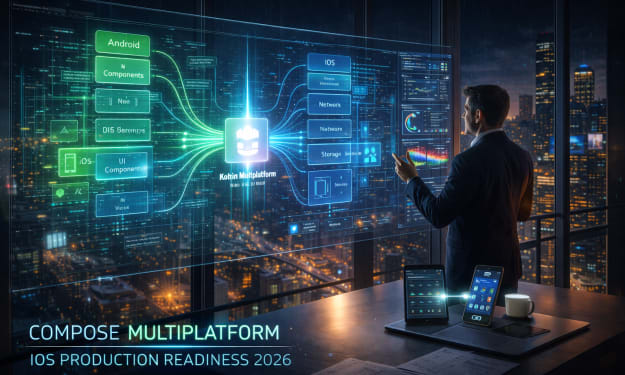
Compose Multiplatform for iOS Production Readiness in 2026
Engineering leaders must evaluate Kotlin Multiplatform today. The cross-platform UI debate has shifted recently. It is no longer about if it works. The focus is now on maintenance at scale. Compose Multiplatform (CMP) for iOS has reached a critical tipping point. Developers can share business logic and the UI layer. This works across both Android and iOS platforms. It provides a unified codebase for your team. It avoids the lag of web-based wrappers. It also lacks the overhead found in Flutter. This guide evaluates readiness for technical decision-makers. We focus on long-term stability and development speed.
By Devin Rosario4 days ago in 01
Design-to-Development Handoff: Why Projects Break After Design
If you've ever shipped a redesign that looked great in Figma and slightly… off in production, you've seen the handoff problem. It's rarely about talent. It's usually about the invisible gap between intent and implementation.
By Valeriia Shulga4 days ago in 01
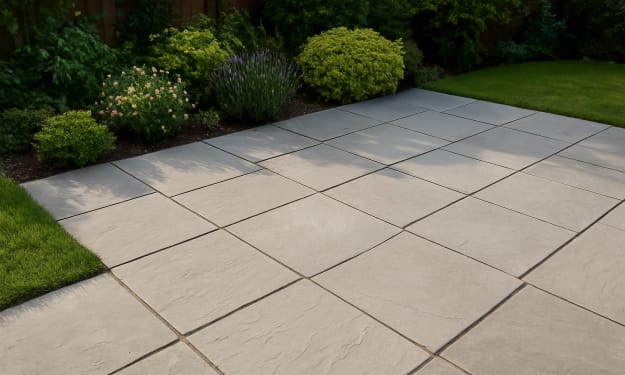
The Best Materials for Durable Garden Slabs
Garden paving does more than shape an outdoor space. It carries furniture, foot traffic, planters, barbecues, children’s toys, and constant exposure to rain, frost, sun, and debris. The right material keeps its structure, colour, and finish for years without constant repair.
By Ammaari Stones4 days ago in 01


Comments
There are no comments for this story
Be the first to respond and start the conversation.