
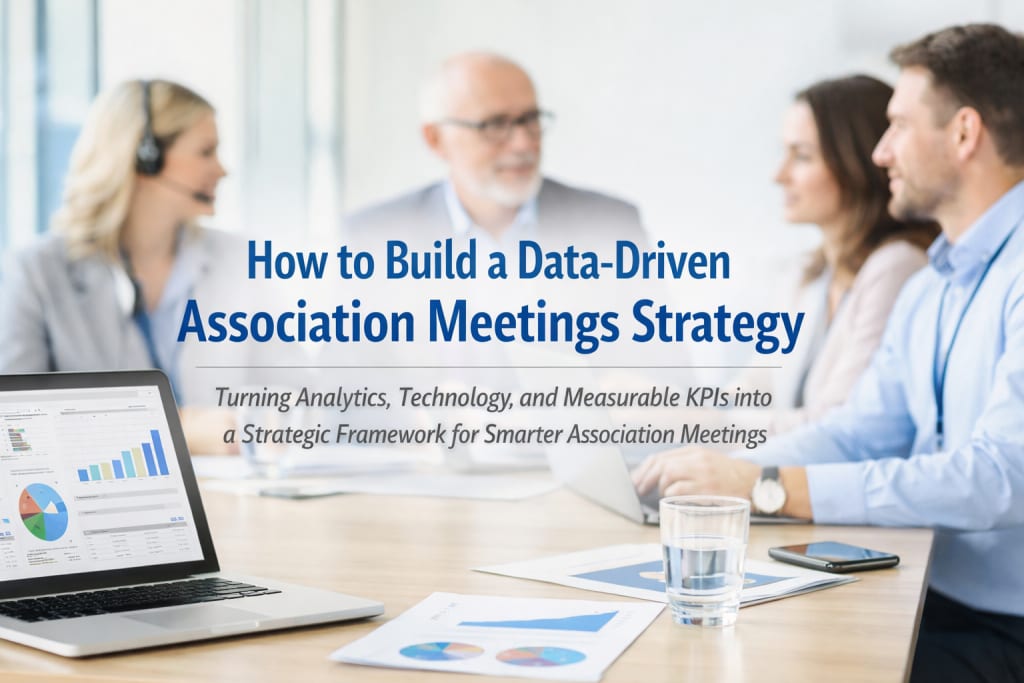
How to Build a Data-Driven Association Meetings Strategy
Turning Analytics, Technology, and Measurable KPIs into a Strategic Framework for Smarter Association Meetings
An effective Association Meetings Strategy is no longer built on assumptions or past habits. Today, associations operate in a competitive environment where member expectations are rising, budgets are scrutinized, and outcomes must be measurable. A data-driven approach transforms meetings from routine gatherings into strategic growth tools.
If your association wants stronger engagement, higher retention, and measurable return on investment, data must guide every stage of planning.
Here is how to build a structured, data-driven strategy that delivers results.
1. Start With Clear Organizational Objectives
Before collecting data, clarify what success looks like.
Ask:
- Is the goal to increase membership?
- Improve sponsorship revenue?
- Enhance member engagement?
- Deliver continuing education credits?
- Strengthen industry positioning?
Your Association Meetings Strategy should directly align with broader organizational goals. Without this alignment, data collection becomes scattered and unfocused.
Define 3 to 5 measurable objectives before planning your next event cycle.
2. Identify the Right Data Sources
Not all data is useful. Focus on information that supports decision-making.
Key data sources include:
- Historical attendance figures
- Member demographics
- Registration trends
- Session popularity metrics
- Post-event surveys
- Sponsorship performance data
- Budget and cost breakdowns
Many associations now rely on Meetings and Event Technology to centralize this information. Registration platforms, CRM systems, and analytics dashboards allow real-time tracking instead of manual spreadsheets.
The goal is clarity. You should be able to answer: What worked? What did not? Why?
3. Segment Your Audience
A common mistake in association planning is treating all members the same.
Use data to segment attendees based on:
- Career stage
- Geographic location
- Industry sector
- Past attendance history
- Content interests
Segmentation allows you to personalize programming and marketing. For example, early-career professionals may prefer interactive workshops, while senior executives value high-level networking sessions.
Advanced Meetings and Event Technology platforms make segmentation easier through automated tagging and behavioral tracking.
4. Use Predictive Insights for Planning
Data should not only explain the past. It should shape the future.
Analyze trends such as:
- Peak registration timelines
- Popular session formats
- Revenue patterns
- Engagement drop-off points
These insights help forecast attendance and optimize pricing strategies.
Professional Congress Organisers (PCOs) often support associations in interpreting this data. With experience across multiple events and industries, Professional Congress Organisers (PCOs) can benchmark performance and identify growth opportunities that internal teams may overlook.
Predictive planning reduces financial risk and improves decision-making accuracy.
5. Integrate Technology for Real-Time Analytics
A modern Association Meetings Strategy must include integrated technology.
Essential tools may include:
- Online registration systems
- Event apps
- Live polling platforms
- Badge scanning for session tracking
- CRM integration
- Sponsorship analytics dashboards
Meetings and Event Technology enables real-time engagement tracking. You can see which sessions are full, which exhibitors attract traffic, and how attendees interact with content.
This allows mid-event adjustments rather than waiting until the event concludes.
For example, if attendance drops in breakout sessions, you can adapt scheduling or adjust room allocation immediately.
6. Measure What Matters
Data-driven strategy requires clear KPIs.
Common performance indicators include:
- Attendance growth rate
- Revenue per attendee
- Sponsorship ROI
- Session satisfaction scores
- Member retention rates
- Cost per participant
Your Association Meetings Strategy should define KPIs before the event begins. Otherwise, measurement becomes reactive instead of intentional.
Work with stakeholders to determine which metrics reflect strategic impact rather than vanity numbers.
7. Optimize Sponsorship and Revenue Models
Sponsors increasingly demand measurable outcomes.
Data can provide:
- Traffic reports for exhibition booths
- Lead capture numbers
- Engagement statistics
- Brand exposure analytics
Professional Congress Organisers (PCOs) frequently help associations design sponsorship packages backed by analytics. Data strengthens sponsor negotiations and increases renewal rates.
When sponsors see clear value, long-term partnerships grow.
8. Continuously Refine and Improve
A data-driven Association Meetings Strategy is never static.
After each event:
- Conduct post-event analysis
- Compare results against KPIs
- Identify patterns
- Adjust programming accordingly
Use surveys carefully. Instead of generic questions, focus on specific, actionable insights. For example:
- Which session formats delivered the highest value?
- Was networking time sufficient?
- Did the event app improve engagement?
Refinement should be systematic, not emotional.
9. Balance Data With Human Insight
While analytics guide decisions, member experience still matters.
Combine quantitative data with qualitative feedback. Conversations with attendees, exhibitors, and board members often reveal nuances numbers alone cannot capture.
Professional Congress Organisers (PCOs) bring an external perspective that blends operational data with industry insight, helping associations maintain strategic focus.
Conclusion
Building a data-driven Association Meetings Strategy requires clarity, structure, and the right technology. When objectives align with measurable KPIs and supported by modern Meetings and Event Technology, associations can make informed decisions that strengthen engagement, revenue, and long-term growth.
The associations that thrive are not those hosting the most meetings. They are the ones using data to ensure every meeting delivers measurable value.
If your organization is ready to move beyond assumptions and build a strategy grounded in insight, start by auditing your current data systems and identifying gaps. From there, build a framework that turns every event into a strategic asset.
About the Creator
Keep reading
More stories from Meeting Media and writers in 01 and other communities.
How Professional Congress Organisers Reduce Risk in Large-Scale Conferences
Large-scale conferences come with high expectations and high stakes. When you are managing hundreds or even thousands of delegates, speakers, sponsors, and partners, even small mistakes can turn into major problems.
By Meeting Media5 days ago in 01
Top 12 Digital Marketing Companies in India 2026
India’s digital marketing landscape continues to evolve rapidly as businesses move toward performance-driven online strategies. In 2026, companies are investing in data-led campaigns, automation tools, search optimization, and audience-focused content to remain competitive across crowded digital channels.
By Jane Smith2 days ago in 01
When Amazon Says You’re a Disappointment
Yesterday, for the first Wednesday in months, I didn’t publish a piece on Vocal. Believe me, I wanted to. I had it all written up and ready to go. I was going to share the news that I had officially become a published author.
By Sandy Gillman6 days ago in Writers



Comments
There are no comments for this story
Be the first to respond and start the conversation.