
Interactive iOS Widgets Creative Use Cases for 2026
A guide for developers and product owners leveraging advanced SwiftUI interactivity for better user engagement.

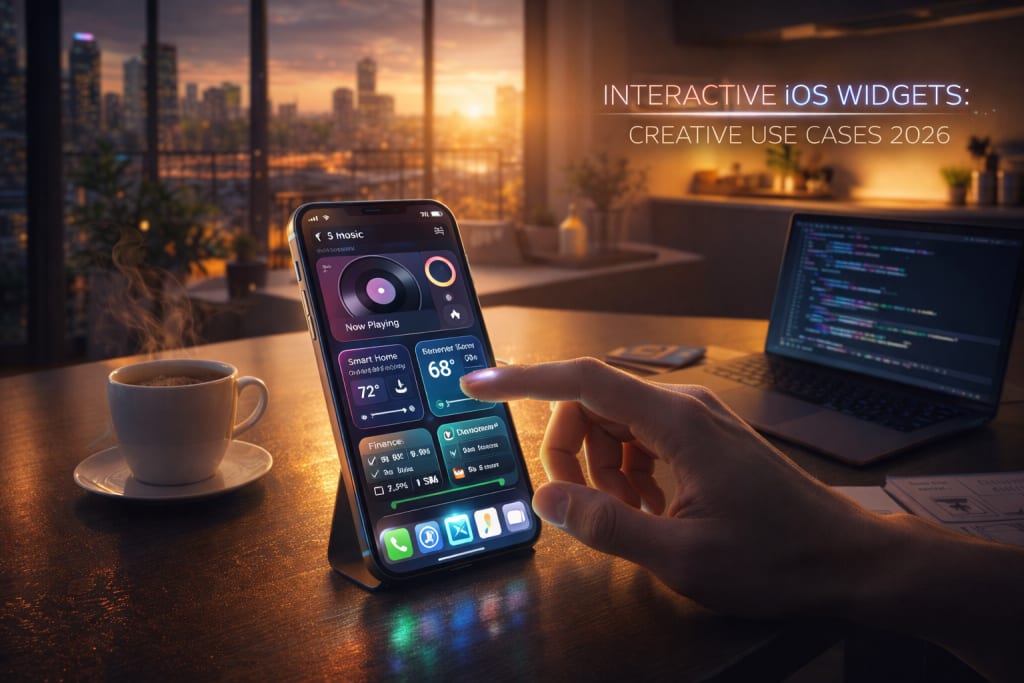
The evolution of iOS widgets has shifted. They moved from static "glanceable" information to fully functional interfaces. These are miniature application interfaces. In 2026, old technical constraints are gone. These constraints once limited widgets to simple button toggles. They are replaced by high-performance protocols. These protocols live within SwiftUI and WidgetKit. This transition allows users to complete multi-step tasks. Users do this without ever launching the parent application.
For developers, this creates a new frontier. Product strategists also see a new frontier for user retention. A user can manage an entire morning workflow through a widget. They can use Medium or Large widget sizes. This makes the perceived value of the application increase significantly. This article explores creative and high-utility implementations. These are based on current 2026 development standards.
The 2026 Widget Landscape: Beyond Glanceability
In earlier iterations, widgets were primarily data mirrors. You tapped a widget in the past. It acted as a deep link. This forced the full app to open. Today, the "App Intents" framework changes this. App Intents are commands that run app code in the background. They allow complex logic to execute without the app opening. According to 2025 industry benchmarks, interactivity helps. Apps with deep widget interactivity saw a 22% usage increase. This is compared to those using static displays.
The primary shift in 2026 is the Interactivity Ceiling. The Interactivity Ceiling refers to the maximum complexity allowed. Apple has optimized the memory footprint for background processes. This allows widgets to handle small-scale data entry. They can also handle scrolling lists within the widget view. Real-time state changes are now possible. These changes sync via iCloud across devices instantly.
Creative Implementation: High-Value Use Cases
1. The Micro-CRM and Lead Manager
For sales professionals, the Home Screen is a command center. Users no longer open a CRM to log a call. A widget now allows for "Quick-Log" buttons.
- The Function: This is a scrollable list of "Recent Contacts." It features interactive status icons.
- The Interaction: Tapping a "Followed Up" icon works instantly. It updates the database through a background App Intent.
- 2026 Advantage: Users can rotate through different lead pipelines. They do this directly on the widget. They use a small embedded picker tool.
2. Live Financial Transaction Triage
Finance apps are moving away from simple balances.
- The Function: A "Needs Review" widget surfaces recent transactions. It shows the last three uncategorized items.
- The Interaction: Users can tap category icons directly. Examples include Food, Transport, or Rent icons. These are located right on the transaction line.
- The Outcome: This allows immediate classification of expenses. It removes the friction of app authentication. You do not need to open the app for every edit.
3. Dynamic Health and Bio-Feedback Loops
Standard "Steps" counters are now just the baseline. The 2026 standard involves proactive user input.
- The Function: This is a "Hydration & Mood" tracker. It adapts based on the time of day.
- The Interaction: It uses an interactive slider or stepper. Users log water intake this way. They can also use a sentiment scale. This logs mental state during high-stress hours.
Companies may want to build these complex interfaces. Partnering with experts is a great choice. Look into Mobile App Development in Chicago. They provide the technical specialized knowledge required. They help balance widget performance with battery efficiency.
Real-World Examples
Hypothetical: "SwiftTask" Productivity Suite
In 2026, an app called SwiftTask launched a widget. It was called the "Inbox Zero" widget.
- Scenario: A user receives five new tasks. They do not open the main app. They use the widget’s "Swipe-to-Defer" simulation. This is implemented via Button Intents.
- Outcome: The user cleared their morning queue quickly. It took only 15 seconds while waiting for coffee. Telemetry showed a major shift in usage. 60% of daily interactions occurred solely within the widget.
Verified Trend: Smart Home Orchestration
By early 2026, major smart home platforms moved forward. They moved from "On/Off" buttons to "Scene Scrollers." Users can now adjust dimming percentages directly. They use a stepped button interface. Example buttons include -10% or +10%. This happens right on the Home Screen. It leverages the increased refresh frequency. This frequency is allowed for HomeKit-linked widgets.
Practical Application: Implementation Logic
Building these widgets requires a specific shift. You must change how you handle state. You are no longer managing a full View Controller. Instead, you are managing a Timeline Provider. The Timeline Provider tells the widget what to show. It also tells it when to update.
- Define the App Intent: Create a custom LiveUpdateIntent. This is the code that runs when users tap.
- Optimistic UI Updates: Ensure the widget reflects changes immediately. Optimistic UI assumes the action will succeed. It shows the result before the server confirms. In 2026, users expect zero-latency feedback. Use the invalidating modifier in SwiftUI. This triggers a timeline refresh very fast. It happens the millisecond an intent completes.
- State Synchronization: Users might change a value in the widget. Ensure the "Shared App Group" container updates. This allows the main app to show the same data. The data is ready when the app next launches.
AI Tools and Resources
Xcode 17 Predictive Coding — This is integrated AI. It suggests App Intent structures for you. It uses your existing data models.
- Best for: This tool helps with rapid prototyping. It is great for interactive buttons and toggles.
- Why it matters: It reduces the boilerplate code required. It connects widget buttons to database updates easily.
- Who should skip it: Avoid this for highly proprietary systems. Skip it if you have strict privacy requirements.
- 2026 status: This tool is now stable. It is the industry standard for SwiftUI development.
WidgetSim Pro — This is a specialized simulator. It tests widget performance in low-power modes.
- Best for: Use this to optimize background intents. It is also great for checking memory usage.
- Why it matters: It prevents your widget from being "throttled." iOS throttles apps for excessive resource consumption.
- Who should skip it: Teams building simple widgets should skip. Do not use it for static-only designs.
- 2026 status: It is active and widely used. It is standard for QA in enterprise-level apps.
Risks, Trade-offs, and Limitations
Interactivity is powerful but it is not infinite. Apple still enforces strict memory caps. These caps are usually around 30MB for widgets.
When Interactive Widgets Fail: The "Sync Ghost" Scenario
- The Situation: A user updates a task status. They do this on the widget. They later open the main app. The task still shows as "Pending" there.
- Warning signs: Look for a spinning loading indicator. This happens if the widget never resolves. You might see a "Data Mismatch" error. Check the app log for these errors.
- Why it happens: This is usually a sync failure. The Shared App Group container might fail. A race condition might also occur. The OS might terminate the background process. This happens if the network call takes too long.
- Alternative approach: Use "Optimistic Persistence" for success. Write the change to a local cache first. Then attempt the network sync in the background. If the sync fails, the widget must change. It should revert its visual state. This happens on the next timeline update. This keeps the widget truthful for the user.
Key Takeaways
- Utility over Visuals: Usefulness is the goal in 2026. The best widgets save the user time. They are more than just "aesthetic" designs.
- App Intents are Essential: Modern widgets require these. You must understand the App Intents framework. You also need to know background execution.
- Respect the Battery: Excessive interactivity causes problems. Constant network polling triggers these issues. The OS will deprioritize your refresh rate.
- Focus on Micro-Tasks: Save complex tasks for the app. Use the widget for binary choices. It is perfect for increments and status toggles.
About the Creator
Keep reading
More stories from Del Rosario and writers in 01 and other communities.
Passkey Authentication: Implementing Passwordless Flows 2026
The digital security landscape has shifted permanently. As of early 2026, passwords are no longer primary. They are not enough for high-trust applications. They are now considered a legacy fallback. Passkeys have moved from experimental to expected. They are built on the FIDO2 standard. They also use the WebAuthn protocol. FIDO2 is a set of standards. These standards allow for secure, passwordless logins. WebAuthn is the specific web API. It lets websites use these secure keys.
By Del Rosarioa day ago in 01
📱 Samsung Galaxy S26 Ultra release date, Official & Rumored Release Timeline
🗓 Official Unpacked Event & Announcement The most reliable global reports agree that Samsung scheduled its Galaxy Unpacked event for February 25, 2026. This event, hosted in San Francisco, was confirmed by Samsung and widely covered across tech media outlets.
By USA daily update 6 days ago in 01
The Silent Guardian: How Background Location Tracking Works Without Draining Your Battery
We’ve all been there. You’re using a family location app for peace of mind, but by midday, your phone’s battery icon is glaring red. It feels like a trade-off: either know your loved ones are safe, or have a phone that actually lasts.
By Olivia Martinez3 days ago in 01



Comments
There are no comments for this story
Be the first to respond and start the conversation.