
Revolutionize your customer service game with the power of Machine Learning
customer service


Are you struggling to keep up with the ever-increasing demands of your customers? Do you feel like your customer service experience is falling short of their expectations?
If so, you're not alone. As businesses continue to expand and competition grows fiercer, providing exceptional customer service has become a top priority for success. But with limited resources and time, how can you possibly deliver the level of service your customers expect?
Enter machine learning - the game-changing technology that has revolutionized the world of customer service.
What is Machine Learning?
Machine learning is a subset of artificial intelligence that involves training computer algorithms to learn from data and make predictions or decisions without being explicitly programmed. In other words, machine learning algorithms can analyze large amounts of data and identify patterns, relationships, and insights that would be difficult for humans to detect.
Machine learning algorithms are commonly used in various applications, such as image and speech recognition, natural language processing, and predictive analytics. In customer service, machine learning algorithms can analyze customer data to identify patterns and trends, automate tasks, and provide personalized recommendations and solutions.
Applications of Machine Learning in Customer Service
There are several ways in which businesses are using machine learning to enhance their customer service efforts. Let's take a closer look at some of the most popular applications of machine learning in customer service.
Chatbots and Virtual Assistants
Chatbots and virtual assistants are becoming increasingly popular in customer service. These AI-powered tools can handle routine queries and tasks, freeing up customer service representatives to focus on more complex issues.
chatbot customer services
Chatbots can be integrated into a business's website, social media channels, or messaging apps. Customers can interact with the chatbot using natural language, and the chatbot can provide relevant information, answer frequently asked questions, and even initiate transactions.
Virtual assistants, on the other hand, are more sophisticated AI systems that can perform tasks beyond answering simple questions. For example, a virtual assistant can help customers book a flight, make a restaurant reservation, or troubleshoot technical issues.
Sentiment Analysis
Sentiment analysis is the process of analyzing customer feedback to determine their emotions and opinions about a product or service. Machine learning algorithms can analyze large amounts of data, such as social media posts, customer reviews, and support tickets, to identify patterns and trends in customer sentiment.
This information can be used to improve products and services, identify areas for improvement in customer service, and even prevent potential customer churn. For example, if a business notices a sudden increase in negative sentiment towards a particular product feature, it can investigate the issue and make improvements before it affects its customer base.
Predictive analytics
Predictive analytics is the use of machine learning algorithms to predict future outcomes based on historical data. In customer service, predictive analytics can be used to anticipate customer needs and proactively address issues before they arise.
For example, a business can use predictive analytics to identify customers who are at risk of churning and take steps to retain them. By analyzing a customer's past behavior, such as the frequency of their purchases and the types of products they prefer, a business can predict whether they are likely to leave and take action to prevent it.
Customer segmentation
Customer segmentation is the process of dividing a customer base into groups based on similar characteristics, such as demographics, purchase behavior, and customer lifetime value. Machine learning algorithms can analyze customer data to identify patterns and group customers into segments automatically.
Benefits of Machine Learning in Customer Service
A study by Accenture found that 83% of consumers prefer dealing with a human customer service representative, but 60% are also comfortable with chatbots and virtual assistants.
There are several benefits of using machine learning in customer service:
Personalization of customer experience: Machine learning can help businesses provide personalized recommendations and solutions to customers based on their individual needs and preferences.
Faster response times: Chatbots and virtual assistants can provide instant responses to customer inquiries, reducing wait times and improving customer satisfaction.
Improved accuracy and consistency: Machine learning algorithms are highly accurate and consistent, reducing the likelihood of errors and ensuring that customers receive the same quality of service every time.
24/7 availability: Chatbots and virtual assistants can operate 24/7, providing customers with support outside of regular business hours.
Limitations of Machine Learning in Customer Service
While machine learning has many benefits for customer service, there are also some challenges and limitations to consider.
Lack of Empathy and Human Touch
One of the biggest challenges of using machine learning in customer service is the lack of empathy and human touch. While AI-powered tools can provide fast and efficient service, they may not be able to understand the emotional needs of customers or provide the same level of personalized service as a human representative.
Need for Quality Data
Machine learning algorithms rely on large amounts of quality data to function properly. This means that businesses need to collect and store customer data in a way that is accurate, consistent, and compliant with data privacy regulations.
Cost of Implementation
Implementing machine learning in customer service can be expensive, particularly for small businesses. There may be costs associated with acquiring and storing data, hiring data scientists and developers, and integrating the technology into existing systems.
Challenges in Implementing Machine Learning in Customer Service
While machine learning has the potential to revolutionize customer service, some challenges come with implementing it. Here are some of the challenges businesses may face:
Data Privacy and Security Concerns
Using customer data to train machine learning algorithms can raise privacy and security concerns. Customers may be hesitant to share their personal information, and businesses must ensure that their data is kept secure and used ethically.
Integration with Existing Systems
Integrating machine learning algorithms with existing systems can be challenging, especially if the systems are outdated or incompatible. Businesses must ensure that their systems can support machine learning and that the algorithms can integrate seamlessly with their workflows.
Overcoming the Challenges: Tips for Successful Implementation
To successfully implement machine learning in customer service, businesses must overcome the challenges mentioned above. Here are some tips on how to do it:
Prioritize Data Privacy and Security
Businesses must prioritize data privacy and security when using customer data to train machine learning algorithms. They must ensure that data is collected and used ethically and that appropriate measures are taken to secure it.
Invest in the Right Infrastructure
To integrate machine learning algorithms with existing systems, businesses must invest in the right infrastructure. This may involve upgrading their systems or investing in new technology to support machine learning.
Provide Adequate Training
To ensure that machine learning algorithms are used effectively, businesses must provide adequate training to their employees. Employees must be trained on how to use the algorithms and how to interpret the results.
Best Practices for Implementing Machine Learning in Customer Service
To overcome the challenges of implementing machine learning in customer service, businesses should follow best practices for planning, implementing, and monitoring the technology.
Revolutionizing Customer Service: Atlantis BPO's Ingenious Use of Machine Learning to Boost Client Satisfaction
Atlantis BPO is revolutionizing the customer service industry by leveraging the power of machine learning. By using cutting-edge algorithms and data analysis techniques, Atlantis BPO is helping its clients provide superior customer experiences. From sentiment analysis to personalized recommendations, Atlantis BPO is using machine learning to uncover insights into customer behavior and preferences, enabling their clients to better understand and meet their customers' needs.
Additionally, Atlantis BPO's use of chatbots is improving response times for their clients. By harnessing the power of machine learning, Atlantis BPO is at the forefront of the customer service industry, providing unparalleled solutions that enable their clients to thrive and grow.
So, If you're looking to revolutionize your customer service and improve response times, look no further than Atlantis BPO Solutions.
With cutting-edge machine learning algorithms and data analysis techniques, we provide superior customer experiences, from sentiment analysis to personalized recommendations. By harnessing the power of chatbots, Atlantis BPO is helping its clients stay ahead of the competition and meet the needs of their customers.
About the Creator
Atlantis
Atlantis BPO Solution was one of the best leading software company in USA, proving different services:
How Blockchain Infrastructure Makes Asset Tokenization Possible
Asset tokenization has rapidly moved from a theoretical concept to a transformative financial innovation reshaping capital markets, real estate, commodities, and private equity. At its core, asset tokenization is the process of representing ownership rights of real-world assets as digital tokens on a blockchain. These tokens can represent fractional ownership, income rights, governance rights, or a combination of financial entitlements.
By Ethan hunt4 days ago in 01
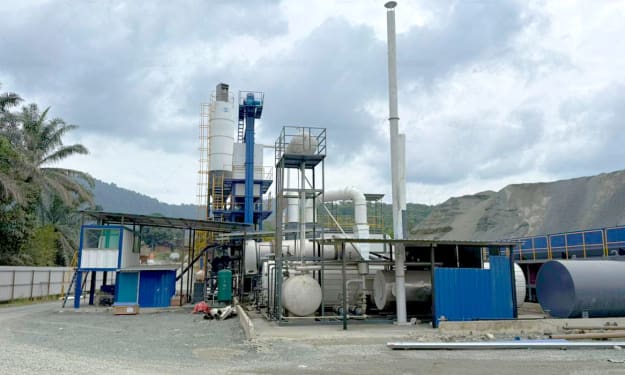
Energy Consumption Impact of Batch Asphalt Plant Working Principles
The working principle of a batch asphalt plant significantly influences energy consumption during asphalt production. Understanding how these plants operate reveals key factors affecting their energy efficiency. This article explores the operational mechanics of a batch asphalt plant, identifying how each stage impacts energy needs and highlighting best practices to enhance energy efficiency while maintaining production quality.
By Macroad Asphalt Plant7 days ago in 01
The Pride Flag and the Diversion
For nearly a decade, the LGBTQIA Pride Flag rippled in the wind at Christopher Park, a kaleidoscope of color staked into the soil of America’s first national monument to LGBTQIA+ liberation. That flag came down this week. Federal officials, citing new guidance from the Trump Administration, silently lowered the rainbow flag from its pole across the street from the Stonewall Inn. The birthplace of the modern gay rights movement now flies only the United States flag.
By Tim Carmichael7 days ago in Pride



Comments
There are no comments for this story
Be the first to respond and start the conversation.