
Russia’s T-14 Armata Tank Fails to Deliver
Expensive project meets humiliating defeat under real war fire

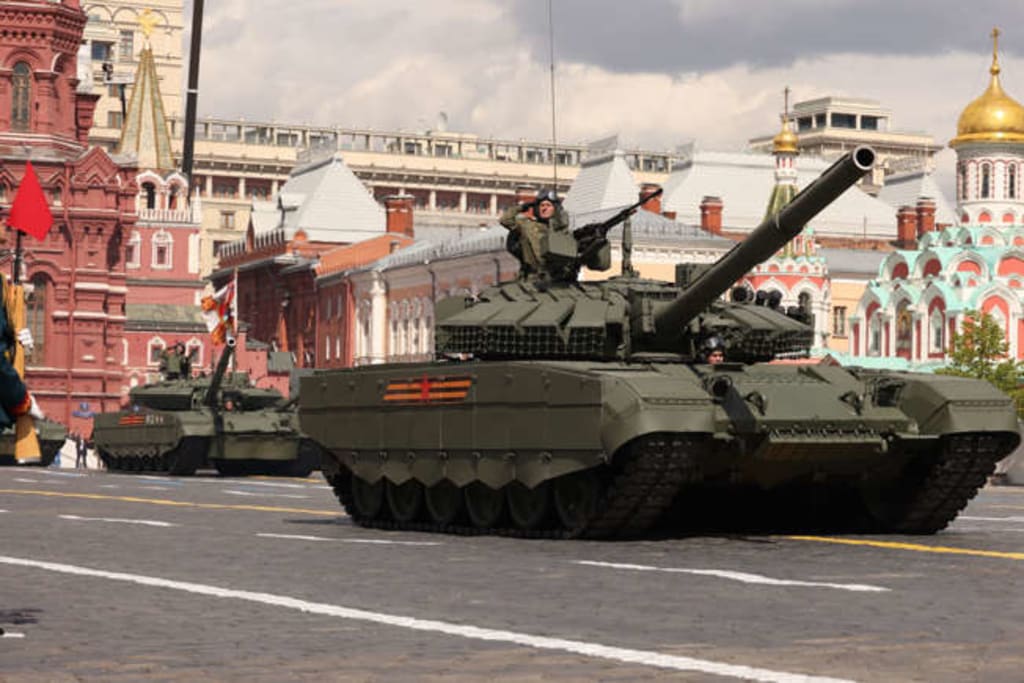
In recent years, Russia proudly introduced the T-14 Armata tank as its most advanced and modern armored vehicle. Hailed as a game-changer in tank technology, this tank promised unmatched firepower, protection, and speed. However, when tested under real battlefield conditions, particularly in the ongoing Ukraine conflict, the T-14 Armata has failed to meet expectations. Despite its cutting-edge design and the high costs involved, the tank has faced several setbacks, leading to a disappointing and humiliating performance in actual combat.
The T-14 Armata was designed to replace older Soviet-era tanks and bring Russian armored forces into the 21st century. Equipped with an unmanned turret, advanced radar systems, and active protection technologies, the tank was supposed to outperform all competitors. Its developers boasted about its capabilities in terms of survivability and fire accuracy. Russian media often described it as nearly invincible on the battlefield, capable of turning the tide of any armored confrontation.
However, the harsh realities of war tell a different story. When deployed in the Ukraine conflict, the T-14’s performance did not match the high hopes. Several reports from the frontlines suggest that these tanks have been vulnerable to anti-tank weapons and guerrilla tactics. Unlike what was promised, the advanced armor and defense systems failed to protect the tanks from relatively low-cost, portable missile systems used effectively by Ukrainian forces.
One key reason behind the T-14’s failure lies in the unpredictable nature of modern warfare. While Russia focused heavily on high-tech innovations, the actual battlefield involves irregular combat, ambushes, and rapid maneuvering. Ukraine’s fighters use simple but effective anti-tank rockets, drones, and mines, exploiting the weaknesses in the tank’s defense. The T-14’s automated systems, which were designed to work best in controlled environments, have struggled in such chaotic conditions.
Moreover, logistical issues have worsened the tank’s reputation. The production of the T-14 has been slow and costly, with only a small number being deployed. The tanks require complex maintenance and specialized parts that are hard to replace quickly in combat zones. This limited the number of active T-14 units on the battlefield, reducing their overall impact. Additionally, the high price of each tank makes it difficult for Russia to produce them in large quantities, which is crucial in modern warfare.
Another important factor is the skill level of the tank crews. Many experts believe that despite the tank’s advanced systems, the operators need intensive training to use it effectively. Russia’s military training programs have not always prepared crews adequately, resulting in operational mistakes and poor coordination on the field. The tank’s complicated control systems require experienced operators who can manage both the vehicle and its advanced weapons simultaneously, but this has not always been the case.
The T-14’s failure also has broader implications for Russia’s military strategy. The tank was supposed to symbolize Russian strength and technological progress, but its battlefield issues have damaged that image. Russia’s enemies see this as a sign that expensive, high-tech weapons alone cannot guarantee victory. It also shows the limits of relying heavily on new technology without considering the realities of warfare, such as guerrilla tactics and the importance of numbers.
In contrast, Ukraine has successfully combined old and new tactics. While its armed forces lack the high-tech tanks like the T-14, they use simpler, more reliable weapons effectively. Portable anti-tank missiles, drones, and hit-and-run attacks have proven highly effective in stopping or destroying advanced Russian tanks. This strategy has shown that flexibility and smart tactics often outweigh sheer technological power.
Looking ahead, Russia faces difficult choices. It must either fix the issues with the T-14 Armata or shift focus to producing more reliable and easier-to-maintain tanks. Experts suggest that improving crew training and battlefield tactics will be just as important as upgrading technology. Until these problems are addressed, the T-14 will likely remain a symbol of missed opportunities rather than a battlefield success.
To sum up, the T-14 Armata tank, once Russia’s pride and hope for armored superiority, has struggled to deliver in real combat. Its advanced features have not translated into battlefield dominance, especially against the resourceful and determined Ukrainian resistance. The tank’s failures highlight the complexity of modern warfare, where expensive technology alone cannot guarantee victory. Russia’s experience with the T-14 serves as a lesson in balancing innovation with practical strategy and adaptability.
About the Creator
majid ali
I am very hard working give me support
Mobile Banking App Development Trends to Watch in 2026
The financial technology landscape is evolving at an unprecedented pace, and mobile banking app development is at the forefront of this transformation. As we move into 2026, digital banking apps are no longer just a convenient way to check balances or transfer money—they have become comprehensive platforms for financial management, personalized services, and seamless customer experiences. For banks, fintech startups, and IT service providers, keeping up with the latest trends in mobile banking app development is essential to remain competitive in an increasingly crowded market.
By shane cornerus3 days ago in 01




Comments
There are no comments for this story
Be the first to respond and start the conversation.